Guide to Renting in Oshodi, Lagos: Everything You Need to Know Before You Move
Expert Listing
·
·
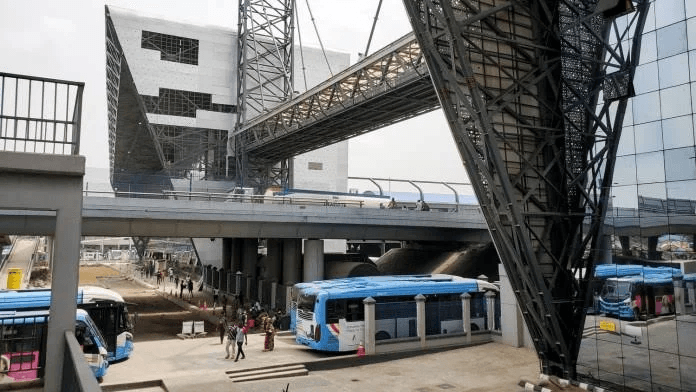
Oshodi stands as the ultimate central nervous system of Lagos, a location that offers unparalleled connectivity to virtually every corner of the state. For the modern renter, choosing this area is often a strategic calculation designed to minimise the “Lagos factor” of being stranded by distance, yet it is an environment that punishes those who do not understand its hyper-local nuances. The core value proposition here is accessibility and relative price advantage compared to neighbouring Ikeja or Ilupeju, but the core risk lies in the intense urban density and the varying quality of infrastructure across its different traditional and modern zones.
This guide covers how to choose the right apartment within the distinct residential pockets of Oshodi, what the rental market looks like in 2026, and what to check before committing your hard-earned capital. It details the specific market tiers available, provides the questions to ask that agents rarely volunteer answers to, and distinguishes between apartments that offer a genuine sanctuary and those that leave you exposed to the area’s characteristic noise and traffic friction. You will find research-backed data on commute times, flooding vulnerabilities, and the real cost of service charges in the area’s emerging gated developments.

Browse verified, physically inspected apartments in Oshodi here:
Why People Choose Oshodi
The decision to rent in Oshodi almost always comes down to one of three things, and knowing which one applies to you shapes everything else about your approach. Understanding your primary driver will help you narrow down whether you should be looking near the transport interchange, the more serene borders of Ilupeju, or the industrial-residential mix near the Apapa-Oshodi Expressway.
The first is Connectivity. Oshodi is the only location in Lagos where a resident can realistically reach the Lagos Island, the Murtala Muhammed International Airport, and the Lagos-Ibadan Expressway within roughly the same time frame. For professionals whose jobs require constant movement across the state, or for those who work in Ikeja but cannot afford the premium rents of GRA, Oshodi serves as a strategic transit hub. The presence of the world-class Oshodi Transport Interchange has revolutionised how residents move, providing a structured, safer, and more predictable way to navigate the city compared to the chaotic Oshodi of a decade ago.
The second is Affordability. When compared to the soaring prices of serviced apartments in Yaba or the high-entry costs of Surulere, Oshodi offers a more accessible entry point for decent housing. A renter in Oshodi can often secure a newly built or renovated three-bedroom apartment for the price of a cramped “mini-flat” in more “prestigious” Mainland neighbourhoods. This price advantage allows young families and mid-level professionals to enjoy more square footage and better internal finishes while remaining within striking distance of the city’s major commercial centres.
The third is Commerce. Oshodi is home to some of the largest specialised markets in West Africa, including the electronics, textile, and pharmaceutical hubs. For entrepreneurs and traders, living in Oshodi is a lifestyle preference rooted in being close to their source of wealth. The ability to walk or take a five-minute drive to one’s place of business, while avoiding the soul-crushing Lagos traffic, is a luxury that many Oshodi residents value above the quietude of more suburban areas. It creates a self-sufficient ecosystem where everything from bulk groceries to specialised technical parts is available at your doorstep.
If none of these three things describes your situation, Oshodi is probably not the right address for you – and it is worth being honest about that before you invest time in the search.
Understanding the Oshodi Rental Market
The Oshodi rental market is currently split into three distinct tiers: the “Ilupeju-Border” Premium tier, the Mid-Market Gated Pockets, and the Traditional Standalone buildings. Unlike other areas where the divide is simply old versus new, in Oshodi, the divide is defined by “insulation”, how well the property protects the tenant from the surrounding commercial bustle and the quality of the immediate access road.

The Premium tier consists of modern apartments located on the fringes of Oshodi, particularly the areas sharing boundaries with Ilupeju and parts of the Shogunle axis. These are often serviced blocks or small gated mini-estates with paved compound floors, uniform paint schemes, and dedicated security. These properties deliver a lifestyle that mimics the quieter suburbs, offering amenities like treated water and structured waste management. The typical tenant here is a corporate professional or a small family unit that works in Ikeja or Victoria Island but wants to maximise their rental budget without sacrificing basic middle-class comforts.
The Mid-Market tier is the most common and consists of recently renovated standalone buildings or newly constructed “room and parlour” self-contained units located in areas like Bolade or Mafoluku. These buildings often lack professional management and rely on a “caretaker” system. While the interiors are frequently upgraded with modern tiles and POP ceilings to attract high-value tenants, the external infrastructure, such as the drainage on the street or the consistency of the borehole, can be hit-or-miss. These are ideal for young starters who prioritise the interior aesthetics of their home over the prestige of the street address.
The honest recommendation for most renters is to target the Premium tier or the better-managed sections of the Mid-Market tier. Attempting to go too cheaply in Oshodi usually results in “hidden costs” that far outweigh the initial savings. In the lower tiers, you often face issues with erratic water pumping due to poor electrical configurations, lack of secure parking for vehicles, and neighbourhoods that become impassable during the rainy season. Paying a 15 to 20 per cent premium for a property with a dedicated gate-man and a functional drainage system pays off in the long run by protecting your vehicle and your mental health from the area’s higher-than-average environmental stress.
Current Rent Prices in Oshodi (2026)
Understanding the current market range helps a renter identify a fair asking price versus an overpriced listing or a suspiciously underpriced one that likely hides structural or legal issues. Prices in Oshodi have seen a steady climb due to its proximity to the airport and the completion of major road projects.
As of 2026, a standard 1-bedroom apartment (Mini-flat) in the Premium tier ranges between ₦800,000 and ₦1,200,000 per annum, while the same size in the Mid-Market tier goes for ₦500,000 to ₦750,000. For a 2-bedroom apartment, the Premium tier commands ₦1,500,000 to ₦2,200,000, whereas the Mid-Market tier sits between ₦1,000,000 and ₦1,400,000. 3-bedroom apartments in the better-managed estates can reach ₦2,500,000 to ₦3,500,000, compared to ₦1,800,000 in standalone buildings. This shows a monthly differential of roughly ₦40,000 to ₦70,000 between tiers. This extra spend buys you significantly more than just a better ceiling; it typically secures a dedicated parking slot, a higher level of security, and a neighbourhood that does not require you to navigate stagnant water to reach your front door.
Upfront payment remains firmly rooted in the one-year-advance model for most properties, though some very new developments in the Mafoluku area have begun experimenting with six-month renewals after an initial one-year payment. Caution fees, legal fees, and agency fees typically add another 30 %to your total package. Because Oshodi is a high-velocity market where good apartments are often taken within 48 hours of listing, having your full bulk payment ready is the only way to secure a competitive unit.
How to Choose the Right Building in Oshodi
Choosing the right building in Oshodi is the most important decision in the entire renting process, yet it is the one that most first-time renters underweight in favour of interior decor. The quality of the property’s “micro-environment” determines whether your life in Oshodi will be a convenient urban experience or a daily struggle with noise and logistics.
The primary variable in choosing is the property’s management and security structure. In a high-density area like Oshodi, a well-managed property is distinguished by its ability to enforce parking rules and maintain a clean perimeter. A poorly managed building quickly succumbs to “encroachment,” where the entrance is blocked by street traders or informal transport operators, making it impossible to drive in or out during peak market hours. You must look for properties that have a clear physical boundary and a landlord or manager who is active in local community security associations.
Questions to ask every estate management, landlord, or agent before committing:
- What is the specific schedule for the water pump, and is there a backup power source dedicated solely to the borehole?
- How is the monthly electricity bill (IKEDC) handled for the common areas and the pumping machine to avoid “estimated billing” disputes among tenants?
- What are the specific rules regarding visitor parking, and is there a limit on the number of cars each flat is allowed to park inside the compound?
- Has the building undergone any structural reinforcement or damp-proofing in the last three years to handle the area’s vibration and groundwater levels?
- Who is the designated point of contact for emergency repairs (plumbing or electrical), and what is the typical turnaround time for these requests?
You must also perform a thorough flood profile check. Do not ask “if the area floods,” as you will likely receive a vague “no.” Instead, ask specifically if the street remains navigable during a heavy downpour and if the water has ever reached the level of the compound’s gate in the last two rainy seasons. Physically, check the walls of the building for “watermarks”, faint, horizontal lines of discolouration or peeling paint near the base of the structure. If you see these marks, the property has a history of waterlogging, and you should avoid any ground-floor units.
Visiting the property at different times is non-negotiable. An agent will typically show you an apartment at 11:00 AM on a weekday when the area is at its quietest. You must return at 7:00 PM or on a Saturday afternoon. This evening visit reveals the true noise levels from nearby bars or religious centres and, more importantly, the parking reality when all tenants have returned home. A compound that looked spacious at noon can become a logistical nightmare when six cars are vying for four slots.
Finally, talk to current residents. A two-minute conversation with a neighbour in the car park is worth more than any agent’s assurance. Ask them if the “security fee” actually results in a guard being present at night and if the landlord is responsive to maintenance issues. Most residents will be surprisingly honest about the building’s flaws once the agent is out of earshot.
Not sure about Oshodi? Read our area guide first
The Commute Question: Being Honest With Yourself
The commute is the most common source of renter regret in Oshodi, not because the transport options are poor, but because the mental toll of the area’s congestion compounds over time. While Oshodi is central, the “last mile” of your journey, getting from the main expressway to your specific street, can sometimes take longer than the journey between two different local governments.
The honest numbers in 2026:
To Victoria Island under light traffic (Sunday 7:00 AM): 35 minutes.
To Victoria Island during peak hours (Monday 7:00 AM): 1 hour 20 minutes – 2 hours, depending on the congestion at Anthony Inward and Third Mainland Bridge.
To Lekki Phase 1 under light traffic (Saturday 10:00 AM): 45 minutes.
To Lekki Phase 1 during peak hours (Workday 5:30 PM): 1 hour 45 minutes – 2 hours 30 minutes, primarily due to the bottleneck at the Oworonshoki interchange.
To Ikeja (General Hospital/Computer Village) under light traffic: 15 minutes.
To Ikeja during peak hours: 35–50 minutes, depending on the flow at Bolade and Shogunle.
To Murtala Muhammed International Airport: 10-20 minutes regardless of traffic, provided you use the airport link road.
If your office is in Victoria Island or Ikoyi, the commute is manageable but requires an early start. Because Oshodi is a primary transit point, you have the advantage of early access to BRT buses and carpools, but you are also at the mercy of any breakdown on the Apapa-Oshodi Expressway. The consequence of a single truck breakdown can add an hour to your journey.
If your office is in Ikeja, Maryland, or Ilupeju, the commute is excellent and offers one of the best work-life balances available on the Mainland. You will find that you spend significantly less on fuel and transport than your colleagues living further out in areas like Abule-Egba or Ikorodu. This makes Oshodi a high-value choice for Ikeja-based professionals.
If your office is on the Lekki-Ajah axis, Oshodi is not the right address unless you have a flexible hybrid work arrangement. The daily trek through the Third Mainland Bridge and the subsequent Lekki toll gate traffic is gruelling and will quickly lead to burnout. Only consider this if you are willing to leave home before 5:30 AM every single day.
Flooding in Oshodi: What You Need to Know Before You Sign
Flooding in Oshodi is a localised but serious concern that is often underestimated by renters viewing properties during the dry season. While Oshodi is not a low-lying coastal area like parts of Lekki, its flood risk is driven by “surface-level accumulation”, a result of high urban density and a drainage system that is frequently overwhelmed by the sheer volume of run-off from paved surfaces.
The structural reason for this is the area’s historical development. Many streets were built before modern drainage standards were enforced, resulting in narrow gutters that are often blocked by debris or informal structures. In parts of Mafoluku and the areas near the railway line, the terrain is slightly depressed, causing water to pool for hours after a heavy downpour. When the main “canals” that drain the Mainland are full, the secondary drains in Oshodi can experience a “backflow” effect, pushing water back onto the streets.
During a significant flooding event, the consequences are concrete and immediate. In vulnerable streets, road access becomes impossible for small sedans, forcing residents to park their cars at nearby petrol stations or higher ground and trek to their homes. Ground-floor apartments in poorly elevated buildings can experience “seepage,” where water enters through the floorboards or the base of the walls, leading to permanent damage to furniture and electronics.
In contrast, newer gated developments and properties along major renovated roads like the Airport Road fare substantially better. These buildings are typically constructed with a “high plinth,” meaning the ground floor is raised several feet above the street level, and they feature dedicated, covered drainage channels that lead directly to the main government collectors. These engineering choices make the difference between a dry home and a flooded living room.
Expert Listing maps flood-risk signals for individual listings based on precise location data. This is the most reliable way to assess a specific apartment’s flood profile rather than relying on the agent’s description of the area or your own dry-season impression of the terrain.
Do not rent a ground-floor unit in Oshodi without specific confirmation, backed by data and resident testimony, that the estate does not flood.
The Transformation of the Oshodi Transport Interchange
The single most significant development that has materially changed the liveability of Oshodi is the completion and full integration of the Oshodi Transport Interchange. Before this massive infrastructure project, the area was a synonym for urban chaos, a place where renters had to navigate a labyrinth of unregulated “danfo” buses, street traders, and a lack of clear pedestrian pathways just to reach their homes.
Concretely, the interchange has separated regional transport from local residential life. Residents now have access to three massive terminals that organise travel to different parts of Nigeria and Lagos in a terminal-style, air-conditioned environment. This has significantly reduced the “street-level friction” in the surrounding residential pockets. What this means for the renter is that the area is no longer just a “junction” to pass through; it has become a structured transit hub. The arrival of organised BRT routes from this interchange means that an Oshodi resident can now plan their morning with a level of predictability that was previously impossible.
For the renting decision, this development lowers the “lifestyle cost” of choosing Oshodi. You no longer need to own a car to enjoy a relatively dignified commute to the Island or Ikeja. The interchange has also attracted secondary commercial anchors, including better-organised retail outlets and improved security patrols in the immediate vicinity. This has made the area more self-sufficient, allowing residents to complete their daily errands within a safe, well-lit perimeter rather than travelling to Ikeja for basic services.
Things to Confirm Before Signing Any Oshodi Lease
These items are in addition to the building management questions already covered; they represent the lease-level due diligence required to ensure your “total cost of living” matches your budget.

The full monthly cost. You must ask for a complete breakdown of all recurring charges. In Oshodi, it is common to find an annual rent of ₦1,200,000, but when you add the “service charge” for the gate-man, the “LAWMA” waste fee, and the monthly “security levy” for the street association, your actual monthly outflow can increase by ₦15,000 to ₦30,000. Ask if there is a “Development Levy” or a “Transformer Fee” that the landlord expects new tenants to pay. Get this breakdown in writing to avoid “surprise” bills in your second month of residency.
The lease terms on renewal and notice. Standard leases in this area require a 6-month notice for the landlord to recover the premises and a 3-month notice from the tenant. However, you must confirm if the rent is “subject to market review” at the end of the first year. In a high-demand area like Oshodi, some landlords attempt to hike the rent by 20 %after the first year once they see a tenant has settled in. Ensure your lease has a clear clause regarding the maximum %age of rent escalation for the first renewal.
The deposit and its conditions for return. The “Caution Deposit” is a standard requirement, usually ranging from ₦50,000 to ₦150,000. You must confirm that the lease specifically states this is refundable. More importantly, take photos of the apartment’s condition—especially the plumbing fixtures and electrical points—on the day you move in and share them with the landlord via email. This prevents the common practice of using your deposit to fix “pre-existing” damages when you eventually decide to move out.
Maintenance responsibilities. In many Oshodi standalone buildings, landlords expect tenants to handle all “internal” maintenance, including repairing burst pipes or fixing electrical faults. You must clarify that “major structural repairs”, such as roof leaks, external plumbing failures, or structural cracks, remain the landlord’s financial responsibility. Flag this early, as many tenants in this market find themselves spending hundreds of thousands of Naira on repairs that should have been covered by the owner.
Parking Allocation and Access. This is the specific area-specific concern for Oshodi. Because space is at a premium, you must confirm exactly which slot is yours. Do not accept a “first-come, first-served” verbal agreement in a compound with more tenants than spaces. If your apartment is in a building where you have to “double-park” other tenants (blocking them in), clarify the protocol for moving cars in the morning. If you work late and another tenant leaves early, this logistical friction can become a major daily stressor.
Ready to Find Your Apartment in Oshodi?
Every listing on Expert Listing is physically inspected and document-verified before going live. Flood risk is mapped at the individual listing level. Listings are removed the moment they are rented or sold.
Frequently Asked Questions
Is Oshodi a good place to live?
Oshodi is an excellent choice for individuals who prioritise central connectivity and want to maximise their rental budget on the Lagos Mainland. Its value has increased significantly with the modernisation of the transport interchange and the improvement of major access roads. However, its suitability depends on your tolerance for high-density urban environments; it is perfect for active professionals but may be too busy for those seeking a quiet, suburban lifestyle.
What is the best street or zone within Oshodi to rent in?
The most sought-after zones are those bordering Ilupeju and the Shogunle axis, as they offer a more residential feel with better-planned street layouts. Streets like Arowojobe and parts of the Mafoluku area that are closer to the Airport Road are also highly recommended for their relatively better drainage and security. Expert Listing recommends focusing on gated “pockets” within these zones to ensure the best living experience.
Are there serviced apartments in Oshodi?
Yes, there is a growing market for serviced apartments in Oshodi, particularly in the newer developments near the Airport Road and the Ilupeju border. These apartments typically include security, water treatment, and waste management within a fixed service charge. While they are more expensive than traditional standalone buildings, they offer a level of convenience and “insulation” from the area’s bustle that many corporate tenants find essential.
How is the security situation for residents in Oshodi?
Security in Oshodi has improved significantly since the formalisation of the transport interchange and increased police presence. Most residential streets now operate their own “Community Development Association” (CDA) security, featuring gated street entrances that are locked at night. As with any high-density area, it is advisable to choose a compound with its own dedicated gate-man and to be mindful of your surroundings during late-night commutes.
Does it flood in Oshodi?
Flooding in Oshodi is highly localised; while major roads stay dry, some inner-city streets with poor drainage can experience significant water accumulation during the rainy season. It is crucial to check the elevation of a property relative to the road and look for watermarks on fences. Expert Listing provides specific flood-risk mapping for its listings to help you avoid the streets that are most vulnerable to surface-level flooding.
What are the transport options for someone living in Oshodi?
Residents have access to one of the most robust transport networks in Africa, including the BRT (Bus Rapid Transit) system, the Oshodi Transport Interchange for interstate and intercity travel, and the nearby railway line. Its proximity to the International Airport and the Apapa-Oshodi Expressway makes it a premier hub for both public and private transport users. This connectivity is the primary reason many renters choose Oshodi over more secluded neighbourhoods.