Apo, Abuja: Area Guide
Expert Listing
·
·
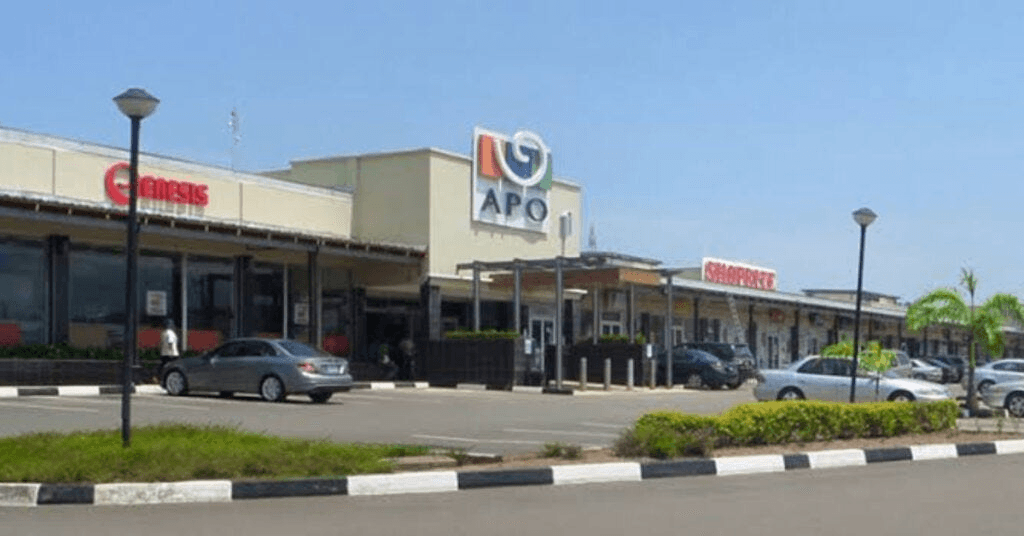
Apo occupies a highly strategic position within Abuja’s competitive residential landscape, serving as a vital release valve for the capital’s high-density central districts. Originally conceived in part to accommodate displaced indigenous populations and later famously developed to house members of the National Assembly, the area has matured into a vast, multi-layered suburban hub.
Its primary value proposition lies in its ability to offer relatively modern, secure housing options at price points that significantly undercut inner-core areas like Maitama or Wuse 2, while remaining physically closer to the city centre than deep outer satellites like Lugbe or Kubwa.
The target renter profile for Apo consists primarily of upwardly mobile mid-level professionals, civil servants, growing families, and corporate contractors who require straightforward access to the Central Business District but refuse to pay the exorbitant premiums demanded by phase one neighbourhoods. The area appeals strongly to those who value the safety and structural uniformity of gated residential estates over individual, standalone street properties.

It provides an operational sweet spot where mid-career professionals can secure functional space, such as three-bedroom terraces or detached bungalows, without compromising their daily logistical connection to the city’s commercial and administrative machinery.
However, moving to Apo requires a clear-eyed assessment of its inherent trade-offs rather than a reliance on real estate marketing materials. The rapid pace of private estate development has severely outstripped municipal infrastructure planning, leaving several sub-zones struggling with poor internal access roads, unpaved corridors, and highly uneven public power distribution. While major expressways bound the district efficiently, internal transit during peak morning and evening hours can quickly dissolve into dense bottlenecks, particularly around major roundabouts and intersections feeding into Garki.
This comprehensive guide details the real operational realities of living, working, and renting in Apo to ensure you make an informed housing decision.
What Is Apo?
Apo is a large residential and commercial district situated within the Abuja Municipal Area Council, which is the principal administrative local government area of the Federal Capital Territory. Geographically, it occupies a prime position directly south of Abuja’s inner city centre, bordered tightly by Garki Phase 2 to the north, Guzape’s high-brow hills to the northeast, and Gaduwa and Lokogoma to the west and southwest, respectively. Its position relative to major transit channels is anchored by the Murtala Mohammed Expressway, popularly referred to as the Outer Southern Expressway, which serves as the primary artery linking Apo directly to the Asokoro district and the wider regional highway network leading out of the capital.

The district is highly fragmented and is typically divided into several distinct sub-zones, each carrying its own distinct planning history and architectural profile. The most historic and strictly laid out areas are the formal Apo Legislative Quarters, which are partitioned sequentially from Zone A through Zone G.
Flanking these official enclaves is Apo Resettlement, a sprawling, organic, and densely built sector originally designed to relocate village communities but now heavily commercialised by private landlords. Further to the south and east lie Apo Dutse and Apo Mechanic Village, specialised zones where rapid private residential construction coexists alongside the capital’s largest automotive repair and informal artisanal market corridors.
In the broader context of the Abuja commuter network, Apo serves as a critical geographic gateway connecting the city’s core administrative zones with the rapidly expanding residential frontiers of Ring Road 2. The construction of major flyovers and the expansion of the Apo Roundabout have firmly integrated the area into the daily migration patterns of the city’s white-collar workforce. It acts as an urban bridge, allowing thousands of residents to live outside the high-cost central zones while maintaining a physical commute that rarely exceeds fifteen minutes to the major ministries, corporate headquarters, and administrative secretariats of the capital.
The Neighbourhood Feel
The overall character of Apo is marked by a stark juxtaposition between mature, highly ordered governance enclaves and rapidly developing, somewhat chaotic private residential frontiers. In the Legislative Quarters, the ambience is distinctly suburban, quiet, and highly institutional, characterised by wide, tarred streets, mature trees, and uniform housing designs that project an aura of established security. Conversely, stepping into Apo Resettlement or the outer fringes of Apo Dutse reveals a high-density, high-energy environment where construction cranes, unpaved cul-de-sacs, and informal retail kiosks sit side-by-side with newly finished, hyper-modern apartment blocks.

The resident profile is overwhelmingly middle-class, dominated by corporate professionals, mid-to-senior level federal civil servants, legal practitioners, tech workers, and entrepreneurial traders who operate in nearby commercial hubs. Because the area offers spacious housing options at reasonable rates, it attracts a large demographic of young families with school-aged children, creating a daytime environment that feels inherently domestic and community-focused.
The evening atmosphere shifts depending on the sub-zone, moving from the silent, gated security checkpoints of the estates to the lively, roadside commercial energy of the market corridors where open-air suya spots and neighbourhood lounges cater to returning commuters.
To understand Apo’s positioning, it is helpful to contrast it with comparable Abuja neighbourhoods like Life Camp or Gwarinpa. While Gwarinpa shares Apo’s mega-suburb status and mixed-income demographic, Gwarinpa has evolved into an independent, self-sustaining city with an intense commercial density that can feel overwhelming and noisy.
Life Camp offers a similar serene, green residential aesthetic to the Apo Legislative Quarters, but it sits on the western wing of the city, making it less convenient for professionals whose daily obligations tie them to the southern and eastern administrative hubs. Apo strikes an intentional middle ground, offering a quieter residential baseline than Gwarinpa, while retaining a sharper, more direct physical proximity to Garki and Asokoro than Life Camp can provide.
Key Streets, Zones, and Estates
The real estate landscape of Apo is strictly defined by its sub-zones, with property values, structural integrity, and living conditions varying wildly across different borders. The Apo Legislative Quarters, broken down into Zones A, B, C, D, E, F, and G, represent the premium tier of the open-market options in this district. Originally built by the federal government, these zones feature spacious three-bedroom and four-bedroom semi-detached and detached houses with large compound spaces. The area is highly organised, fully tarred, and exceptionally well-secured, making it the preferred choice for senior corporate workers and families who demand a peaceful, predictable residential environment with stable utility connections.
Apo Resettlement presents a completely different architectural and socioeconomic profile, characterised by high-density blocks, bungalows, and multi-tenanted apartment structures. Because these properties were built on smaller plots with less stringent municipal oversight, the streets are narrower, and commercial activities are heavily integrated into residential blocks.
Housing stock here consists largely of self-contained units, one-bedroom mini-flats, and standard three-bedroom flats that attract younger renters, single professionals, and budget-conscious families. While it lacks the serene prestige of the Legislative Quarters, it is highly accessible and remains one of the most liquid rental markets in the entire Federal Capital Territory.
Apo Dutse is the current frontier for modern, private estate developments, attracting major property developers who are constructing premium gated communities such as Rockvale Manors, Brains and Hammers estates, and Pleasant Places. This zone is characterised by contemporary architectural designs, including flat-roof terraces, fully serviced townhouses, and smart luxury apartments.
The interior of these private estates is usually immaculate, boasting internal paving, dedicated transformers, and strict uniform security gates. However, the immediate challenge in Apo Dutse is the infrastructure outside the estate walls, where access roads leading to the main expressways often remain untarred, rocky, or dusty, requiring residents to navigate challenging terrain before reaching smooth municipal asphalt.
Rent Prices in Apo
Rental figures in Apo are directly tied to the specific sub-zone, age of the property, and the level of internal infrastructure provided by the estate management. In Apo Resettlement and the outer, unpaved sections of Apo Dutse, a standard one-bedroom apartment or mini-flat averages between 1,500,000 Naira and 2,500,000 Naira per annum, depending on whether the building is newly constructed.
Moving into the more secure, fully serviced private estates or the traditional Legislative Quarters, the cost for a one-bedroom apartment jumps significantly, commanding between 3,000,000 Naira and 4,500,000 Naira annually, driven by the presence of uniform security, paved access, and managed facilities.

For mid-sized family housing, a standard two-bedroom flat within Apo Resettlement commands an annual rent ranging from 2,500,000 Naira to 3,500,000 Naira. In sharp contrast, the same two-bedroom configuration within a premium, fully serviced gated estate in Apo Dutse or the Legislative Quarters will cost between 4,500,000 Naira and 6,500,000 Naira per annum, with landlords frequently justifying the markup through integrated services like corporate security, waste management, and dedicated water treatment.
Three-bedroom apartments and terrace duplexes represent the highest volume of family rentals, starting at 4,000,000 Naira to 6,000,000 Naira in the resettlement zones, and scaling rapidly from 7,000,000 Naira to as high as 12,000,000 Naira per annum for modern townhouses with boys’ quarters in top-tier estates.
When compared to the broader real estate market, Apo represents a logical middle tier for the capital’s professional class. For context, a three-bedroom terrace in a central area like Wuse 2 or Maitama routinely commands between 15,000,000 Naira and 25,000,000 Naira per annum, making Apo significantly cheaper while offering comparable square footage.
On the other end of the spectrum, outer satellite districts along the airport road corridor, such as Lugbe, offer cheaper three-bedroom options ranging from 2,000,000 Naira to 3,500,000 Naira, but they force tenants into a punishing daily commute. Payment terms in Apo remain heavily traditional, with nearly all landlords demanding a full annual lump-sum payment upfront, along with separate legal, agency, and refundable caution fees that typically add an extra twenty to twenty-five per cent to the base rent.
For current verified listings with real-time pricing and availability, browse apartments in Apo on Expert Listing
Flooding: What You Need to Know
Flooding in Apo is primarily a flash-flood phenomenon driven by localised topography and severe gaps in secondary drainage infrastructure. The district sits within the wider Abuja Municipal Area Council basin, which experiences intense annual rainy seasons divided into two distinct peaks: the primary deluge between April and July, and the secondary heavy downpours from September to October.
Because parts of Apo are flanked by the dramatic elevation of the Guzape hills, heavy rainfall triggers significant surface runoff that descends rapidly into the lower-lying plains of the district, overwhelming natural streams and artificial concrete channels that are frequently constricted by ongoing property construction.
The areas facing the most severe structural risk are the lower-lying sections of Apo Resettlement, particularly streets bordering natural drainage paths, and specific transit corridors connecting Apo with Lokogoma and Gaduwa. In these vulnerable spots, poorly maintained, open municipal drainages routinely become choked with household refuse and construction debris, causing storm waters to overflow directly onto the roadways and submerge low-clearance vehicles during heavy downpours.
Furthermore, certain undeveloped patches within Apo Dutse suffer from seasonal waterlogging, where unpaved access tracks turn into thick, impassable mud traps due to the high clay content of the soil and the absence of integrated street-level gutters.
Conversely, the sub-zones that consistently fare better are the officially planned Apo Legislative Quarters and premium private estates that have invested heavily in independent engineering solutions. The Legislative Quarters benefit from deep, pre-planned concrete drainage networks built to federal standards, allowing surface water to clear within minutes of a storm ending.
Modern private estates in Apo Dutse also mitigate these risks by raising their foundation levels, paving internal roads with interlocking stones, and constructing dedicated retention channels to direct runoff away from residential doorsteps.
Expert Listing maps flood-risk signals at the individual listing level so you’re working with precise data, not general impressions.
Safety and Security
Apo maintains a reassuringly stable safety and security profile that rates favourably when measured against standard Abuja municipal baselines. Because the district was historically anchored by the National Assembly residential quarters, it has long benefited from a consistent, visible security presence and a highly alert neighbourhood watch culture.
The overall crime rate remains low, with incidents of violent crime being exceptionally rare, though opportunistic property crimes like petty theft, car accessory vandalism, and daytime burglaries do occur, primarily in areas with porous perimeter controls or high commercial foot traffic.
The security profile varies significantly when moving between the gated estates and the open residential blocks. In the Apo Legislative Quarters and top-tier private developments in Apo Dutse, security is treated as an active, structural priority, featuring uniform guards at access gates, mandatory visitor registration, perimeter fencing topped with electric wire, and scheduled night patrols.
These measures ensure that residents can walk freely within their estates at any hour of the night with minimal concern. In contrast, the resettlement zones and commercial fringes feature completely open street networks with unrestricted vehicular access, relying instead on local police divisions, occasional military checkpoints along major intersections, and informal vigilante groups to secure the neighbourhood during late-night hours.
Standard precautionary practices are advisable for anyone moving to the area, without adopting an attitude of alarmism. It is generally recommended to avoid walking alone along unlit, lonely stretches of the Apo-Dutse road or near the vicinity of the Mechanic Village late at night, as these industrial and developing zones experience minimal pedestrian activity after dark. If you are renting a property outside a formal, managed estate, investing in high-quality security doors, reinforcing low-level windows with iron burglary bars, and ensuring the street has an active neighbourhood security agreement are standard steps to guarantee peace of mind.
Commute and Getting Around
Commuting from Apo to the central business hubs of Abuja is one of the neighbourhood’s strongest selling points, offering direct routes that are far more manageable than those from the western or northern suburbs.
A drive from Apo to central districts like Maitama, Asokoro, or Wuse 2 takes approximately twelve to fifteen minutes under normal, off-peak traffic conditions via the Murtala Mohammed Expressway. However, during the intense morning rush hour between 7:30 AM and 9:00 AM, this commute can extend to thirty-five or forty-five minutes, primarily due to heavy vehicle convergence at the Apo Roundabout and the key intersections feeding into Garki Phase 2.
The transit path to the Central Business District is similarly efficient, utilising the main expressway axis to guide motorists directly into the heart of the city’s administrative core in about ten minutes off-peak.
For those needing to reach major outlying hubs, the connection to Ring Road 2 provides a direct, high-speed bypass to areas like Gwarinpa or the airport road without forcing drivers to cut through central city traffic. The reverse evening commute between 5:30 PM and 7:30 PM sees significant slowing along the Garki-Apo corridors as thousands of vehicles exit the corporate core simultaneously, though traffic generally flows steadily once past the initial checkpoint bottlenecks.

Internal transit within Apo is highly diverse and relies on a mix of public and private options. Within open areas like Apo Resettlement and the major street corridors, green mini-buses and shared tricycles, locally known as keke, handle the bulk of short-distance passenger movement along designated routes.
Commercial motorcycles, or okada, are restricted from the main expressways but operate actively within the inner unpaved tracks of Apo Dutse to ferry residents from estate gates to bus stops. For seamless, door-to-door transit, ride-hailing applications like Uber and Bolt maintain an exceptionally high driver density across all zones of Apo, ensuring that a vehicle can typically be secured within five to eight minutes of requesting a ride.
Schools
The educational infrastructure in and around Apo is highly developed, making the district one of the primary residential hubs for families who prioritise access to high-quality primary and secondary schooling. The area features a dense mix of established international institutions, faith-based academies, and specialised preparatory schools that follow both the Nigerian national curriculum and British educational standards. The local presence of these institutions spares parents the stress of driving long distances into the city centre for daily school runs.
- Page Schools — A premium co-educational institution located in the Dutse district of Apo, offering a robust blend of the Nigerian and Cambridge curricula across early years, primary, and secondary levels.
- Hampos Academy — A well-equipped private school within the Apo axis focusing on early childhood education and basic primary development with a strong emphasis on character building.
- The Regent Secondary School — Located a short drive away in neighbouring Garki/Durumi, this top-tier international school provides a premium British curriculum education for families seeking elite academic pathways.
- Whiteplains British School — Situated within easy commuting distance along the Jabi-Garki axis, offering boarding and day options modelled on international educational frameworks.
- Government Secondary School, Apo — A major public secondary institution providing affordable national curriculum education and serving as a central academic landmark in the district.
The sheer variety and geographical concentration of these academic institutions ensure that families living in Apo can easily find an option that fits both their academic expectations and household budget, cementing the area’s reputation as a stable, child-friendly suburban environment.
Healthcare
Healthcare delivery in Apo is anchored by a sophisticated mix of advanced private multispecialty hospitals, specialised diagnostic centres, and public primary healthcare clinics. This ensures that residents have immediate access to everything from routine medical checkups and pediatric care to complex emergency interventions without needing to travel into the central city core.
- Cedarcrest Hospitals – Located on Sam Mbakwe Street within the immediate Gudu-Apo axis, this is a premier private multispecialty hospital group renowned for its advanced orthopaedic surgery, intensive care capabilities, emergency medicine, and comprehensive radiology services.
- Nizamiye Hospital – Situated within a brief driving radius near the fringes of the district, this world-class medical facility offers 24/7 emergency care, advanced cardiology, neurology, and a wide array of specialised surgical departments.
- Apo Primary Health Care Centre – A government-run public facility located within the core of the district, focusing on accessible maternal care, immunisations, and routine outpatient medical services.
- Garki Hospital – Situated just a few minutes north of the Apo boundary, this large, public-private partnership hospital handles high-volume emergency care, specialised consultations, and comprehensive inpatient treatments.

The distinct proximity advantage of having top-tier trauma and specialist facilities like Cedarcrest right on the edge of the neighbourhood provides an invaluable layer of safety and peace of mind for families and corporate residents alike.
Lifestyle, Food, and Retail
The retail landscape in Apo is highly practical and decentralised, ensuring residents do not have to travel far for daily household procurement. The neighbourhood is anchored by major modern shopping hubs, most notably the Novare Mall axis and individual large-scale supermarket outlets like Shoprite Apo, which provide a comprehensive selection of international groceries, electronics, home decor, and clothing brands under one roof.
For fresh produce, local foodstuffs, and budget-friendly household items, residents rely heavily on the bustling Apo Resettlement Market, an organic, high-energy market zone where local traders sell fresh meat, vegetables, and grains directly from regional farms. This combination of structured, air-conditioned retail and traditional open-air markets offers an efficient balance for managing household logistics.
Apo’s dining and culinary scene is highly practical and straightforward, focusing primarily on casual dining, quick-service franchise restaurants, and regional food hubs. Major fast-food brands maintain a strong presence along the main Legislative Quarters road, offering predictable options for busy professionals and families on the go.

While Apo features several pleasant neighbourhood spot lounges and local kitchens serving excellent Nigerian cuisine, it lacks the concentrated density of high-end fine dining, experimental international bistros, and luxury cafes found in Wuse 2 or Maitama. Residents looking for an elite culinary experience or upscale corporate entertainment typically make the short ten-minute drive into the city centre, choosing to keep Apo as their quiet residential base.
The nearest major destination for comprehensive lifestyle entertainment and community shopping is the Novare Gateway Mall, which can be reached within a ten-to-fifteen-minute drive depending on the specific zone of departure. This modern mall facility functions as the primary social anchor for the wider southeastern district of Abuja, containing multi-screen cinema complexes, dedicated children’s play zones, corporate bank branches, and an expansive food court.
Within Apo itself, community recreation is steadily growing, characterised by local fitness centres, private gyms situated within major gated estates, and open spaces where residents gather for early morning jogging and weekend football matches, creating a grounded, active suburban lifestyle.
Utilities: Power and Water
The distribution of public electricity in Apo is managed by the Abuja Electricity Distribution Company, and its operational efficiency remains highly dependent on the specific sub-zone you choose to reside in. The Apo Legislative Quarters and premium gated developments along the main corridors generally sit on dedicated commercial or priority lines, receiving an average of sixteen to twenty hours of public power daily, which ranks well above the wider Abuja municipal average.
Conversely, parts of Apo Resettlement and the developing fringes of Apo Dutse experience far more erratic load-shedding schedules, where public supply can drop unexpectedly during the peak rainy seasons due to localised network faults.
Because public power is never entirely guaranteed, the use of backup generators or solar inverter systems is an absolute norm across all tiers of housing in Apo. Within the premium private estates of Apo Dutse, management companies typically operate a central, high-capacity diesel generator system that kicks in automatically within seconds of a public outage, charging residents a mandatory monthly service levy based on their consumption. In non-serviced buildings or open street apartments, tenants must provide and maintain their own personal soundproof generators or solar arrays, making it essential to factor fuel and maintenance expenses directly into your monthly housing budget.
Water supply across the district relies almost completely on private boreholes, as connection to the central Abuja municipal water grid remains limited in several sub-zones. Property owners and estate developers drill deep boreholes to tap into the local water table, pumping the water into overhead storage tanks for distribution. While the water yield in Apo is generally abundant and reliable year-round, the chemical composition of the soil means the water frequently contains high iron levels.
Premium estates handle this by installing integrated industrial water treatment and filtration plants, whereas tenants in independent blocks must often monitor their own storage tanks and install basic inline filters to ensure the water is completely safe for domestic usage.
Expert Advisory: Before signing any lease agreement in an Apo estate, insist on seeing a full breakdown of the monthly or annual service charges. Hidden costs such as generator fueling levies, security fees, and waste management charges can easily add an unexpected 500,000 Naira to 1,500,000 Naira to your annual living expenses.
Who Apo Is Best For
Choosing Apo as your residential base is an intentional decision that yields maximum benefits for specific profiles of urban renters.
Families with school-aged children. The high concentration of secure gated estates combined with top-tier international and national schools in the immediate vicinity allows parents to raise children in a safe environment while eliminating the stress of long daily school runs.
Mid-level professionals working in the Garki and Central Business Districts. For individuals whose employment ties them to federal ministries or corporate offices in the urban core, Apo offers a short, highly manageable daily commute that maximises productivity while protecting personal downtime.
Renters seeking modern architectural designs on a defined budget. If you refuse to pay the exorbitant premiums of phase one neighbourhoods but still demand contemporary living spaces like flat-roof terraces or smart apartments, Apo’s private estate market offers the best value per square meter in the region.
Suburban lovers who value peace over intense nightlife. The quiet, tree-lined character of the Legislative Quarters and the insulated nature of the gated communities make Apo an ideal sanctuary for individuals who want to completely unplug from corporate stress once they return home.
What to Watch Out For
While Apo offers exceptional residential advantages, anyone making a serious housing decision must remain fully aware of its specific operational flaws.
Deplorable access roads outside private estate perimeters. While developers build immaculate infrastructure inside estate gates, the public connecting roads in developing parts of Apo Dutse are frequently unpaved, rocky, and severely eroded, leading to accelerated wear and tear on low-clearance saloon cars.
Intense traffic bottlenecks at major intersections during rush hour. The convergence of vehicles heading out of Apo toward Garki Phase 2 can turn the local roundabouts into severe traffic traps between 7:45 AM and 8:30 AM, requiring strategic morning departures to avoid delays.
High and volatile estate service charges. Landlords in fully serviced estates frequently implement aggressive service fees to counter the rising cost of diesel for central generators, meaning your actual cost of living can fluctuate unpredictably throughout the duration of your tenancy.
Encroaching commercial noise near the resettlement and mechanic axes. If you accidentally rent a property situated too close to the borders of Apo Resettlement or the automotive repair zones, you will have to contend with high daily foot traffic, informal trading noise, and localised commercial congestion.
Ready to Find Your Apartment in Apo?
Every listing on Expert Listing is checked before going live. Location is mapped precisely against flood-risk data. Listings are removed the moment they’re rented or sold. No ghost listings, no wasted trips.
Browse verified apartments for rent in Apo on Expert Listing
Frequently Asked Questions
What is Apo known for?
Apo is widely recognised across the Federal Capital Territory as a premier middle-class residential hub that originally gained prominence as the official housing zone for members of Nigeria’s National Assembly. It is also famous for hosting the Apo Mechanic Village, an expansive, highly active industrial cluster that serves as the capital’s central destination for automotive repairs, spare parts procurement, and informal artisanal trade. Today, it is increasingly known as a hotspot for contemporary private estate developments that cater to upwardly mobile professionals seeking a middle ground between inner-city luxury and outer-suburban affordability.
How much is rent in Apo in 2026?
In 2026, rental prices remain tightly bound to the specific sub-zone and the level of estate infrastructure provided. A standard one-bedroom apartment ranges from 1,500,000 Naira in the high-density resettlement zones to as high as 4,500,000 Naira per annum within premium, fully serviced gated estates. Two-bedroom family flats command between 2,500,000 Naira and 6,500,000 Naira annually, while modern three-bedroom terraces and townhouses in top-tier developments scale from 7,000,000 Naira to over 12,000,000 Naira per year, typically requiring a full upfront annual payment.
Is Apo a safe place to live in Abuja?
Yes, Apo is considered one of the safer and more stable residential options within the Abuja Municipal Area Council framework. The neighbourhood benefits significantly from the historic security footprint of the Legislative Quarters and the strict, multi-layered access protocols maintained by its numerous modern private estates. While isolated petty thefts or vehicular vandalism can occasionally occur along busy commercial street corridors, violent crime remains exceptionally rare, making it a highly secure choice for families and single corporate professionals alike.
Are there good schools for children within the Apo axis?
Apo boasts an excellent educational ecosystem featuring a high density of reputable private schools, international academies, and specialised early childhood centres. Notable institutions such as Page Schools and Hampos Academy operate right within the district, providing robust options that follow both the national curriculum and international British educational frameworks. This deep concentration of reliable schooling infrastructure means parents can easily manage daily logistics without forcing their children to endure exhausting commutes into central Abuja.
How is the power and water supply situation in Apo?
The quality of public utility delivery in Apo is highly uneven and depends entirely on your exact street address. While the primary Legislative Quarters and top-tier private estates sit on priority lines that receive between sixteen and twenty hours of daily public power, backup generators or solar inverter setups remain an absolute necessity across the entire district. Water is provided almost universally via private or estate-managed boreholes, which deliver an abundant supply year-round, though properties outside managed estates often require independent filtration systems to handle high localised iron content.