Gwarinpa, Abuja: Area Guide
Expert Listing
·
·
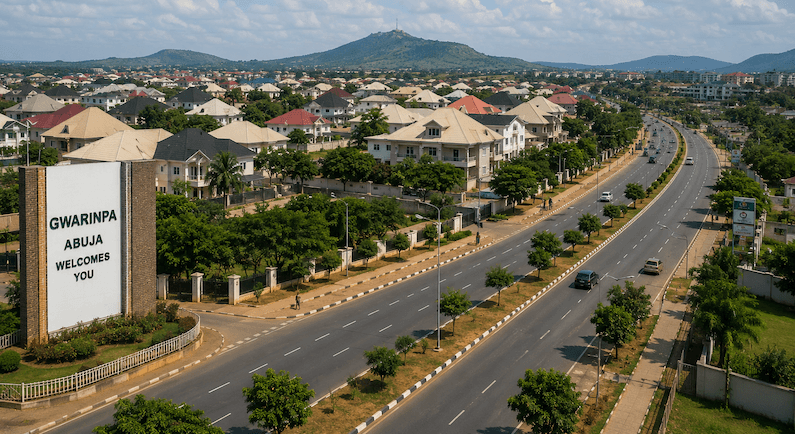
Gwarinpa is the heartbeat of the capital’s middle and upper-middle class. It is the address for people who want the prestige of an Abuja lifestyle without the sterile, overly quiet monotony that defines the inner districts. Gwarinpa bustles, functions, and thrives as an independent urban ecosystem that residents rarely need to leave to satisfy their daily needs.
It has spanned into a massive geographical footprint that holds the legendary status of being the largest single housing estate developed initially to solve the capital’s housing needs for civil servants and citizens in the late 1990s and early 2000s. It has evolved dramatically from a sleepy government-built estate into a sprawling, self-contained mini-city. Today, it balances a distinct residential layout with a hyper-commercialised entertainment and retail hub that rivals any destination in the Federal Capital Territory (FCT).
The beauty of Gwarinpa lies in this duality. Its main avenues are hit with a vibrant sensory experience of multi-storey shopping complexes, high-end lounges, modern workspaces, and some of the best street food in Abuja. Retreat just two blocks inward into any of its residential zones or gated estates, and the chaos instantly melts away into quiet, tree-lined streets, expansive compounds, and suburban tranquillity.
Interested in one of the most respected and strategically analytical addresses in the capital of Nigeria? The Gwarinpa area guide is for you.
What Is Gwarinpa?

Geographically situated in Phase 3 of Abuja’s Master Plan, Gwarinpa is a massive residential district located roughly northwest of the city centre. The estate itself covers an expansive landmass of over 1,090 hectares, an area so vast that it features its own complex internal grid network.
Katampe and Jahi border it to the northeast, Kado and Jabi to the southeast, and Life Camp to the south, while giving commuters rapid outlets to outer districts like Kubwa, Dawaki, and Karsana via its masterfully linked perimeter expressways.
The history of Gwarinpa is rooted in the late General Sani Abacha administration, conceptualised and executed under the visionary housing blueprint of the legendary late Alhaji Lateef Jakande. Its name pays cultural homage to the indigenous Gwari (Gbari) people who have historically inhabited the region for centuries. Originally built as an array of uniform government bungalows and terrace homes to accommodate the influx of public workers moving from Lagos, the district has undergone massive structural gentrification over the past two decades.
Today, Gwarinpa is segmented logically by numbered arteries, predominantly 1st, 2nd, 3rd, 4th, 5th, and 6th Avenues, which act as the structural anchors of the neighbourhood. These avenues have dozens of numbered lateral roads and a galaxy of highly secure private and public-private partnership estates. With an estimated self-contained population pushing past 200,000 residents, it operates effectively as a sovereign economic node within the FCT.
The Neighbourhood Feel

Gwarinpa feels fundamentally alive, carrying an independent, self-assured energy that sets it completely apart from the rest of Abuja. Unlike satellite towns like Lokogoma or Lugbe, which can feel like sleepy bedroom communities where people only return to sleep after working in town, Gwarinpa possesses its own continuous day-and-night economy. The neighbourhood moves at a pace that is functional, energetic, and unapologetically social.
The resident profile here is highly diverse but leans heavily toward the upscale middle class, corporate upwardly mobile professionals, mid-to-senior civil servants, tech founders, and established families. Because of its legendary nightlife and culinary scene, it also attracts a younger, affluent demographic of creators and business owners who prefer its expressive lifestyle to the conservative silence of Maitama.
The visual contrast within the district is striking. The main avenues, particularly 1st and 3rd, vibrate with vehicular traffic, shoppers walking the strips, and colourful delivery bikes servicing the local grid. However, once you cross the security thresholds into the inner gates, you are greeted by older, beautifully mature trees, wide setbacks, kids cycling on paved pavements, and a calm, classic suburban peace that makes you forget you are just moments away from a major commercial artery.
Key Streets, Zones, and Estates

1st Avenue & 3rd Avenue. 3rd Avenue is world-famous for its incredible concentration of retail stores, banks, pharmacies, supermarkets, and a legendary food scene that hosts everything from international fast-food chains to elite local spots. 1st Avenue matches this energy with a heavier mix of corporate offices, fitness centres, and direct transit access points.
4th Avenue, 5th Avenue & 6th Avenue. As you progress deeper into these avenues, commercial noise drops significantly. These zones are characterised by wider plots, family compounds, larger detached duplexes, and older, highly spacious bungalows. 6th Avenue, in particular, blends seamlessly into high-end private developments and offers an incredibly quiet, upscale residential feel.
CITEC Villa/Mount Pleasant Estate is one of the premier, highly managed estate communities in the area. Known for its strict uniform architecture, meticulously paved internal tarred roads, stable dedicated power frameworks, and top-tier gate security, it commands premium pricing for both buyers and renters.
Adkan Estate & EFAB Estate. Represent massive, highly organised residential hubs within the broader Gwarinpa layout and feature a heavy concentration of modern 3-bedroom apartments, blocks of flats, and terraces. Young professionals and families who prioritise estate-controlled security and functional neighbourhoods live here.
Charly Boy Boulevard & 69 Road. A highly popular and prominent residential landmark area located in Gwarinpa, Abuja, Nigeria. It is well-known for housing the famous entertainer Charly Boy’s residence
Rent Prices in Gwarinpa
Rent in Gwarinpa reflects its unique structural position as Abuja’s ultimate middle-to-upper tier compromise. It sits comfortably below the luxury, dollar-backed thresholds of Maitama or Asokoro, but commands a distinct premium over outer districts like Kubwa, Karu, or Lugbe.
The variance in pricing within Gwarinpa is heavily driven by three factors: proximity to main avenues, age/modernity of the building, and whether the property sits within a strictly managed, gated estate.
For self-contained units and studio apartments, prices range significantly based on finishing. A standard, older self-contained can be found starting around ₦1,200,000 to ₦1,500,000 per annum.
However, if you are looking at a newly built, serviced studio apartment featuring modern POP ceilings, fitted kitchenettes, and steady water treatment facilities within a secure estate, prices easily climb to ₦1,800,000 to ₦2,500,000 per year. Multi-bedroom options and standalone duplexes command the highest premium due to immense family demand.
A typical 3-bedroom flat on an open, older street can hover around ₦5,500,000, while the same specification inside a premium serviced estate like CITEC or Adkan, boasting 24-hour uniformed guards, dedicated transformers, and structured waste management, can easily fetch between ₦8,000,000 and ₦12,000,000 annually. Upfront payments are strictly one year, with service charges and generator levies calculated separately depending on the estate’s management structure.
Search for verified apartments on Expert Listing today
What You Need to Know About Gwarinpa
The absolute first thing to understand about Gwarinpa is its sheer, mind-boggling scale. Newcomers frequently make the mistake of treating it like a standard neighbourhood where you can easily stroll from one section to another. In reality, moving from 1st Avenue to the deep ends of 6th Avenue requires a calculated vehicular journey that can take 15 to 20 minutes depending on internal traffic. It is a mini-city inside a capital city, and your specific avenue choice dictates your daily reality.
The commercial evolution of Gwarinpa is an ongoing phenomenon that requires smart residential positioning. While having immediate access to 3rd Avenue means you can walk to three different supermarkets and ten restaurants in five minutes, it also means dealing with delivery bike exhaust, commercial parking disputes, and the distinct hum of corporate generators during business hours.
Finally, because Gwarinpa is highly sought after and boasts premium structural value, the market suffers from a high volume of older housing stock that hasn’t kept pace with modern aesthetics. Many of the original government-built bungalows or older multi-family flats suffer from dated plumbing, faded paint, and vintage electrical layouts.
Safety and Security
Gwarinpa enjoys a highly robust, reassuring safety profile within the wider Abuja landscape, primarily due to its deeply structured neighbourhood watch networks and heavy security presence. Because it houses prominent public figures, senior military personnel, and affluent families, the community leaves very little to chance. The area is heavily patrolled by the Nigeria Police Force, with multiple fully functional divisional police headquarters strategically situated across its avenues.
Within the residential grid, security is handled with military precision. Almost every single lateral street or sub-zone operates under a strict “gated community” model. This means that access roads are sealed off with manned security gates that close systematically at night (typically by 10:00 PM or 11:00 PM), requiring non-residents to undergo rigorous clearance protocols or provide verifiable host invitations. In premium private estates like CITEC or Adkan, security is even tighter, featuring 24/7 uniformed guards, mandatory visitor profiling, and active CCTV monitoring at access junctions.
While day-to-day security inside the residential streets is excellent, standard urban awareness is required when navigating the main commercial avenues late at night. The high concentration of nightlife spots means areas around major bank junctions and popular lounge blocks experience significant foot traffic, making it wise to stay alert against opportunistic pickpocketing or vehicle break-ins.
Commute and Getting Around
Gwarinpa’s geographical location makes it one of the absolute best-connected hubs for multi-directional commuting in the FCT. It is flanked by major expressways that route traffic effortlessly away from inner bottlenecks:
To Abuja Central Business District (CBD) / Wuse II: Via the Murtala Mohammed (Oshodi-Kubwa) Expressway or the Ahmadu Bello Way corridor, the commute into the absolute heart of town takes a mere 15 to 25 minutes under normal driving conditions. During the peak morning rush hour (7:30 AM – 8:45 AM), transit times can swell to 40 minutes due to mergers at the Kado and Next Cash & Carry junctions.
To Jabi / Jabi Lake Mall: Gwarinpa sits directly north of Jabi. Commuters can slide down through internal link roads or the main Ring Road 2 network to arrive at the Jabi Lake Mall or the Jabi commercial hub in less than 10 to 15 minutes.
To Life Camp: Situated directly adjacent to Gwarinpa’s southern borders, getting to Life Camp is incredibly practical. It takes less than 10 minutes via internal avenues, making it a seamless transition for residents who split their social or professional lives between both zones.
To Kubwa / Dawaki: For those heading further outbound toward the outer commercial and residential hubs, the Murtala Mohammed Expressway provides a wide, fast-flowing superhighway. The drive to Kubwa is a clean, reverse-traffic cruise taking roughly 15 minutes.
To Nnamdi Azikiwe International Airport: Commuters can easily bypass the inner city traffic entirely by routing through Ring Road 2 down through the Galadimawa/Airport Road axis, reaching the airport terminals in approximately 35 to 45 minutes.
Internally, getting around Gwarinpa is incredibly smooth. The road network is largely paved and systematically wide. For non-drivers, green Abuja taxis, corporate ride-hailing services (Uber, Bolt, Rida), and local keke (tricycle) operators service the internal avenues continuously, ensuring you are never stranded.
Schools

Gwarinpa is highly prized by parents for its exceptional educational infrastructure. It hosts several of the top-rated international and private schools in Abuja, eliminating the need to drive children into town for premium education.
- Lead British International School (LBIS) is the undisputed crown jewel of Gwarinpa’s academic landscape. Established in 2007, LBIS offers an elite, high-achieving co-educational experience blending the British National Curriculum with Nigerian educational standards. It features world-class sports facilities, science labs, and an ultra-modern camp. It is located on Aliyu Mustdafa Street, Off Wole Soyinka Ave, Gwarinpa Estate, Gwarinpa, Federal Capital Territory, Nigeria.
- Crescent Pearls Integrated School is a highly sought-after, faith-based Islamic school that seamlessly integrates rigorous British national academic modules with rich Islamic values, classical Arabic studies, and modern leadership training programs. It is located opposite Yahuza Suya Spot, El-tengi Plaza, 5th Avenue, Gwarinpa Estate, Abuja.
- Granny Murray Schools is a premium, family-centric early years and primary institution that has built an outstanding reputation for foundational literacy, critical thinking, and highly personalised child attention in a safe, nurturing space. It is located at Plot 43, 441 Crescent, Citec Villas, Gwarinpa, Abuja
Healthcare
Healthcare delivery in Gwarinpa is exceptionally comprehensive, anchored by top-tier specialised surgical centres, massive round-the-clock pharmacies, and highly equipped diagnostic laboratories.
Kelina Hospital is one of Nigeria’s premier institutions for minimal access surgery, laparoscopic procedures, and advanced urological care within Gwarinpa. It operates a state-of-the-art 24-hour facility handling both high-end surgical cases and comprehensive family medicine. It is located at PMB 48, by 3rd Ave, 34 Crescent, Garki, Gwarinpa 900001, Federal Capital Territory.
St. Raphael Children’s Hospital at 1, 69 Road, Off 6th Avenue, Gwarimpa, Abuja, FCT 900108, Federal Capital Territory, has a specialised facility highly regarded by families for dedicated pediatric emergencies, neonatal care, and maternal health.
Louis Pasteur Hospital & Diagnostics: Located by Map Global Junction, 813C, 64 Crescent, 2nd Estate, Gwarinpa Estate, handles advanced medical diagnostics, laboratory tracking, and specialised outpatient clinical care.
H-Medix Pharmacy & Supermarket operates 24/7 and is known to provide constant access to prescription medications, clinical consults, and everyday care supplies. It is famous in Gwarinpa for its massive, all-night pharmaceutical stores that function as walk-in retail medical shops.
Lifestyle, Food, and Retail
Gwarinpa is indisputably the lifestyle and culinary capital of Abuja. It possesses a high-energy dining and social scene that attracts food lovers and fun-seekers from all over the FCT.
Retail and Shopping: You genuinely never have to leave Gwarinpa to shop. The district features massive, multi-floor grocery hubs like Prince Ebeano Supermarket and H-Medix on 3rd Avenue, which carry everything from imported household items to fresh local produce.
Local Market: For a more traditional, open-air experience, the Gwarinpa Estate Market and the bustling Tipper Garage Market provide an absolute abundance of fresh farm produce, livestock, and local cooking ingredients directly from suppliers
Food and Dining: For casual hangouts and great street vibes, spots like Crush Café offer a brilliant mix of sports viewing, outdoor games, and standard continental menus. If you are craving authentic local delicacies, the iconic Yahuza Suya spots in Gwarinpa serve up some of the most famous, perfectly spiced suya in Abuja.
International fast-food lovers are also perfectly catered to with sprawling co-located outlets of Domino’s Pizza, Cold Stone Creamery, and Chicken Republic anchoring the main corners of 3rd Avenue.
Leisure and Recreation: For wellness and personal care, Gwarinpa hosts world-class fitness centres such as the Dalchi Fit Gym (along 1st Avenue near Agete Hotel), which features cutting-edge workout machinery and spin studios. The area is also packed with luxury day spas, modern beauty lounges, and cosy co-working cafes.
While it doesn’t house a mega-cinema complex within its immediate borders, the world-class Jabi Lake Mall is a rapid 10-minute drive down the road.
Utilities, Power, and Water
Power supply in Gwarinpa is managed under the Abuja Electricity Distribution Company (AEDC) framework and is generally considered far superior and more stable than what is experienced in most outer Abuja satellite towns.
Public power availability runs for a respectable number of hours daily, but like any major Nigerian urban centre, it experiences intermittent drops. Consequently, having a secondary power backup, either an automated solar inverter system for apartments or a soundproof diesel generator, is standard practice for most households. In premium managed spaces like CITEC or Adkan, central generator systems run on fixed, pre-scheduled timelines during public outages, with costs factored into a structured monthly utility levy.
A significant portion of central Gwarinpa is connected directly to the FCT Water Board public mains, providing clean, treated pipe-borne water to homes. For properties sitting on the outer fringes or inside newer private extensions, standalone deep industrial borehole systems fitted with advanced overhead multi-stage water treatment tanks are the standard. Water shortage is rarely an acute issue here, provided the building’s pumping systems are well-maintained.
Who Gwarinpa Is Best For
Upwardly-Mobile Professionals & Corporations: If you work in the Wuse II, Central Area, or Maitama business districts but refuse to pay extortionate, hyper-inflated inner-city rents, Gwarinpa is your perfect analytical choice. It offers an elite lifestyle and a highly manageable, direct commute.
Established and Growing Families: With its incredible concentration of premium international schools such as Lead British and Granny Murray Schools; secure gated streets, top-tier pediatric hospitals, and spacious multi-bedroom layouts, it is one of the most complete and nurturing family neighbourhoods in Abuja.
Lifestyle, Culinary, and Entertainment Lovers: For anyone who values having trendy lounges, standard gyms, elite supermarkets, and a buzzing 24-hour food ecosystem right at their doorstep, Gwarinpa delivers an energy that sterile inner-city addresses simply cannot match.
Surgical and Healthcare Professionals: Given the presence of elite medical hubs like Kelina Hospital, medical doctors, consultants, and diagnostic experts find Gwarinpa to be a highly practical residential base that keeps them close to major clinical operations.
Entrepreneurs and Small Business Owners: Gwarinpa functions as its own independent economy. For business owners looking to tap into a large, highly affluent middle-class consumer base, living and setting up shop along its high-traffic avenues provides immense commercial leverage.
Things to Watch Out For in Gwarinpa
While the expressways leading out of Gwarinpa are wide and fast, the internal avenues, especially 3rd Avenue, can become massive bottlenecks between 5:30 PM and 7:30 PM. The combination of shoppers pulling into supermarkets, delivery riders navigating junctions, and commuters returning home can turn a short drive down the avenue into a slow crawl. Smart residents learn to use quieter parallel residential routes to bypass the main commercial drag.
Because Gwarinpa was built in phases stretching back over two decades, there is a massive disparity in structural quality. Some older, unrenovated government bungalows and blocks of flats carry tired plumbing, peeling walls, and inefficient electrical setups, yet landlords still demand premium Gwarinpa rates based purely on the address. Always inspect a property thoroughly, paying specific attention to water pressure and structural maintenance before signing.
If you mistakenly rent an apartment that sits too close to a major avenue junction or right behind a popular lounge street, you will find yourself battling midnight bass frequencies, parking spill-overs onto your street, and constant street-level noise. For residential peace, it is vital to pick a property located at least two to three streets deep into the avenue’s layout.
Ready to Find Your Apartment in Gwarinpa?
Navigating the Gwarinpa rental market requires a platform that understands the specific layout of this massive mini-city. Properties inside its premium estates move incredibly fast due to high demand from families and corporate relocations, while older units require precise verification to ensure your utility costs don’t spiral.
With Expert Listing, every property is mapped with pinpoint accuracy against estate security credentials, water infrastructure quality, and proximity to major avenues. Find your perfect home in one of West Africa’s largest estates today.
Browse fully verified apartments for rent in Gwarinpa on Expert Listing.
Frequently Asked Questions
Is Gwarinpa considered a safe area to live in Abuja?
Gwarinpa has one of the strongest, most reassuring safety profiles for a mid-to-high-class residential district outside Abuja’s immediate city centre. This is achieved through a combination of heavy police visibility and a highly disciplined gated community system where individual streets and estates operate manned security checkpoints that strictly regulate visitor access, particularly at night.
What is the major structural difference between 1st/3rd Avenues and 4th/6th Avenues?
The difference lies entirely in the balance of commercial activity against residential peace. 1st and 3rd Avenues operate as the high-energy, hyper-commercial spines of Gwarinpa, hosting the bulk of the banks, restaurants, mega-supermarkets, and offices. 4th, 5th, and 6th Avenues transition deeper into quiet, low-density residential territory, characterised by large family compounds, mature trees, minimal street noise, and elite private estates.
How long does it take to commute from Gwarinpa to the Central Area?
Under normal driving conditions during the day, a drive from Gwarinpa to Wuse II or the Central Business District takes about 15 to 25 minutes via the Murtala Mohammed Expressway or Ahmadu Bello Way. During the morning peak rush hour, the journey can extend to 40 minutes due to standard traffic congestion, which is still considered highly manageable by capital standards.