Jahi, Abuja: Area Guide
Expert Listing
·
·
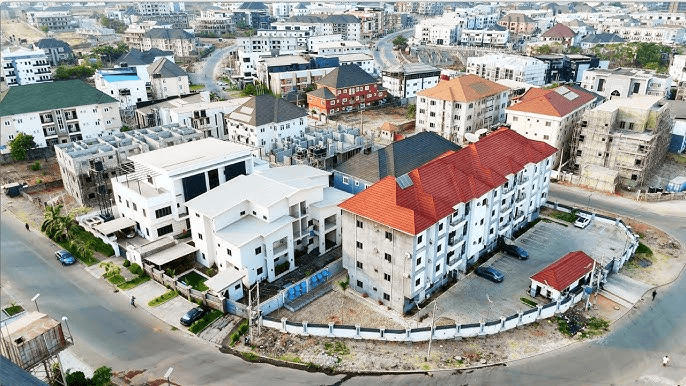
Jahi occupies a unique, transitional space in Abuja’s phase 2 urban landscape. Positioned as a mid-tier residential frontier, the neighborhood appeals to middle-class professionals and growing families who find themselves priced out of the inner-core districts like Maitama or Wuse 2 but are unwilling to commit to the long commutes associated with outer satellite towns. Its value proposition rests squarely on proximity: it promises city-center access without the crushing premiums of phase 1 real estate, offering modern, newly constructed apartments at prices that remain competitive for upwardly mobile urbanites.
However, moving to Jahi requires a clear understanding of its status as an evolving district rather than a fully finished enclave. The renter profile here consists largely of corporate employees, civil servants, and tech professionals who value modern architecture and secure estates over established neighborhood heritage. It is an area defined by contrast, where a sleek, contemporary multi-unit terrace development often sits directly across from an unpaved access road or an active construction site.
The compromise of choosing Jahi is finding an acceptable balance between immediate internal comfort and ongoing infrastructural development. While your apartment may feature top-tier contemporary finishing and smart home installations, your daily drive may involve navigating uneven terrain before reaching the main arterial roads. Security within the gated communities is typically tight, but the public spaces between these pockets remain empty at night. This guide provides an honest, comprehensive evaluation of what to expect when living, commuting, and renting in Jahi.
What Is Jahi?
Jahi is situated within the Abuja Municipal Area Council (AMAC), which is the primary administrative Local Government Area for the capital city’s core. Geographically, Jahi occupies a strategic slot in Abuja Phase 2, positioned directly northwest of the central city center. It sits bounded by several highly active neighborhoods: it shares borders with Katampe to the north and east, Mabushi to the southeast, Kado to the south, and Gwarinpa to the west. This placement creates a natural buffer zone between the dense commercial pulse of Gwarinpa and the quiet, high-income ridges of Katampe.
The district is structurally divided by major transport corridors and natural topography, generally split into Jahi District (often called Jahi 1 or the main residential zone near Next Cash and Carry) and Jahi 2, which extends further back toward the boundary lines of Katampe and the rural Jahi village enclave. Its position relative to Abuja’s transport architecture is highly advantageous. It is framed by major infrastructure lines including the Ahmadu Bello Way and the Murtala Mohammed Expressway (popularly called the Kubwa Expressway), making it an integral transit link for commuters moving between the outer northern corridors and the Central Business District.
The Neighbourhood Feel

Jahi carries the distinct atmosphere of a mid-stage development zone. Unlike the mature, tree-lined streets of Wuse 2 or the predictable suburban layout of Gwarinpa, Jahi is a landscape dominated by construction cranes, bricklaying crews, and freshly painted apartment blocks. The day-to-day ambiance is quiet but punctuated by the ambient hum of development. It lacks the intense pedestrian foot traffic and roadside commercial clutter of Abuja’s older phases, giving it a somewhat sterile, car-dependent suburban feel during the day that transitions into a highly tranquil, dark residential pocket by nightfall.
The typical resident profile is dominated by younger, upwardly mobile corporate professionals, medium-scale entrepreneurs, and families with young children who prioritize interior square footage and modern amenities over neighborhood maturity. There is also a notable population of expatriates and senior consulting professionals drawn to the newly built executive terraces. When contrasted with Gwarinpa, Jahi feels significantly less chaotic and far less congested, though it lacks Gwarinpa’s immediate walkability and rich street-level commercial presence. Compared to Utako, Jahi feels more strictly residential and less exposed to long-distance transport hubs, providing a more peaceful, if less complete, environment.
Key Streets, Zones, and Estates
The main residential corridor near the landmark Next Cash and Carry site represents the most premium and fast-maturing axis within the district. This zone features a heavy concentration of multi-family apartment blocks and serviced mini-estates. The housing stock consists primarily of contemporary 2-bedroom and 3-bedroom flats with modern fitted kitchens and smart security systems. It is highly sought after by young professionals who want immediate access to the Ahmadu Bello Way corridor, making it one of the highest-priced sectors within the entire district.
Further inward lies the Church Road axis, a long corridor that showcases Jahi’s transitional nature. Here, ultra-modern luxury terraces and standalone duplexes sit alongside older, uncompleted structures and traditional settlements. This area is heavily populated by private developers building mini-estates with uniform architectural profiles. The road infrastructure along this axis varies wildly, with some tarred stretches giving way to rough dirt tracks that become challenging during the peak of the wet season. Housing here is slightly more affordable than the Next Cash and Carry axis, appealing to larger families looking for 4-bedroom terraces.
Connect Estate and its surrounding private enclaves represent the highly organized, gated side of Jahi. These micro-neighborhoods offer structured living with uniform security guards, central waste management, and dedicated transformer systems. The properties here are almost exclusively townhouses and detached duplexes, commanding premium rent prices. This sector suits high-earning corporate managers and tech founders who demand an insulated environment where children can play within a secure perimeter, far removed from the dust and construction traffic of the open Jahi streets.
The outer northern boundary, extending toward the Katampe hills and Jahi 2, remains the most actively developing pocket. This zone contains large tracts of land under active construction, featuring massive carcass structures that will eventually become luxury estates. Accommodation options here are highly varied, ranging from newly finished studio apartments catering to single professionals to sprawling construction sites. Prices are at their lowest in this sector due to the unpaved nature of many access roads and the ongoing construction noise, making it an ideal entry point for budget-conscious renters willing to tolerate a changing environment.
Rent Prices in Jahi
Rent structures in Jahi reflect its phase 2 status, sitting comfortably below phase 1 figures while remaining significantly higher than satellite towns like Lokogoma or Lugbe. For a standard 1-bedroom apartment or mini-flat, annual rent falls within the range of N1,500,000 to N3,000,000, with prices scaling higher for fully serviced apartments or those featuring premium fitted appliances in the Next Cash and Carry axis.
Moving up to a standard 2-bedroom apartment, renters can expect a price range between N4,000,000 and N6,000,000 per annum. The variance depends heavily on estate infrastructure, security provisions, and whether the access road is tarred. For a 3-bedroom apartment or townhouse terrace, current market rates span from N7,500,000 to N12,000,000 annually. Premium, fully detached 4-bedroom or 5-bedroom duplexes within elite gated enclaves routinely cross N15,000,000 to N20,000,000 per annum.
When compared to an equivalent high-brow location like Maitama or Wuse 2, where a 3-bedroom apartment can easily command N15,000,000 to N25,000,000, Jahi offers substantial savings for similar interior luxury. Conversely, it is noticeably more expensive than more distant options like Gwagwalada or Kubwa, where similar spaces can be found for under N3,000,000. Rent payment terms are traditionally an annual lump sum paid upfront, though an increasing number of corporate developers managing serviced blocks are beginning to offer semi-annual structures to attract long-term professional tenants.
For current verified listings with real-time pricing and availability, browse apartments in Jahi on Expert Listing
Flooding: What You Need to Know
Flooding in Jahi is primarily an infrastructural issue rather than a natural riverine threat, driven by rapid concrete development that has outpaced the implementation of central public drainage networks. The primary problem zones are concentrated along the lower-lying unpaved valley tracks and specific stretches of the inner Church Road axis, where heavy seasonal rains cause water to pool deeply on the dirt roads due to inadequate runoff channels. The areas immediately bordering the natural green channels and lower elevations near the Katampe boundary are also susceptible to severe waterlogging during intense downpours.
Abuja experiences its primary rainy season from April to July, followed by a brief break, and a intense secondary peak from September to October. During these months, the clay-heavy soil profile of Jahi becomes saturated, and without wide, interconnected concrete gutters, rain water collects on access roads, making sedan navigation difficult. The sub-zones that fare significantly better are the established gated communities like Connect Estate and properties built directly along the elevated, paved paths leading out to Ahmadu Bello Way. These areas benefit from localized, developer-built drainage networks that successfully move water away from residential foundations into the larger city channels.
Expert Listing maps flood-risk signals at individual listing level so you’re working with precise data, not general impressions.
Safety and Security
Jahi maintains a respectable safety profile that aligns well with Abuja Phase 2 residential standards, presenting a far lower incidence of violent crime compared to more dense, commercialized parts of the city. Because the district is predominantly residential and car-dependent, it lacks the chaotic street assemblies that draw opportunistic petty theft. Crime patterns are mostly limited to occasional property-related burglaries targeting construction sites or isolated houses that lack adequate perimeter fencing.
The security profile changes dramatically depending on the specific living arrangement. Within the gated estates, security is highly structured, featuring 24-hour manned entry gates, visitor clearance protocols via intercom or mobile apps, and routine night patrols. On the open, un-gated public streets and developing access roads, public street lighting is largely absent, making these stretches dark and quiet after 9:00 PM. While not overtly dangerous, residents are advised to maintain standard security awareness, ensure functional private perimeter lighting, and avoid late-night pedestrian movement along unlit construction corridors.
Commute and Getting Around

Commuting from Jahi is highly efficient when moving toward Abuja’s administrative and commercial core, provided you have access to a personal vehicle or ride-hailing services.
To Wuse 2, Maitama, and Asokoro, the primary route is via the Ahmadu Bello Way or by connecting through Mabushi onto the inner ring roads. During off-peak hours, a drive to Wuse 2 takes a brief 7 to 10 minutes, while Maitama is accessible within 12 to 15 minutes. During morning peak hours (7:30 AM to 9:00 AM), congestion at the major intersections and the Mabushi interchange can extend the commute to Wuse 2 to about 20 to 25 minutes, which remains highly manageable compared to outer satellite districts.
To the Central Business District (CBD), the commute is straightforward via the Shehu Shagari Way extensions or the Murtala Mohammed Expressway, taking approximately 15 minutes off-peak and 30 minutes during heavy morning traffic. Movement to major outer hubs like Gwarinpa or Kado is incredibly rapid, often taking less than 5 to 10 minutes via internal connecting roads.
Within Jahi itself, internal public transportation is restricted. Large passenger buses (danfos) do not ply the inner residential streets. Instead, transportation relies on tricycles (kekes) operating along specific designated routes like Church Road to ferry domestic staff and residents without cars to the main road junctions. Commercial motorcycles (okadas) are officially banned from the main highways but operate discreetly within the unpaved inner sectors. For most professional residents, ride-hailing options like Uber and Bolt are the default choice, with vehicles readily available for pickup within 5 to 8 minutes across the main residential zones.
Schools

The educational infrastructure surrounding Jahi is highly developed, making the district a premier choice for families who want international standard curricula without driving long distances. The area benefits from proximity to top-tier schools that service the wider Phase 2 and Gwarinpa axes.
- International Community School — Located within easy driving reach, this institution offers a complete American curriculum from early years through high school, with a strong focus on college preparatory standards.
- Start-Rite International School — Situated nearby, this school provides a comprehensive character-based education utilizing a blend of the British and Nigerian national curricula for primary and secondary students.
- Aduvie International School — A massive, modern campus located along the Gwarinpa-Jahi border, known for its extensive extracurricular facilities, ICT-driven learning, and dual-curriculum options.
- The Fashion Academy, Abuja — A highly specialized vocational and creative institution located within Jahi that attracts adult learners and professionals seeking world-class fashion design and apparel production training.
This concentration of reputable institutions ensures that parents can choose between British, American, or Montessori instructional styles within a ten-minute radius of their front gate, significantly reducing early morning school-run stress.
Healthcare
Jahi is well-served by several advanced medical facilities located either within the district boundaries or along its immediate peripheral junctions, providing robust coverage for both standard consultations and medical emergencies.
- Nizamiye Hospital — Located just off the highway borders, this major multi-specialty hospital is renowned for its advanced medical technology, intensive care units, and comprehensive diagnostic and surgical departments.
- Cedarcrest Hospitals — Positioned within easy transit distance, this tertiary care facility is highly regarded as a premier center for orthopedics, trauma management, and specialized surgical care in Abuja.
- Jahi Clinic — A localized private medical facility operating within the district that handles everyday primary care, outpatient consultations, immunizations, and routine laboratory tests for residents.
The proximity of these institutions means that high-end emergency trauma care and specialized pediatric services are accessible within a 5 to 12-minute drive from anywhere within the Jahi residential zone, removing a major layer of anxiety for families and elderly residents.
Lifestyle, Food, and Retail
Retail activities in Jahi are anchored by its immediate proximity to major retail giants. For years, the massive Next Cash and Carry hypermarket served as the definitive shopping anchor for the entire zone, and its surrounding commercial node still dictates retail traffic, supplemented by numerous neighborhood supermarkets like H-Medix and Everyday Supermarket located just across the border lines in Gwarinpa and Kado. Scattered within Jahi itself are functional pharmacy chains, beauty salons, and small estate-based convenience stores that handle daily household provisions.
The restaurant and dining scene within Jahi is intimate and growing, characterized by upscale boutique cafes and hidden spots located inside modern apartment structures rather than massive fast-food strip malls. For a more expansive culinary experience, residents lean heavily on the neighboring Gwarinpa axis, which boasts Abuja’s highest concentration of urban lounges, shawarma spots, and open-air fish joints. Jahi’s dining options are quieter and more expensive, geared toward professional business lunches or private evening dates, completely avoiding the loud, chaotic nightlife crowds found in Wuse 2.
While Jahi does not contain a mega-mall within its immediate borders, the Jabi Lake Mall is an easy 8 to 10-minute drive away via the Kado bypass routes. This provides residents with rapid access to international retail brands, a multi-screen cinema, lakeside dining options, and a structured modern shopping environment.
For recreation and community wellness, Jahi residents utilize specialized indoor fitness centers and private gyms situated within individual luxury estates. The neighborhood feel is more focused on private indoor lifestyle comfort, though the nearby Jabi Lake park areas provide an accessible outdoor space for morning jogs, weekend green markets, and boat rides without requiring a trip into the central city core.
Utilities: Power and Water
Power supply in Jahi is managed by the Abuja Electricity Distribution Company (AEDC). The reliability of the grid varies by sub-zone, but it generally hovers around the Abuja average of 12 to 16 hours of daily supply, subject to national grid stability. Because of this variable supply, 24-hour inverter installations or automated diesel generator systems are standard requirements within all premium serviced estates. Prospective renters must expect to rely on alternative power sources to maintain consistent air conditioning and remote work setups.
Water infrastructure in Jahi is predominantly decentralized. While central FCT water lines run along the main highway corridors, the majority of residential buildings and private estates rely completely on private industrial boreholes. Water quality is generally high across the district, but developers must install functional treatment plants to handle the mineral content typical of Abuja’s underground water table. When renting here, it is absolutely essential to obtain a comprehensive breakdown of the monthly or annual service charge, as generator diesel levies and water treatment fees can add a substantial recurring cost to your base rent.
Who Jahi Is Best For
- Corporate professionals working in the Central Business District. The 15-minute commute via smooth highway corridors allows these individuals to beat the heavy traffic coming from deep satellite towns while enjoying a modern apartment.
- Young families prioritizing high-end education. With immediate access to elite international schools like Start-Rite and Aduvie, parents can ensure premium schooling for their kids without enduring stressful morning transits.
- Mid-tier professionals seeking phase 1 luxury on a phase 2 budget. This group can enjoy contemporary architectural designs, fitted kitchens, and secure estate living at a fraction of Wuse 2 or Maitama rental prices.
- Remote workers and tech professionals who need quiet environments. The serene, low-density residential nature of Jahi’s gated enclaves provides an ideal backdrop for deep work, free from commercial street noise.
What to Watch Out For

- Unpaved and dusty access roads. Many inner streets and connections to developing estates remain un-tarred, turning muddy during the heavy April to October rains and highly dusty during the harmattan season.
- Hidden costs in high estate service charges. The heavy reliance on diesel generators for backup power and private borehole maintenance can result in annual service charges that add 30% to 50% to your base rental fee.
- Lack of direct street-level walkability. The neighborhood is structurally designed for car owners, meaning stepping outside to buy minor items often requires a drive or waiting for a tricycle.
- Ongoing construction noise and dust. Living next to an open plot means bearing with the sounds of concrete mixers, stone deliveries, and workers from early morning until dusk as the district continues to build out.
Ready to Find Your Apartment in Jahi?
Every listing on Expert Listing is checked before going live. Location is mapped precisely against flood-risk data. Listings are removed the moment they’re rented or sold. No ghost listings, no wasted trips.
Browse verified apartments for rent in Jahi on Expert Listing
Frequently Asked Questions
What is Jahi known for?
Jahi is recognized across Abuja as a fast-developing residential hub that bridges the gap between premium luxury living and middle-class affordability. It is celebrated for its strategic location right next to Gwarinpa and behind the landmark Next Cash and Carry site, making it a hotspot for modern, newly constructed terrace estates. It is known for its quiet, serene environment that appeals to professionals who want quick access to the city center without paying the extreme rental premiums found in Phase 1 districts.
How much is rent in Jahi in 2026?
In 2026, rent prices in Jahi depend significantly on the property type and estate facilities. A standard 1-bedroom apartment ranges from N1,500,000 to N3,000,000, while a modern 2-bedroom flat costs between N4,000,000 and N6,000,000 annually. Larger 3-bedroom apartments or contemporary townhouses command between N7,500,000 and N12,000,000, with luxury duplexes in highly secure gated environments exceeding N15,000,000 per annum.
Is Jahi a safe place to live in Abuja?
Yes, Jahi is considered a very safe and secure residential neighborhood by Abuja standards. The low amount of commercial foot traffic minimizes opportunistic street crimes, and the prevalence of gated estates with private guards provides an excellent security layer. However, because public street lighting is still underdeveloped on the newer inner roads, residents should practice basic caution when moving around late at night.
What phase is Jahi in Abuja?
Jahi is officially classified under Phase 2 of the Abuja Federal Capital Territory master plan. This positioning means it benefits from modern urban design standards and sits just outside the older, fully completed Phase 1 core. Its status as a Phase 2 district means it offers newer housing stock and modern architecture, though some inner infrastructure is still being actively developed.
Are there good schools and hospitals in Jahi?
Jahi boasts excellent proximity to some of the finest educational and medical institutions in the capital. Families have direct access to top-rated options like the International Community School and Start-Rite International School. For medical care, residents are located just minutes away from world-class private tertiary facilities including Nizamiye Hospital and Cedarcrest Hospital, ensuring premium options for both daily lifestyle needs and emergency situations.