Nyanya, Abuja: Area Guide
Expert Listing
·
·
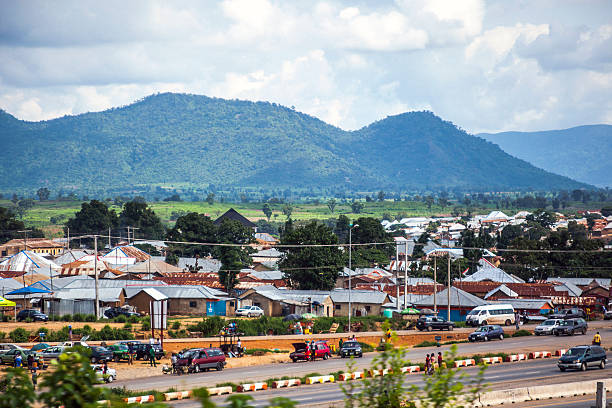
Nyanya occupies an interesting position in Abuja’s residential map. Technically, it sits within the Abuja Municipal Area Council, but it borders Nasarawa State and connects the FCT to Keffi. It is the kind of area where civil servants, teachers, traders, and working families have built stable lives for decades.
The Abuja-Keffi Expressway runs directly through Nyanya, and this is both the neighbourhood’s most important practical asset and its defining geographic feature. The CBD is 15 to 25 minutes away under normal conditions. Karu, Maraba, and the broader Nasarawa corridor are minutes in the other direction. Markets are active. Transport links are frequent. And the rents, relative to what the location delivers in terms of commute access, represent some of the most affordable options available to professionals working in central Abuja.
The trade-offs are real as infrastructure varies significantly between the better-managed zones and the open streets. The Nyanya Market area brings commercial congestion that residents on adjacent streets feel daily. The entire area is worth understanding before making it a residential choice. This guide covers all of it.
What Is Nyanya?

Nyanya is a suburban district in the Abuja Municipal Area Council. It is an area that connects nearby Nasarawa State to the Federal Capital Territory. While it is in Nasarawa State in some descriptions, it is generally considered as part of the Abuja metropolis, and is fast growing as a residential area for low- and medium-income earners.
Nyanya is a popular area in Phase 2 of Abuja. It is divided into five zones, A through E.
The Abuja-Keffi Expressway is the primary road serving the district, running through the area and connecting it to the Central Business District in one direction and Karu, Mararaba, and Nasarawa State in the other. The Nyanya Motor Park — one of the major transport hubs in this part of Abuja is a key landmark and transit point for residents and commuters across the corridor.
Because of its multicultural neighbourhoods, English is most commonly spoken, although Hausa is also spoken in the area.
The Neighborhood Feel
The residents in Nyanya mostly consist of middle and lower-level federal civil servants, artisans, and traders, and this defines what the neighbourhood feels like. Zone A and the areas along the Karu Road extensions tend to be more organised, with more consistent building standards and better-managed residential streets. The zones closer to the market and motor park carry more commercial activity and the associated noise and congestion. Understanding which end of the zone spectrum a property sits on is the most important single piece of information for prospective residents.
Nyanya is known for its popular weekly market, which sells affordable and cheap items, giving residents quality goods at affordable prices. The market is a genuine community asset for provisioning and social commerce, but its surroundings during market days carry significant congestion that residents on nearby streets experience directly.
Location and Accessibility
Nyanya’s commute profile is one of its most important practical arguments, and it holds up well against addresses at similar or higher price points.
To the Central Business District: 15 to 25 minutes under normal traffic conditions via the Abuja-Keffi Expressway. For civil servants and professionals whose offices are in the CBD, Garki, or Wuse, this is a commute that compares favourably with many Mainland addresses that cost more.
To Karu and Mararaba: 5 to 15 minutes. The Karu-Mararaba corridor is Nyanya’s immediate eastern neighbour and shares much of its commercial and transport infrastructure.
To Wuse and Utako: 20 to 30 minutes, opening the commercial and retail corridor of inner Abuja.
To the Airport: Approximately 40 to 55 minutes via the expressway network. Nyanya is not an airport-proximate address, and frequent travellers should factor this distance in.
To Maitama and Asokoro: 25 to 40 minutes, depending on traffic and route.
Public transport is one of Nyanya’s genuine strengths. The Nyanya Motor Park is a major transit hub with frequent departures to all parts of Abuja and beyond. Minibuses, taxis, and ride-hailing apps cover the district consistently. For residents without a personal vehicle, Nyanya’s transport links make daily movement across the city more manageable than in outer Abuja districts that depend primarily on private cars.
Key Streets, Zones, and Estates
Nyanya is divided into five zones, A through E. In Nyanya’s more established zones, like Zone A and parts of the Karu Road extensions, gated estates often offer 2 to 4-bedroom units with private parking and perimeter fencing. Semi-detached houses are popular among civil servants and growing families, usually offering 2 to 3 bedrooms with boreholes, solar lighting, and privacy. Terraced homes are mostly popular among first-time owners, coming in 2 to 3 bedrooms and mostly found in areas close to the market. There are 3-bedroom units of flats and apartments in Nyanya, most of which come with borehole water and in some houses a standby generator.
Zone A is generally regarded as the most established and better-organised part of Nyanya, with more consistent building standards and a more residential character than the zones closer to the market and motor park.
The market and motor park surroundings carry the highest commercial density and the associated noise, traffic, and congestion. Properties immediately adjacent to these areas provide maximum access to daily commerce at the cost of residential quiet.
New Nyanya Layout is a distinct sub-area within the broader Nyanya address, with its own residential character and amenity profile.
Rent Prices in Nyanya
Nyanya is one of the most affordable residential addresses accessible to central Abuja, reflecting both its infrastructure profile and its position as a Phase 2 district.
| Property Type | Annual Rent Range |
| Self-Contain / Studio | N250,000 – N600,000 |
| 1-Bedroom Flat | N400,000 – N1M |
| 2-Bedroom Flat | N700,000 – N1.8M |
| 3-Bedroom Flat | N1.2M – N3M |
| 3-Bedroom Semi-Detached | N1.5M – N3.5M |
| 4-Bedroom Detached | N2.5M – N5M |
Beyond headline rent, factor in caution deposit, agency and legal fees (typically 15 to 20 percent of annual rent), and service charges where applicable. Confirm generator arrangements and water supply specifics before signing any lease.
Flooding and Drainage
Parts of Nyanya experience flooding during Abuja’s rainy season, which runs from April to October with the heaviest rainfall in July and August. Low-lying sections and streets with older drainage infrastructure are the most vulnerable. The newer estate sections and Zone A properties generally manage drainage better than the older open-street compounds.
Before committing to any property, visiting during or after heavy rain and speaking with current residents about the specific street’s drainage history is the most reliable way to assess risk.
Safety and Security

Nyanya’s security profile reflects its mixed character. In the gated estate sections, controlled access and compound security provide a managed environment. On the open streets, the security arrangement is more variable with community vigilance, neighbourhood familiarity, and the general informal security that comes from a long-established, populated residential area.
The commercial activities around the market and motor park create more opportunistic crime risk than the quieter residential zones. Residents on open streets, particularly near commercial hubs, benefit from the standard precautions: secured gates, locked vehicles, and awareness after dark.
Schools
Notable private schools within and around Nyanya include:
- Fountain of Wisdom Academy – Offers nursery, primary, and secondary education with a focus on structured learning and moral development.
- The Great Height Academy – A growing private school known for serving families within the district seeking a more organised learning environment.
- Solid Foundation Academy – Provides nursery and primary education with emphasis on foundational academics and child development.
- Destiny Kids College – Offers both primary and secondary education within the Nyanya axis.
- Royal Ambassadors Private School – A community-focused private school catering to families within the area.
One thing many parents notice quickly is that school quality in Nyanya can differ significantly from one street to another. Some schools operate with modern facilities and stronger academic structure, while others remain more basic in setup. Because of this, many residents prefer to:
- Visit schools physically before enrolling
- Speak with other parents in the neighbourhood
- Review class sizes and teaching structure firsthand
Healthcare
Nyanya General Hospital is the district’s primary government hospital, a government-owned hospital that provides essential medical services to the residents of Nyanya. The hospital offers general medicine, pediatrics, obstetrics and gynaecology, and emergency care. It plays a vital role in providing accessible healthcare services to the local community. The hospital is located on LEA Primary School Road, Area B, opposite the Custom Quarters.
Saffron Medical Centre is a private facility located at Plot MF 114 and 115, 1km off the checkpoint in Nyanya. It hosts the Davik Eye Clinic Nyanya branch within its premises, adding a specialist ophthalmology service to its general medical offering. It represents the kind of private clinic that fills the gap between the general hospital and the inner Abuja hospital network for Nyanya residents who need organised, reliable private care.
Bismol Hospital is located in the New Nyanya Layout and provides general medical services for residents in that sub-area of the district.
Food, Lifestyle, and Retail
Nyanya Market is a major market serving the daily provisioning needs of Nyanya and the surrounding Karu-Mararaba corridor. Fresh produce, proteins, household essentials, clothing, and everyday items are available at prices that reflect the market’s role as a working-class provisioning hub. The market draws buyers from across the city, which means it is busy and well-stocked, and which also means the surrounding streets carry significant congestion on market days.
Several smaller supermarkets, provisions stores, and daily shopping options are distributed across the zones, covering everyday needs without requiring a trip to the main market or a drive to inner Abuja.
The dining scene within Nyanya is anchored by local food joints and buka-style restaurants serving Nigerian meals throughout the day. These are the most affordable and most consistently available eating options for the district’s working population. Fast food chains and sit-down restaurants are not yet established within Nyanya, and residents who want that level of dining variety typically drive to Wuse or Garki.
Utilities: Power and Water
Power supply in Nyanya follows the standard Abuja pattern for outer districts, available from the public grid but inconsistent enough that generator or inverter backup is a daily practical necessity for most residents. The managed estate sections tend to have more organised backup infrastructure than open-street buildings.
Water supply in most residential properties comes from boreholes. Popular amenities within houses in Nyanya include boreholes and solar lighting. In older buildings without borehole infrastructure, water vendors are the fallback. Confirm the specific water arrangement for any property before signing.
Internet and mobile data coverage is adequate across the district for remote work, with the major networks providing consistent coverage.
Who does Nyanya Works Best For
Civil servants and government workers whose offices are in the CBD, Garki, or Wuse. Many civil servants live in Nyanya because it is affordable and close to the city centre. The 15 to 25-minute CBD commute at Nyanya’s price point is difficult to match elsewhere in Abuja.
Working families on moderate budgets who need space, school access, and daily provisioning without paying inner-city prices. The combination of affordable rent, the market’s provisioning infrastructure, and the transport links makes Nyanya one of the more complete budget-friendly residential addresses in the FCT.
Traders and business owners whose commercial activity connects to the Nyanya-Karu-Mararaba corridor and the Abuja-Keffi Expressway route. The transport links and market infrastructure are direct practical assets for this profile.
First-time Abuja residents who want a manageable commute to central Abuja at the most accessible price points the city offers. Nyanya provides this more consistently than the more remote outer districts.
Nyanya is not the right address for residents who want a fully managed estate environment with contemporary infrastructure throughout. It is not the right choice for residents who need specialist healthcare immediately on their doorstep. And it is not suitable for residents whose social and professional lives depend on proximity to the lifestyle infrastructure of inner Abuja.
What to Watch Out For
Public hospital limitations. The Nyanya General Hospital’s operational challenges are documented. For anything beyond routine consultation, having a plan that routes to private facilities or the inner Abuja hospital network is practical rather than precautionary.
Commercial congestion near the market and motor park. The Nyanya Market and motor park bring significant vehicle and foot traffic to their surrounding streets. Properties in these immediate surroundings experience this daily. Visit the specific street at different times before committing.
Zone and street variation. The five zones of Nyanya are not equal in infrastructure quality, security, or residential character. Ask specifically which zone a property is in and visit before committing. Zone A and the gated estate sections consistently deliver a different experience from the open streets in other zones.
Flooding on specific streets. Low-lying sections flood during the rainy season. Visit after rain and ask current residents before committing to any property.
Move-in costs beyond headline rent. Agency and legal fees in Nyanya typically run 15 to 20 percent of annual rent plus a caution deposit. On a N1.5 million annual rent, total move-in costs reach N2 million to N2.3 million before furniture or setup.
Frequently Asked Questions
Which LGA is Nyanya in? Nyanya is in the Abuja Municipal Area Council (AMAC), Federal Capital Territory.
How far is Nyanya from the CBD? 15 to 25 minutes by road under normal traffic conditions via the Abuja-Keffi Expressway.
How much is rent in Nyanya? A self-contained unit starts from N250,000 per year. A 2-bedroom flat ranges from N700,000 to N1.8 million. A 3-bedroom flat runs N1.2 million to N3 million annually. Open-street older buildings sit toward the lower end of each range; gated estate sections and newer compounds sit toward the upper end.
Is Nyanya safe? The gated estate sections and better-managed zones have reasonable security. Open streets, particularly near the market and motor park, carry more activity and require standard urban precautions, especially after dark. Security is variable by zone and street rather than uniform across the district.
Does Nyanya flood? In specific low-lying sections, yes. Flooding during the April to October rainy season affects some streets more than others. Verify at the specific property level before committing.
What zones are in Nyanya? Nyanya is divided into five zones: A, B, C, D, and E. Zone A is generally the most established and best-regarded for residential quality. Properties in different zones vary meaningfully in infrastructure, building standards, and daily living experience.
How is the transport from Nyanya? The Nyanya Motor Park is one of the major transit hubs in this part of Abuja. Minibuses, taxis, and ride-hailing apps provide frequent connections to all parts of the city. For residents without personal vehicles, Nyanya’s transport links are among the strongest available in outer Abuja at its price point.