Mile 12, Lagos: The Complete Area Guide
Expert Listing
·
·
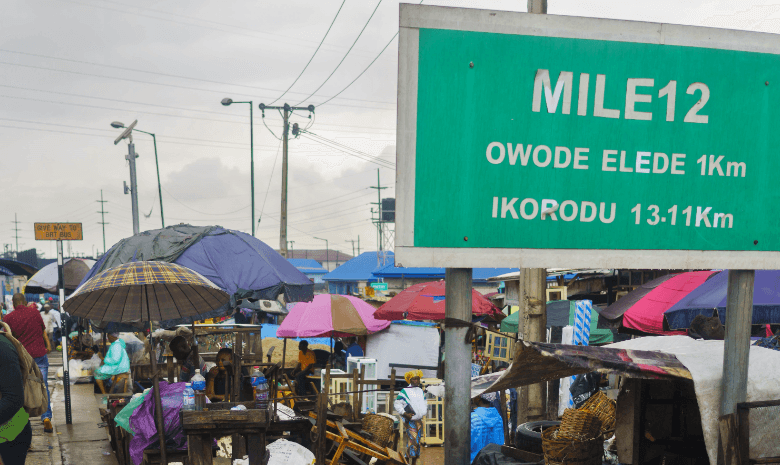
Mile 12 sits at a unique intersection of Lagos life, functioning as one of the most critical logistical hubs on the Mainland while serving as a high-density residential zone for the city’s working class.
It is respected by those who value extreme proximity to the city’s primary food supply chain and the strategic transport corridors that link Lagos to the Nigerian hinterland.
In practical terms, it delivers a lower cost of living regarding food and basic commodities, paired with a central position on the Ikorodu Road axis that many newer, more expensive suburbs cannot match.
The area is one of the most complete ecosystems for traders, transport workers, and low-to-middle-income professionals who require access to the heart of the Lagos Mainland.
Its infrastructure is defined by its maturity, featuring a massive, recently remodelled market complex, a major BRT terminal, and a network of residential streets that have remained occupied for decades.
It is a compelling address for those who prioritise functional utility and commercial energy over the quiet, manicured aesthetics of the city’s private estates.
Living in Mile 12 requires a willingness to navigate high human density, significant noise levels, and the persistent logistical friction of a neighbourhood that never sleeps.
The proximity to the market brings both convenience and a unique set of sanitation and traffic challenges that are unavoidable for any resident. This guide covers all of it honestly.
What Is Mile 12?
Mile 12 is a prominent residential and commercial district located within the Kosofe Local Government Area of Lagos State. Geographically, it is situated along the Ikorodu Road, acting as a gateway between the central Lagos Mainland and the rapidly expanding Ikorodu suburb.

Its position is strategic, bounded by Ketu to the south and the Owode Onirin axis to the north.
It is famously bisected by the Lagos-Ikorodu Expressway, which serves as its primary circulatory artery, connecting residents to the Third Mainland Bridge via the Alapere-Ogudu interchange.
The area is primarily known for the Mile 12 International Market, the largest perishable food market in West Africa, which dictates the functional role of the entire neighbourhood.
While it is a major transport and commercial node, it contains significant residential pockets that house thousands of Lagosians.
Administratively, the area is divided into several internal zones, including the Mile 12 Under-bridge area, the residential streets bordering the market, and more structured sections like the Ajelogo and Agboyi-Ketu borders.
The Neighbourhood Feel
The atmosphere of Mile 12 is defined by an unrelenting, high-velocity pace. It is a neighbourhood that feels deeply established, characterised by old-growth Lagos energy where commerce and domestic life are inextricably linked.
For a first-time visitor, the sensory input is immense: the sound of heavy-duty trucks moving produce, the rhythmic calls of traders, and the constant flow of commuters at the BRT terminal.
It does not possess the suburban quiet found in parts of Magodo or Gbagada, but it offers a vitality that appeals to those who want to be at the centre of the action.
The resident profile is diverse but leans heavily toward the entrepreneurial class, civil servants, and young professionals who are just beginning their careers and need a budget-friendly launchpad.
There is a strong sense of community, particularly among the long-term residents of the older tenement buildings and bungalows.
Compared to areas at a similar price point, such as parts of Okokomaiko or Agege, Mile 12 feels more interconnected to the rest of Lagos due to its superior transport infrastructure. It is a place for the resilient and the pragmatic, rather than those seeking a secluded retreat.
Key Streets, Zones, and Estates
The Ajelogo area serves as one of the more residential and slightly organised segments of Mile 12. It sits further back from the immediate chaos of the market, offering a mix of older, storied buildings and newer, renovated apartments. The housing stock here is varied, attracting small families who want to remain in Mile 12 for the low cost of goods while gaining a small measure of distance from the market’s noise. It is considered a mid-range zone within the neighbourhood’s internal price hierarchy.

Doyin Omololu Street and its surrounding grid represent the heart of the inner Mile 12 residential corridor. This area is characterised by high-density housing and close-knit living arrangements. The streets are often narrow and bustling with local commerce, from small kiosks to independent tailors. It is the preferred zone for those whose livelihoods are directly tied to the Mile 12 market or the transport sector, offering unparalleled walking access to the main commercial hubs.
The Orisigun area is another significant zone that borders the market district. It contains a high concentration of traditional Lagos-style face-me-I-face-you apartments alongside modern self-contained units. The character here is intensely commercial, with many ground-floor spaces converted into shops or storage for market dry goods. It is a high-traffic zone that suits individuals who prioritise low rent and immediate access to the BRT corridor over privacy and quiet.
While Mile 12 is not known for sprawling luxury estates, the Unity Estate and adjacent gated pockets provide a more controlled environment. These areas feature higher fences, manned gates, and a more uniform housing stock consisting of bungalows and blocks of flats.
These zones are the most expensive within the Mile 12 enclave and are typically occupied by senior traders or professionals who work in Ikeja but prefer the lower cost of living in Kosofe. They offer a rare sense of perimeter security in an otherwise porous and open neighbourhood.
Rent Prices in Mile 12
Mile 12 occupies a specific niche in the Lagos rental market, positioned as a more affordable alternative to the nearby Ketu and Ojota districts, while generally being more expensive than the far-flung outskirts of Ikorodu.
It is the middle ground for those who want to stay close to the city centre without paying the premium prices associated with Gbagada or Maryland.
In 2026, the annual rent ranges are as follows:
- 1-bedroom apartment (Mini-flat): ₦450,000 to ₦800,000
- 2-bedroom apartment: ₦750,000 to ₦1,300,000
- 3-bedroom apartment: ₦1,200,000 to ₦2,000,000
The lower end of these 2026 figures typically represents older buildings in high-density streets like Orisigun or those closer to the market periphery, where noise is a constant factor.
The higher end of the range is found in the gated estates or newly constructed “modern” flats in the Ajelogo axis, which often feature tiled floors, en-suite rooms, and better security features.
Property age and the presence of dedicated pumping machines or prepaid meters are the primary drivers of price variations in this area.
Standard rental terms in Mile 12 usually require a one-year upfront payment for existing tenants, though new residents are frequently asked for a two-year initial payment by traditional landlords.
In newer developments, some institutional landlords are beginning to offer one-year cycles to attract younger professionals. For current verified listings with real-time pricing and availability, browse apartments in Mile 12 on Expert Listing.
Flooding: What You Need to Know
Flooding is a significant and genuine concern in several parts of Mile 12, primarily due to its proximity to the Ogun River and the low-lying nature of the terrain near the Agboyi Creek.
During peak rainfall, certain sections experience waterlogging that can impede both pedestrian and vehicular movement. It is not an area where drainage issues can be ignored when selecting a specific property.
The specific zones most vulnerable to flooding include the lower sections of Ajelogo and the streets directly adjacent to the riverbanks.
During the Lagos rainy season windows, which typically runs from April to July and again from September to October, these areas can face flash flooding after heavy downpours. The primary cause is a combination of blocked tertiary drains and the backflow from the river when the Oyan Dam is released or when high tides prevent the natural drainage of the Lagos lagoon system.
Parts of Mile 12 that sit on slightly higher ground, such as the areas closer to the main Ikorodu Road and the established Unity Estate, tend to fare much better. These sections benefit from being further away from the water bodies and having more direct access to the primary drainage channels maintained by the state government.

However, even in these better-off zones, localised flooding can occur if the immediate street gutters are not regularly cleared of plastic waste from the market.
As with every Lagos address, flood-risk verification at the specific listing level is essential. Neighbourhood reputation, even a well-earned one, is not a reliable proxy for a specific street’s drainage profile.
Expert Listing maps flood-risk signals at the individual listing level so you are working with precise data, not general impressions.
Safety and Security
The security profile of Mile 12 is average by Lagos Mainland standards, requiring a high level of situational awareness. Its reputation is heavily influenced by the presence of the international market, which draws thousands of strangers into the area daily.
While this commercial activity is the neighbourhood’s lifeblood, it also creates an environment where petty theft and pickpocketing can occur, especially in high-density zones like the Under-bridge and the main bus stops.
Within the residential enclaves, security is more manageable. The gated estates mentioned earlier maintain their own private security guards and restricted access points, which significantly lowers the risk of residential burglary.
In the more open streets, residents often rely on informal community policing or street-level security committees that employ night watchmen.
Most managed compounds in the area now insist on 24-hour guard presence and improved perimeter lighting as standard features for their tenants.
The commercial strips along Ikorodu Road are active late into the night, which provides a level of “security by numbers,” but residents are generally advised to avoid walking in unlit or isolated sections after 10:00 PM.
Like many parts of Kosofe, Mile 12 has seen a move toward more organised security in recent years, but it remains a place where “street smarts” are an essential part of daily life. Standard Lagos precautions, such as ensuring gates are locked by a certain hour and being mindful of personal belongings in transit, apply here as they do elsewhere.
Commute and Getting Around
The commute profile of Mile 12 is perhaps its strongest selling point for some and its greatest deterrent for others. Being located directly on the Ikorodu Road axis means residents have a straight, albeit often congested, shot into the heart of the city.
- To Lagos Island: via Ikorodu Road and the Third Mainland Bridge – 35 minutes in light traffic, 90 to 120 minutes during peak hour.
- To Victoria Island: via Ikorodu Road and the Third Mainland Bridge – 45 minutes in light traffic, 120+ minutes during peak hour.
- To Ikeja / Mainland commercial hubs: via Mobolaji Bank Anthony Way or Kudirat Abiola Way; 25 minutes in light traffic, 60 minutes during peak hour.
Internal movement within Mile 12 is dominated by Keke NAPEP and Danfo buses, which ferry residents from the inner streets to the main highway.
The road quality within the residential zones varies significantly, with some paved streets and others remaining as graded earth roads that can become difficult during the rainy season.
Uber and Bolt availability is generally good, though drivers may sometimes be hesitant to enter the deeper, more congested parts of the market district during peak hours.
A major advantage for residents is the Mile 12 BRT Terminal. This provides a structured and relatively faster way to commute to CMS or Ikorodu, bypassing much of the unregulated bus chaos.
Additionally, the proximity to the Lagos Ferry Services (LAGFERRY) terminals in nearby Ikorodu or Ajegunle-Ketu offers a potential water-based alternative for those looking to reach the Island while avoiding the Ikorodu Road traffic altogether.

Schools
The school infrastructure in Mile 12 is sufficient for families who require accessible, mid-range private education. While it may not house the elite international schools found in Lekki or Ikeja, it offers a solid selection of long-standing institutions that serve the local professional and trading classes. The area is particularly strong for nursery and primary education, with several secondary options available within a short commute.
- Grace Schools – Located a short distance away in Gbagada, this is a top-tier choice for Mile 12 residents who want high-standard primary and secondary education for their children.
- Supreme Education Foundation Schools – A well-regarded private institution providing comprehensive nursery, primary, and secondary schooling options near the Magodo-Ketu axis.
- Monef Schools – A local primary and secondary school known for serving the Mile 12 and Ketu communities with a focus on academic discipline.
The area also benefits from its proximity to the educational cluster in Yaba and Akoka, making it a viable residential location for staff or students of the University of Lagos who are looking for more affordable housing outside the immediate campus environment.

Healthcare
Healthcare in Mile 12 is characterised by a high number of private clinics and maternity homes that cater to the dense population. While it lacks a massive multi-specialist hospital within its immediate internal streets, it is located within a 15-minute radius of some of the Mainland’s most significant medical facilities.
- Lagos State University Teaching Hospital (LASUTH) – Located in nearby Ikeja, this is the primary public tertiary healthcare provider for the region, offering specialist care across all major disciplines.
- Kosofe General Hospital – The nearest government-run facility for residents, providing affordable routine care and emergency services.
- St. Raphael’s Divine Mercy Specialist Hospital – A prominent private hospital in the Ijede-Ikorodu axis that many Mile 12 residents use for more specialised medical needs.
- Pabod Clinic – A long-standing private facility within the Mile 12/Ketu area that provides general practice and maternity services.
The area is specifically strong for routine care and quick access to pharmacies, which are plentiful around the market and major residential streets.
For major emergencies or specialised surgeries, residents typically head toward Ikeja or the private hospitals in Gbagada.
Lifestyle, Food, and Retail
Retail in Mile 12 is dominated by the Mile 12 International Market, which means residents have access to the freshest and cheapest produce in Lagos. Beyond the market, everyday shopping is handled by numerous supermarkets like Hubmart in nearby Ikeja or smaller local outlets like De-Prince Supermarket on the Ikorodu Road.
For household essentials and groceries, there is almost no need to leave the neighbourhood, as the density of shops ensures that every street has multiple options for daily needs.
The restaurant and food scene in Mile 12 is largely informal but incredibly vibrant. It is the home of authentic Lagos “buka” dining, where one can find high-quality local dishes at a fraction of the price found in more affluent areas. While there are fewer fine-dining establishments, several fast-food anchors like Mr Bigg’s and Chicken Republic are situated along the Ikorodu Road corridor. The dining scene is still developing in terms of modern cafes or international cuisine, which are more easily found in nearby Magodo or Ikeja.
For a full mall experience, residents typically head to the Ikeja City Mall, which is approximately 8 to 10 kilometres away, depending on the specific starting point in Mile 12. This mall covers all categories of shopping, from international fashion brands to cinema entertainment and a large Shoprite. The proximity to Ikeja means that Mile 12 residents are never more than a short drive away from a premium retail and entertainment hub.
Community and recreation in Mile 12 are centred around religious institutions and local social clubs. There are several large churches and mosques that serve as the primary social fabric for residents. While green spaces and public parks are limited within the immediate neighbourhood, many residents utilise the private gyms and fitness centres that have cropped up in the Ajelogo area. The social life is grounded and community-focused, reflecting the hardworking nature of the people who call this area home.

Utilities: Power and Water
The Ikeja Electric Distribution Company (IKEDC) provides power to Mile 12. The supply frequency is generally considered average for the Lagos Mainland, with some residential pockets benefiting from being on commercial-priority feeders due to the nearby market infrastructure.
However, power outages remain a reality, and the “national grid” experience is consistent with the rest of the city.
Most modern apartment blocks and houses in the gated estates rely on generator backup. In well-run buildings, generator management is handled through a central system where residents contribute to diesel costs. In more traditional tenement settings, “I-pass-my-neighbour” generators are common, contributing to the evening noise levels in the neighbourhood.
Prepaid meters are increasingly common in the area, allowing residents to manage their consumption more effectively.
Water supply in Mile 12 is almost entirely dependent on private boreholes. Each house or apartment complex typically has its own borehole system and overhead tanks. While the public mains exist in some older parts of the neighbourhood, they are rarely the primary source of water. The quality of the borehole water is generally good, but residents are advised to use treatment systems for drinking water, as is standard practice across Lagos.
Service charges in Mile 12 can be a point of contention if not clarified upfront. In newer flats or gated estates, these charges cover waste management (via LAWMA or private collectors), security, and the cleaning of common areas. It is important to note that the headline rent is not the total monthly cost; one must factor in these levies and electricity bills. Get the full monthly cost picture, not just headline rent – before signing.
Who Mile 12 Is Best For
Traders and wholesalers at the International Market
The area is the logical choice for those whose business revolves around the food supply chain. Living in Mile 12 eliminates the gruelling commute many traders face and allows them to be on-site during the critical early morning hours when goods arrive from the north.
Early-career professionals working in Ikeja
For those who work in the state capital but cannot yet afford the high rents of Ikeja or Magodo, Mile 12 offers a practical alternative. The commute to Alausa or Allen Avenue is relatively short, and the savings on rent and food are significant for those building their savings.
Families prioritising low cost of living
Mile 12 is ideal for families who need to maximise their disposable income. The proximity to the market significantly reduces the monthly grocery bill, and the availability of numerous mid-range private schools makes it a functional environment for raising children on a budget.
Commuters using the BRT corridor
Individuals who prefer public transport over driving will find Mile 12 to be one of the best-connected hubs in Lagos. The presence of the BRT terminal ensures a structured commute to the Island or other parts of the Mainland, making it a strategic base for those without private vehicles.
What to Watch Out For
The Agboyi-Ketu flood risk
Prospective renters must be extremely cautious about properties located close to the Agboyi Creek or the lower parts of Ajelogo. These areas are prone to seasonal flooding that can rise high enough to enter ground-floor apartments, often requiring residents to relocate temporarily during peak rains.
Peak-hour gridlock at the Mile 12 bridge
While the area is central, the bottleneck at the Mile 12 bridge can be legendary. Traffic coming from Ikorodu often merges with market-bound trucks, creating a standstill that can add an hour to even the shortest trip. You must time your movements carefully to avoid being trapped in this localised congestion.
Market-related noise and sanitation
The proximity to the international market means that noise from trucks and traders is a 24-hour reality in some streets. Additionally, the high volume of organic waste generated by the market can lead to sanitation challenges if the local government’s cleanup efforts fall behind, particularly during the wet season.
High human and vehicular density
Mile 12 is not for those who suffer from claustrophobia. The streets are crowded, parking is often a luxury, and the sheer number of people in the commercial zones can be overwhelming. If you require wide, empty streets and absolute silence, this neighbourhood will likely not suit your lifestyle.
Service charge transparency in new builds
As more “modern” apartments are built in Mile 12, some landlords are introducing complex service charge structures. Always ask for a breakdown of what the “extra” fees cover, especially regarding security and water maintenance, to avoid unexpected monthly costs that significantly inflate your living expenses.
Ready to Find Your Apartment in Mile 12?
Every listing on Expert Listing is checked before going live. Location is mapped precisely against flood-risk data. Listings are removed the moment they are rented or sold, no ghost listings, no wasted trips.
Browse verified apartments for rent in Mile 12 on Expert Listing.
Frequently Asked Questions
Is Mile 12 a good place to live?
Mile 12 is a practical and highly functional neighborhood for individuals who prioritize affordability and transport connectivity. It is particularly good for those whose business is tied to the market or those who work on the Mainland and want to keep their living costs low. While it is noisy and dense, it offers a strong sense of community and unmatched access to affordable food and commodities.
How much is rent in Mile 12 in 2026?
Rent in Mile 12 for 2026 varies by property type and specific location. A standard 1-bedroom mini-flat ranges between ₦450,000 and ₦800,000 per annum. For larger 3-bedroom apartments, prices typically fall between ₦1,200,000 and ₦2,000,000, with the higher end found in gated estates or newly built developments.
How far is Mile 12 from Ikeja?
Mile 12 is approximately 8 to 10 kilometers away from Ikeja, the heart of the Lagos Mainland. In light traffic, the drive takes about 25 minutes. However, during peak morning hours, the commute can extend to 60 minutes or more due to congestion along the Ikorodu Road and the approaches to Mobolaji Bank Anthony Way.
Does Mile 12 flood?
Yes, certain parts of Mile 12 are prone to flooding, especially those located near the riverbanks and low-lying sections of Ajelogo. The flooding is most common during the peak rainy months of June, July, and September. However, areas closer to the main Ikorodu Road and those in established, higher-ground estates tend to remain dry.
Is Mile 12 on the Island or Mainland?
Mile 12 is firmly located on the Lagos Mainland. It is part of the Kosofe Local Government Area and sits along the primary corridor that connects central Lagos to the Ikorodu suburb. While it is a Mainland address, its proximity to the Third Mainland Bridge makes it relatively accessible for those who need to commute to the Island.