Oworonshoki, Lagos: Area Guide
Expert Listing
·
·
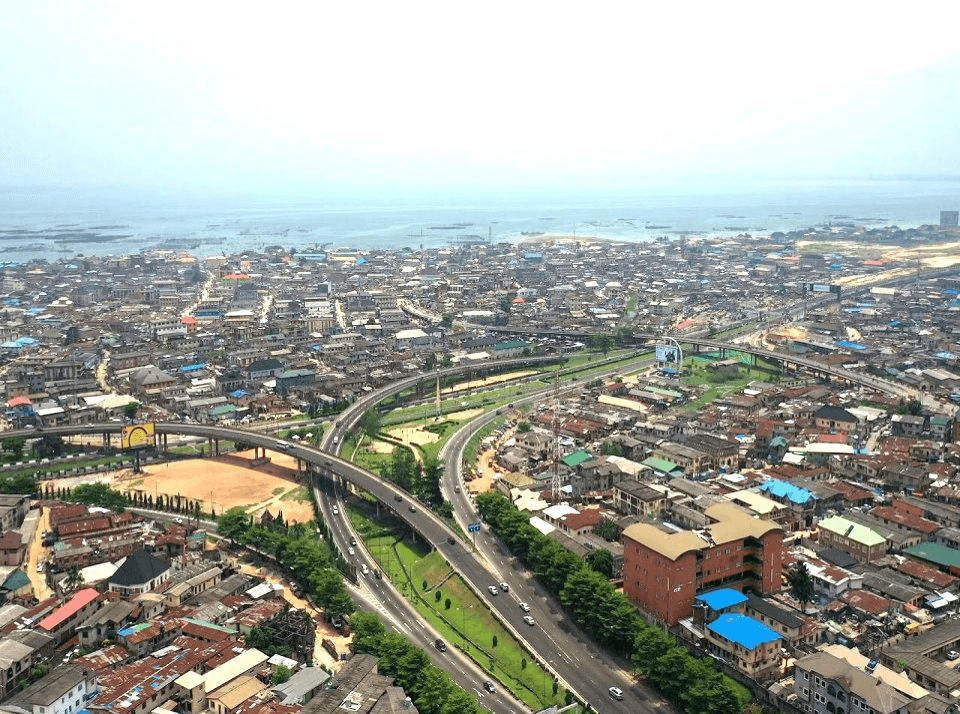
Oworonshoki occupies a unique and often underestimated position in the Lagos real estate market. Respected by pragmatic professionals for its unmatched logistical advantages, it serves as the ultimate “bridge” community between the Lagos Mainland and the Island.
While it may lack the polished prestige of Ikoyi or the sprawling suburban quiet of parts of Magodo, it delivers a level of connectivity that few other neighbourhoods can match at this price point.
It is a territory defined by its function as a transit powerhouse, offering a middle-ground solution for those who work in the corporate hubs of Victoria Island but prefer the relative affordability and cultural energy of the Mainland.
The neighbourhood has transitioned from a primarily low-income coastal settlement into a diverse, infrastructure-heavy residential hub.
This evolution is driven by its proximity to the Third Mainland Bridge, which has made it a strategic choice for housing developers and young families. The maturity of the area is evident in its dense network of inner roads and the increasing number of modern multi-storey apartment blocks that are replacing older, single-family structures.
It offers a functional, high-energy environment where the commercial pulse of Lagos is felt at every street corner, supported by a growing ecosystem of retail outlets and service providers.
Choosing Oworonshoki requires a clear-eyed assessment of its complexities. The rapid urbanization has put significant pressure on local drainage systems, and the area’s proximity to the lagoon brings specific environmental considerations that vary street by street.
Traffic congestion at the main entry points can be intense during peak periods, and the density of the area means that quiet, secluded pockets are a rarity.
Prospective residents must weigh the incredible time-savings on their commute against the bustling, high-density nature of the community.
This guide covers all of it honestly.

What Is Oworonshoki?
Oworonshoki is a major residential and transport node located within the Kosofe Local Government Area of Lagos State. Geographically, it sits at the eastern edge of the Lagos Mainland, perched at the very foot of the Third Mainland Bridge.
This location is its most defining characteristic, as it serves as the gateway for commuters moving from the heart of the Mainland toward the Island. It is bounded by the Lagos Lagoon to the east and south, and it shares borders with Gbagada to the west and north. This positioning makes it a critical piece of the Lagos spatial puzzle, connecting the Oworonshoki-Oshodi Expressway with the primary artery to the business districts.
Administratively and functionally, Oworonshoki is divided into several distinct segments, ranging from the older, more traditional coastal settlements to newer, more structured residential pockets. The area is broadly categorised into “Oworonshoki Interior” and the sections closer to the Gbagada border, which often blend into the more upscale Gbagada Phase 2.
It serves primarily as a residential hub for the Lagos workforce, but its role as a transport interchange is significant, housing one of the city’s most active ferry terminals and major bus loading points.
The Neighbourhood Feel
The lived experience in Oworonshoki is one of constant motion and high density. It is an established, high-paced neighbourhood that feels thoroughly lived-in. Unlike the sterile quiet of some gated estates in Lekki, Oworonshoki has a gritty, authentic Lagos soul.
The streets are alive with local commerce, from small-scale kiosks to bustling car washes and street-side eateries. It is a neighbourhood that wakes up early, as thousands of residents prepare for the trek across the bridge, and stays active late into the night.
The typical resident profile has shifted significantly over the last decade. While it remains home to long-standing families and local artisans, there is a massive and growing population of young corporate professionals, tech workers, and mid-level civil servants.
These residents are drawn by the ability to live within fifteen minutes of their Island offices without paying Island rent prices. The atmosphere is more “Mainland” than “Island”; it is communal, noisy, and unpretentious. Compared to areas like Yaba or Surulere, Oworonshoki feels more focused on outward connectivity than internal leisure, making it a place where people live specifically because of where it allows them to go.

Key Streets, Zones, and Estates
The Oworonshoki landscape is a patchwork of different housing qualities and environmental profiles. Understanding the nuances of these zones is essential for any renter looking to find a balance between convenience and comfort.
Oworonshoki Waterfront and Ferry Terminal Area
This zone is the historical heart of the community and is currently undergoing significant changes. Traditionally, a more congested and informal area, the development of the Lagos State Ferry Terminal has brought a new level of government attention and infrastructure.
The housing here is a mix of older tenement buildings and newer, modern apartments designed for professionals who use water transport to reach Falomo or CMS. It is the most high-energy part of the neighbourhood, characterised by heavy foot traffic and a constant presence of commercial activity.
Diya Street and Adjacent Routes
Technically forming the boundary between Oworonshoki and Gbagada, the areas surrounding Diya Street are among the most sought-after by professionals. The housing stock here is generally of a higher standard, featuring well-finished three-bedroom apartments and semi-detached houses.
This zone offers the best of both worlds: the amenities and relative calm of Gbagada with the immediate bridge access of Oworonshoki. Prices here sit at the top of the local market, reflecting the improved road quality and the professional demographic of the neighbours.
Yanuyo and Olopomeji
These central zones are the residential backbone of Oworonshoki. They consist of a dense network of streets that house the bulk of the area’s middle-income earners. The housing varies wildly here; one can find a brand-new “mini-flat” (one-bedroom apartment) right next to a structure from the 1980s.
Security in these central streets is often managed by local community associations rather than formal gated structures. It is a vibrant area, but requires careful vetting of specific buildings to ensure adequate water and parking facilities.
Olowoira and the Gbagada Fringe
As you move toward the northern edges of Oworonshoki, the neighbourhood begins to feel more suburban and organised. This area contains several smaller, informal “estates” where residents have banded together to install gates and security posts.
The streets are slightly wider, and there is less through-traffic compared to the areas near the bridge. This is a preferred zone for families who need more space and a quieter environment while still maintaining the strategic advantage of the Oworonshoki location.
Rent Prices in Oworonshoki
Rent in Oworonshoki is notably more affordable than in neighbouring Gbagada Phase 1 or the more premium parts of Magodo, yet it commands a premium over areas further inland like Bariga or Mushin. Its pricing is dictated almost entirely by its proximity to the Third Mainland Bridge.
For 2026, the annual rent ranges are as follows:
- 1-bedroom apartment (Mini-flat): ₦1,200,000 to ₦2,500,000
- 2-bedroom apartment: ₦2,200,000 to ₦4,000,000
- 3-bedroom apartment: ₦3,500,000 to ₦6,500,000
- 4-bedroom or detached house: ₦6,000,000 to ₦10,000,000
The wide range in pricing is a result of the extreme variance in property age and estate management. At the top of the range, you will find modern apartments in the Gbagada fringe or newly built “smart” flats near the waterfront. These often come with pre-installed air conditioning and 24-hour security.
At the lower end of the range are older properties in the central Yanuyo or Olopomeji zones, which may require more frequent maintenance.
Standard rent terms in Oworonshoki typically require a one-year upfront payment for existing buildings.
However, for brand-new developments, some landlords may demand a two-year initial payment. It is also increasingly common for new apartment blocks to charge a separate service charge or “caution fee” ranging from 10% to 20% of the rent.
For current verified listings with real-time pricing and availability, browse apartments in Oworonshoki on Expert Listing.
Flooding: What You Need to Know
Flooding is a significant and genuine concern in parts of Oworonshoki, particularly those closest to the lagoon and those situated in low-lying central pockets. Because much of the area was developed rapidly without a comprehensive master drainage plan, the rainy season can pose serious challenges for residents on certain streets.
The most vulnerable zones are the waterfront areas and the lower-lying sections of the interior,o where drainage channels are often blocked by waste or inadequate for the volume of runoff. During the primary Lagos rainy seasons (April to July and September to October), flash flooding is common after heavy downpours. Streets in the older parts of the community can become temporarily impassable, and ground-floor apartments in poorly elevated buildings are at risk of water ingress.
Conversely, the parts of Oworonshoki that sit on higher ground or closer to the Gbagada border fare much better.
These areas benefit from the natural slope of the land and better-integrated drainage systems that connect to the major Gbagada canals. However, even in these “safer” zones, a lack of consistent maintenance of street-level gutters can lead to localised pooling.
Prospective renters must inspect the elevation of the property and the state of the gutters on the specific street before committing.
As with every Lagos address, flood-risk verification at the specific listing level is essential. Neighbourhood reputation, even a well-earned one, is not a reliable proxy for a specific street’s drainage profile.
Expert Listing maps flood-risk signals at the individual listing level so you are working with precise data, not general impressions.

Safety and Security
Oworonshoki has an average security profile by Lagos Mainland standards. It is not as secluded as a private estate in Ikoyi, nor is it considered a high-risk flashpoint.
The area has benefited from increased police patrols and the presence of the Oworonshoki Police Station, which is centrally located and relatively responsive.
The neighbourhood’s security is characterised by a “strength in numbers” feel, with high foot traffic acting as a natural deterrent for certain types of crime during daylight hours.
Within the area, security quality varies by street. In more organised pockets and the small gated communities on the Gbagada fringe, residents employ private security guards and maintain strictly manned gates at night.
In the central and waterfront areas, security is more informal, often relying on community vigilante groups that operate between midnight and dawn.
The high-traffic zones near the Third Mainland Bridge and the bus stops require more awareness, particularly after dark. Petty theft and bag-snatching can occur in these crowded transit hubs. Residents generally advise against walking alone on poorly lit secondary streets late at night.
As with any high-density Lagos neighbourhood, the standard precautions apply: ensuring your apartment has secondary security gates (burglary proofing) and remaining vigilant during power outages are essential practices.
Commute and Getting Around
The commute profile is the single most important factor for anyone considering Oworonshoki. If you work on the Island, living here can save you hours of transit time every week compared to living in areas like Ajah or Mainland suburbs like Ipaja.
- To Lagos Island: via the Third Mainland Bridge, 12 minutes light traffic, 35 to 50 minutes peak hour.
- To Victoria Island: 18 minutes light traffic, 45 to 65 minutes peak hour.
- To Ikeja / Mainland commercial hubs: 20 to 30 minutes via the Oworonshoki-Oshodi Expressway.
Internal movement within Oworonshoki is facilitated by a dense network of “Danfo” buses and Keke NAPEP (tricycles) that ply the major inner routes like Oworo Road. The road quality varies; while the main arteries are paved, many secondary streets are earth roads or have significant potholes that slow down movement during the rains.
Uber, Bolt, and Indriver coverage is excellent, with high vehicle availability due to the area’s proximity to major transit routes.
A significant advantage for Oworonshoki is the Lagos Ferry Services (LAGFERRY) terminal. Residents can bypass the bridge entirely by taking a ferry to CMS, Falomo, or Five Cowries terminal in Victoria Island, a trip that typically takes 20 to 30 minutes and offers a far more predictable schedule than road transport.
Additionally, the area has easy access to the BRT system at the nearby Gbagada or Anthony bus stops, providing structured bus transport to various parts of the state.

Schools
The school infrastructure in Oworonshoki is adequate for primary and early secondary education, though many families choose to look toward neighbouring Gbagada for more “premium” educational institutions.
The area is home to a high concentration of private nursery and primary schools that cater to the local professional class, providing a blend of Nigerian and international curricula.
- Grace Schools, located nearby in Gbagada, is a top-tier option for Oworonshoki residents, offering both primary and secondary education with a long-standing reputation.
- Orange Academy, while primarily a professional branding school, its presence in the vicinity highlights the area’s appeal to the creative and professional class.
- National Primary School, A long-standing public institution serving the central Oworonshoki community.
- De-Merit Schools, A private primary and secondary option located within the inner residential zones of Oworonshoki.
For secondary education, many parents take advantage of the easy commute to Yaba or Ikeja, where several of Lagos’s most prestigious government and private secondary schools are located.
The proximity to the University of Lagos (UNILAG) in Akoka also makes Oworonshoki a strategic base for academic professionals and postgraduate students.
Healthcare
Healthcare in Oworonshoki is characterised by a mix of specialised private clinics and proximity to major state-run facilities. While the area itself may not have a massive “mega-hospital,” residents are within a ten-minute drive of some of the best medical care on the Lagos Mainland.

- R-Jolad Hospital, located just minutes away in Gbagada, is the primary choice for many Oworonshoki residents for both routine and emergency care.
- Gbagada General Hospital, A major state-run facility that provides a wide range of specialist services and serves as the secondary care hub for the entire Kosofe area.
- Oworonshoki Primary Health Centre, A government facility focusing on immunisations, maternal care, and basic outpatient services for the local community.
- Med-In Specialist Hospital, A private facility within the area that offers specialised consultations and inpatient care.
The area is particularly strong for emergency proximity due to its location at the intersection of major expressways.
Residents can quickly access the surgical and emergency hubs in Gbagada or move across the bridge to the specialised clinics on the Island if necessary.
There is, however, a perceived need for more high-end private diagnostic centres directly within the Oworonshoki inner streets.
Lifestyle, Food, and Retail
Retail in Oworonshoki is dominated by the “street market” culture and numerous medium-sized supermarkets. For daily groceries and household essentials, residents frequent stores like Homechoice Supermarket or the various outlets along Oworo Road.
The neighbourhood does not have a large-scale shopping mall within its boundaries, but the sheer density of small-scale retail means that almost any household item can be found within a five-minute walk. For more structured grocery shopping, many residents make the short trip to the Spar or Hubmart outlets in nearby Ilupeju or Gbagada.
The restaurant and food scene is vibrant but leans heavily toward casual dining and local “bukkas.” Oworonshoki is famous for its grilled fish spots and local bars that come alive in the evenings. While it lacks the fine-dining sophistication of Victoria Island, it offers an authentic Lagos culinary experience. Fast-food chains like Mr Bigg’s and various pizza outlets are located along the main entry routes, providing familiar options for busy professionals.
The dining scene is very much still developing in terms of “lifestyle” cafes or upscale bistros, which are currently more prevalent in neighbouring Gbagada.
The nearest major mall is the Maryland Mall, located approximately 15 to 20 minutes away, depending on traffic. This mall provides a central hub for cinema (Genesis Deluxe Cinemas), fashion retail, and a larger Shoprite supermarket.
For Oworonshoki residents, Maryland Mall serves as the primary weekend destination for entertainment and “big-box” shopping.
Community life in Oworonshoki is anchored by its religious institutions and local sports culture. The area has several large churches and mosques that serve as social pillars for the residents. While dedicated green spaces and public parks are scarce, the waterfront area is increasingly being viewed as a potential recreational zone, especially with the recent government-led land reclamation and terminal development.
There are several local gyms and fitness centres scattered throughout the residential zones, catering to the growing health-consciousness of the younger resident profile.
Utilities: Power and Water
Power supply in Oworonshoki is managed by Ikeja Electric (IE). The area generally enjoys a “Mainland average” supply, which translates to roughly 8 to 14 hours of electricity a day, though this varies significantly by specific transformer zone.
Some parts of Oworonshoki that share lines with industrial zones or major hospitals in Gbagada tend to see more consistent supply.
In the newer apartment blocks and managed houses, the use of backup generators is the standard. Most professionals living in “mini-flats” or three-bedroom apartments rely on their own “I-pass-my-neighbour” or medium-sized generators.
In the more organised “estates” or new-build complexes, there is often a central generator management system, though this is less common here than it is on the Island.
Water supply is almost entirely dependent on private boreholes. There is no reliable public mains water system that serves the entirety of Oworonshoki. Most landlords have invested in borehole drilling and overhead storage tanks.
The quality of the water is generally good, but because of the area’s proximity to the lagoon, some parts may experience slightly “salty” or ferruginous (iron-rich) water. It is standard practice for residents to install basic filtration systems for domestic use and rely on bottled or sachet water for drinking.
Service charges are an important consideration. In many of the newer professional-targeted buildings, residents are required to pay for waste management (LAWMA), security, and cleaning of common areas. These fees are typically collected annually or monthly.
Waste management is relatively functional, with private sector participants (PSP) trucks making weekly rounds, though the high density of the area means that trash can accumulate quickly if collections are missed. Get the full monthly cost picture, not just headline rent, before signing.
Who Oworonshoki Is Best For
Professionals who commute to both Island and Mainland destinations
If your work requires you to be in Victoria Island on Monday and Ikeja on Tuesday, Oworonshoki is arguably the most efficient base in Lagos. Its position at the foot of the Third Mainland Bridge and the edge of the Oshodi Expressway eliminates the “getting out of the neighbourhood” time that plagues residents of deeper suburbs.
Young professionals seeking their first independent apartment
The high volume of “mini-flats” (one-bedroom apartments) makes Oworonshoki a prime entry point for young graduates and early-career professionals. It offers a way to live near the Island’s economic action without the crushing rental costs of Lekki Phase 1 or the commute exhaustion of living in Ikorodu.
Commuters who prefer water transport
With the development of the Oworonshoki Ferry Terminal, this area is a dream for those who want to avoid Lagos traffic entirely. A resident can walk or take a short Keke ride to the terminal and be at their Island office in under 30 minutes, a lifestyle luxury that is usually reserved for much wealthier neighbourhoods.
Pragmatic families on a budget
For families who find Gbagada or Magodo prices just out of reach, Oworonshoki provides a functional alternative. It allows parents to stay close to their Island jobs while providing enough savings to afford better private schooling or healthcare for their children.
Postgraduate students and UNILAG staff
The proximity to Akoka makes Oworonshoki a sensible residential choice for those connected to the University of Lagos. It offers a more “adult” residential feel than the immediate student housing in Bariga or Akoka while maintaining a very short commute to the campus.
What to Watch Out For

Waterfront and low-land flooding
The risk of flooding is not uniform but is severe on specific streets near the lagoon and in the deeper interior. Do not rent a ground-floor apartment in these zones without speaking to neighbours about the “water level” during the previous July. If the street gutters are shallow or filled with silt, expect issues.
Entry and exit bottlenecks
While the bridge is closed, the actual “neck” of Oworonshoki, the main roads leading in and out, can become severely congested. During peak hours, it can take 20 minutes just to move from the bridge off-ramp to your street. This “last mile” traffic is a daily reality for residents.
Noise and density issues
Oworonshoki is not a “quiet” neighbourhood. Between the sound of the expressway, the religious institutions, and the high density of generators, the ambient noise level is high. If you work from home and require absolute silence, you will need to invest heavily in soundproofing or look for a property on the extreme fringe of Gbagada.
Varied quality of “New” builds
The rush to build apartments for Island professionals has led to some “quick-flip” developments. Some newer buildings have poor finishing, inadequate parking spaces for the number of tenants, or plumbing systems that fail within the first year. A thorough physical inspection is mandatory.
Security awareness in transit hubs
The areas around the major bus stops and the foot of the bridge are high-activity zones. While not “dangerous,” they are places where you must keep your phone out of sight and remain aware of your surroundings, especially during the early morning or late evening commute.
Ready to Find Your Apartment in Oworonshoki?
Every listing on Expert Listing is checked before going live. Location is mapped precisely against flood-risk data. Listings are removed the moment they are rented or sold , no ghost listings, no wasted trips.
Browse verified apartments for rent in Oworonshoki on Expert Listing.
Frequently Asked Questions
Is Oworonshoki a good place to live?
Oworonshoki is an excellent choice for professionals who prioritise commute efficiency to Lagos Island and Victoria Island above all else. It offers a strategic location at the foot of the Third Mainland Bridge, making it one of the most accessible parts of the Lagos Mainland. While it is a high-density area with some environmental challenges, such as localised flooding, its blend of relatively affordable rents and proximity to major business hubs makes it a highly pragmatic residential choice.
Which LGA is Oworonshoki under?
Oworonshoki falls under the Kosofe Local Government Area of Lagos State. This LGA is one of the largest in Lagos and includes other prominent neighbourhoods such as Gbagada, Ketu, and Ikosi. Being under Kosofe, the area benefits from being part of a major administrative corridor that receives significant attention regarding transport infrastructure and public services.
How much is a house in Oworonshoki?
In 2026, the cost of housing in Oworonshoki varies significantly by the type of property and its specific location. A standard three-bedroom apartment typically rents for between ₦3,500,000 and ₦6,500,000 per annum, while smaller one-bedroom “mini-flats” range from ₦1,200,000 to ₦2,500,000. For those looking to buy, prices for contemporary apartment blocks or older family homes are dictated by land value, which has seen a steady increase due to the area’s strategic bridge access.
Is Oworonshoki on the Island or the Mainland?
Oworonshoki is located on the Lagos Mainland. It is situated at the easternmost edge of the Mainland, serving as the final point before one crosses the Third Mainland Bridge to reach the Island. Its unique positioning gives it an “Island-adjacent” feel, allowing residents to enjoy Mainland living costs while maintaining a commute time that is often shorter than that of those living in the inner parts of Lekki.
What is the postal code of Oworonshoki?
The postal code for Oworonshoki is 100242. This code is used for all streets within the Oworonshoki district under the Kosofe Local Government Area. When filling out official documents or arranging for courier deliveries to the area, using this specific code ensures that mail is routed through the correct district post office.