Cheap Apartments for Rent in Ikorodu, Lagos: A Realistic Price Guide
Expert Listing
·
·
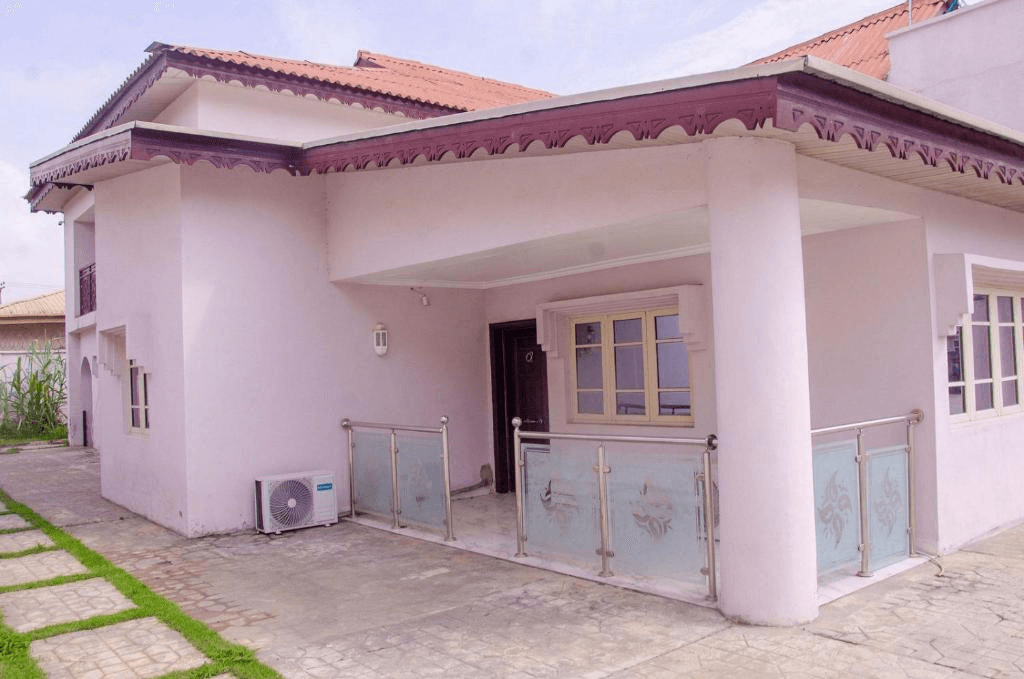
Ikorodu occupies a unique and essential position within the Lagos rental market, functioning as one of the most significant residential hubs for the city’s middle and lower-income workforce. While the central business districts of Lagos Island and Ikeja continue to see skyrocketing property values, Ikorodu remains a primary destination for those seeking a balance between affordability and accessibility.
It sits comfortably at the lower end of the pricing ladder compared to its closest premium neighbour, Magodo. While Magodo serves as a high-end gated community for the affluent, Ikorodu provides a vast expanse of residential options that cater to a much broader demographic, making it a viable alternative for budget-conscious renters who are willing to manage a longer commute in exchange for significantly lower living costs.
The price disparity between Ikorodu and its premium neighbours is stark and offers a clear incentive for relocation. For instance, a standard 2-bedroom apartment that costs ₦3,500,000 per year in Magodo Phase 2 can be found for ₦800,000 to ₦1,200,000 in well-developed parts of Ikorodu.
This represents a saving of over ₦2,000,000 annually, which for many families and young professionals translates to a massive improvement in disposable income or the ability to invest in other areas of life, such as business capital or education.
Practically, this means a renter in Ikorodu can enjoy a much larger living space and a higher standard of interior finishing for less than half the price of a cramped unit in a more central location.
This guide is designed to provide a transparent and data-driven overview of the Ikorodu rental market as it stands in 2026. We acknowledge that the term cheap in a place as large as Ikorodu covers a wide spectrum, from basic rooms in older tenements to modern flats in developing estates.
Not every low-cost option represents true value, as hidden costs like transportation, water delivery, and security levies can quickly erode any initial savings on rent. This guide will cover the specific price bands for 2026, detail what your money actually buys in different neighbourhoods, identify the value floors where quality meets affordability, and highlight the red flags that every budget renter must avoid during their search.
Browse verified apartments in Ikorodu at current prices on Expert Listing:
What “Cheap” Actually Means in Ikorodu
Defining a cheap apartment in Ikorodu requires an understanding of the diverse backgrounds of the people moving into the area. Because Ikorodu is so vast, spanning from the bustling garage area to the quieter outskirts of Ibeshe and Imota, the word cheap is highly relative and depends entirely on the renter’s previous living standard and their primary reason for choosing this location.
For a renter relocating from a premium area like Magodo or even Maryland, cheap in Ikorodu feels like an extraordinary bargain. To this group, an annual rent of ₦1,500,000 for a luxury 3-bedroom flat in a secured estate represents a saving of nearly 60% compared to what they are used to paying. They are often looking for the best that Ikorodu has to offer, prioritising gated security and paved internal roads while still feeling that they are saving a fortune. Their trade-off is almost exclusively time spent in traffic rather than a reduction in the quality of their living space.
A renter moving from the Lagos Mainland, perhaps from areas like Bariga, Somolu, or Mushin, views Ikorodu through a different lens. For them, Ikorodu offers the chance to move from a congested, older neighbourhood into a newer, more organised environment without a significant increase in rent.
Access to the Island Corridor via the ferry services at Ipakodo terminal provides a lifestyle shift that bypasses the traditional road bottlenecks. To this renter, cheap means finding a modern mini flat for ₦450,000 that would be significantly more expensive or simply unavailable in decent condition on the Mainland.
For a first-time renter in Lagos, such as a fresh graduate or someone newly employed in the city, Ikorodu serves as one of the most accessible entry points. At this stage, cheap refers to the absolute bottom of the market where habitability is still maintained.
This group often looks for self-contained units or “room and parlour” arrangements. In Ikorodu, these entry-level formats are widely available at price points that are nearly impossible to find elsewhere in Lagos without compromising safety. This accessibility makes Ikorodu the starting point for many Lagos success stories.
Ultimately, whether you are looking for a massive reduction in overheads or your very first home, Ikorodu provides a range of options that accommodate almost any budget.

Ikorodu Rent Price Bands in 2026
The following four price bands represent the current market realities for rental properties in Ikorodu in 2026, ranging from basic survival units to fully serviced estate options.
Budget tier: below ₦400,000 per year
- What you get: This tier primarily consists of self-contained rooms or older mini-flats in areas like Odogunyan or deep parts of Igbogbo. Infrastructure is basic, usually consisting of a single meter shared among multiple tenants. Generator situations are almost entirely “bring your own,” and water supply is typically a shared central borehole. Road access is often unpaved and can be challenging during the peak of the rainy season.
- Who this suits: This price point is ideal for National Youth Service Corps (NYSC) members, students of the Lagos State University of Science and Technology (LASUSTECH), and early-career workers who spend most of their day outside the home.
- What to be careful about: Security is the primary concern at this level. Ensure the building has a sturdy perimeter fence and ask current tenants about the frequency of “area boy” activity or petty crime in the immediate vicinity.
Mid-budget tier: ₦400,000 – ₦850,000 per year
- What you get: In this band, you can secure a modern mini-flat or a standard 2-bedroom apartment in developing areas like Agbowa or parts of Ebute. The lower end of this band typically covers well-finished mini-flats, while the upper end gets you a 2-bedroom flat in a decent building. You can expect better tiling, POP ceilings, and potentially a dedicated prepaid meter.
- Who this suits: This tier is perfect for small families or young professionals who work on the Mainland or use the ferry service to commute to the Island.
- What to be careful about: Drainage is a variable risk here. Some buildings in this price range look excellent during the dry season but suffer from poor compound drainage when the rains start, leading to damp walls.
Mid-to-upper tier: ₦850,000 – ₦1,800,000 per year
- What you get: This band covers 3-bedroom apartments in established estates or very high-quality 2-bedroom units in prime locations like Solomade or Ipakodo. You can expect estate-level security, facility management services, and a more consistent water supply. Many buildings in this range have dedicated spaces for large generators and better-maintained access roads.
- Who this suits: Senior professionals, larger families, and those who prioritise a quiet, suburban lifestyle with a high degree of privacy and security.
- What to be careful about: Service charges can be high in these estates. Always verify the monthly levy before signing the lease, as a “cheap” rent can be inflated by high mandatory security and cleaning fees.
Serviced and short-let tier: ₦30,000 – ₦60,000 per month (Basic) or ₦400,000+ (Monthly)
- What you get: This tier focuses on furnished apartments that include cleaning, security, and sometimes power in the headline price. These are typically found in the Ebute and Ipakodo areas near the waterfront. They offer a “plug and play” lifestyle with modern amenities, internet access, and air conditioning.
- Who this suits: This is utilised by contract workers, Nigerians in the diaspora visiting for a few months, or people in between permanent apartment moves.
- What to be careful about: Power consumption limits are common. Check if there is a “fair usage” policy on the air conditioning, or if you are required to buy extra power tokens if you exceed a certain limit.
Where the Cheapest Habitable Apartments Are in Ikorodu
Location is the most significant factor affecting both the price and the daily quality of life for a renter in Ikorodu. Because the town is a sprawling urban centre, two apartments at the same price point can offer vastly different experiences depending on their proximity to the main road and the local topography.
Odogunyan serves as a major hub for budget-friendly housing, largely due to its proximity to the industrial estate and the university. There is a high volume of purpose-built self-contained units and mini-flats catering to the student and worker population. Realistic price ranges here for a decent mini-flat fall between ₦350,000 and ₦500,000 per year. While the area is bustling and has good access to local markets, the internal streets are often unpaved, making the commute dusty in the summer and muddy in the winter.

Igbogbo has seen significant development in recent years and offers a more residential, family-oriented feel compared to the industrial vibe of Odogunyan. It contains a mix of older family houses and brand-new developments. You can find habitable 2-bedroom apartments here ranging from ₦600,000 to ₦850,000. The road infrastructure has improved significantly, but some of the newer streets still lack proper drainage, so it is vital to inspect the area after a heavy downpour before committing to a long-term lease.
Ebute and Ipakodo are the “premium” budget zones of Ikorodu, primarily because of their proximity to the Ikorodu Ferry Terminal. This area is highly sought after by those working on Lagos Island or in Victoria Island. While prices are higher here, with mini-flats starting at ₦550,000 and 2-bedroom units reaching ₦1,200,000, the value lies in the reduced commute time. The apartments here are generally of higher quality, often located within gated environments like the Anchor Estate or near the Federal Low-Cost Housing Estate.
Agbala and Sabo are central areas that offer great convenience for those who need to be close to the Ikorodu Garage and the main commercial nerve centre. Rental stock here is older but often more spacious than the newer builds on the outskirts. A standard 3-bedroom flat in these areas can be found for ₦900,000 to ₦1,300,000. The main challenge here is the noise and the high density of people, but the infrastructure for water and electricity is generally more stable than in the newer, more remote zones.
What the Cheapest Ikorodu Apartments Get Wrong (and How to Avoid It)
Finding a bargain in Ikorodu is easy, but finding one that doesn’t cause daily frustration requires a keen eye for specific failure modes that are common in the budget segment of the market.
No functional generator backup
In many budget apartments in Ikorodu, the landlord does not provide a central generator. Power supply from the national grid can be erratic, and without a collective backup system, each tenant is forced to run their own small generator. This leads to high noise pollution and exhaust fumes filling the compound. In more formal settings, there might be a central generator, but it is often poorly maintained or only run for a few hours at night.
The question to ask: You must ask the agent or landlord directly: “Does this building have a central generator, or is every tenant responsible for their own power backup?” If there is a central one, follow up with: “How many hours of power are guaranteed daily, and what is the specific monthly contribution for diesel and maintenance?” Also, ask what the protocol is if the generator breaks down for more than 48 hours.
No borehole: water delivery instead
While most modern builds in Ikorodu include a borehole, some of the cheapest units still rely on communal wells or, worse, water delivery trucks. Relying on water trucks means your daily supply is at the mercy of a third-party vendor and road conditions. This can become an expensive and stressful logistical hurdle, especially during the dry season when demand for water trucks peaks.
A borehole-fed building is always preferable, but you must check the quality of the water. Many parts of Ikorodu have high iron content in the soil, which can result in “brown water” that stains clothes and bathroom fixtures. Ask if there is a treatment plant or a filtration system in place, and take a look at the toilet bowls in vacant units; if they are heavily stained orange, the water quality is poor.
Unpaved or badly maintained access roads
The rainy season in Ikorodu can be unforgiving for those living on unpaved streets. Areas like parts of Ibeshe or the interior of Odogunyan can become nearly inaccessible for small cars between June and September. A house that looks like a great deal in January might require a 4×4 vehicle or a very long walk in rain boots come July.
During your dry-season viewing, look for signs of previous water damage on the street. Are there deep, dried-up ruts in the road? Do the neighbours have planks of wood or stones laid out to help them cross the street? These are clear indicators that the road becomes a swamp during the rains. It is often worth paying 10% more for an apartment on a paved street than saving money on rent only to spend it on car suspension repairs later.
Flooding in the compound or the apartment
Flood risk is a serious consideration in certain low-lying areas of Ikorodu near the lagoon or along the paths of natural drainage channels. Some budget developments are built on reclaimed land without adequate elevation. Ground-floor apartments in these areas are particularly vulnerable to flash flooding, where water enters the living room after a heavy storm.
Always check the exterior walls for a “water line,” which is a faint mark showing how high water has risen in the past. If the compound is lower than the main road, the risk of flooding is significantly higher. Expert Listing maps flood-risk signals at the individual listing level, which is the most reliable way to verify if a property has a history of drainage issues before you even visit the site.
Agents without verified authority
The high demand for cheap housing in Ikorodu attracts many unverified agents who may not have the legal authority to lease the property. This can lead to situations where multiple people are “renting” the same apartment, or the “agent” disappears with the caution fee and legal fees. In a fast-moving market, the pressure to pay quickly to “lock in” a deal is high, but this is exactly when you are most vulnerable.
To protect yourself, never make a payment into a personal account of an agent unless you have met the landlord or seen documented evidence of their authority to act on the landlord’s behalf. Request to see the building’s title documentation or at least a previous utility bill in the landlord’s name. Verify the agent’s identity against their government-issued ID, and ensure that all receipts are signed by both the agent and a witness.
How to Get the Best Value in the Ikorodu Budget Market
Getting the best value in Ikorodu is about optimisation rather than just finding the lowest possible number on a listing.
Set a realistic minimum for your infrastructure requirements. If you need a reliable environment for remote work or family comfort, you should set a minimum budget floor of ₦650,000 per year for a mini-flat or ₦1,200,000 for a 2-bedroom unit. This price point typically moves you into generator-backed estate stock or newer buildings with better-maintained boreholes and security. Attempting to go significantly lower often results in hidden costs that exceed the savings.
Prioritise newer stock within your budget. Aim for buildings that are less than five years old. In Ikorodu, newer stock is more likely to have modern electrical wiring that can handle modern appliances without frequent trips, and the drainage systems are usually designed with the current climate patterns in mind. Older buildings may have cheaper rent, but they often suffer from plumbing leaks and dampness that can damage your furniture and health.
Factor the full cost, including service charges. The headline rent is only part of the story. In many Ikorodu estates, you will encounter a monthly service levy for security, waste management, and compound cleaning, which can range from ₦10,000 to ₦25,000 per month. A worked example: if the headline rent is ₦800,000 but the monthly levy is ₦20,000, your effective annual cost is ₦800,000 + (₦20,000 x 12), totalling ₦1,040,000. Always calculate this effective cost to compare two different properties accurately.
Negotiate on apartments that have been sitting. While the Ikorodu market is fast, some units stay on the market for 3 to 4 weeks, often because the landlord has set a slightly optimistic price. If you find a property that has been vacant for a month, it is a prime candidate for negotiation. For example, an asking price of ₦900,000 can often be negotiated down to ₦800,000 or ₦820,000 if you can demonstrate that you have your total payment ready and can move in immediately.
Use a platform with verified availability. The biggest time-waster in the Ikorodu rental market is chasing “stale” listings that have already been rented out but are still being advertised by agents. This often leads to “bait and switch” tactics, where you are shown a much worse apartment for the same price. Expert Listing solves this by removing listings in real time the moment they are rented or sold, and every property is verified by our team before publication to ensure the photos match the reality.
Cheapest Apartment Types in Ikorodu and What They Include
Self-contained / Studio (₦250,000 – ₦450,000 per year)
This apartment type consists of a single room that serves as the bedroom and living area, with an ensuite bathroom and a small kitchenette. In Ikorodu, the cheaper end of this range gets you a unit in an older building with shared facilities, while the upper end provides a modern studio in a newer development with better finishing. These are most suited for students at LASUSTECH or young single professionals just starting their careers. Most units at this price point require the tenant to provide their own backup power solution.
Mini flat (₦400,000 – ₦750,000 per year)
A mini flat in Ikorodu is a “one-bedroom” apartment consisting of a separate bedroom, a living room, a kitchen, and a bathroom. This is the most popular apartment type for young couples and upwardly mobile professionals. The ₦400,000 options are typically found in areas further from the main road, while the ₦750,000 units are usually located in prime spots like Ebute or within gated streets. These units often come with dedicated prepaid meters and better security features like burglary-proof windows.
1-bedroom flat, budget (₦350,000 – ₦500,000 per year)
While similar in layout to a mini flat, the budget 1-bedroom often refers to units in older “face-to-face” conversions or houses in less developed zones. The rooms might be smaller, and the finishing—such as tiling and cabinetry—might be basic or dated. These are excellent for those who need separate rooms but have a very tight budget. Infrastructure like water might be shared with several other tenants, and road access is often unpaved.
1-bedroom flat, estate (₦600,000 – ₦900,000 per year)
These are high-end versions of the mini flat located within organised estates. They include premium features like POP ceilings, fitted kitchens with cabinets, and water heaters in the bathrooms. The estate setting provides 24-hour security at the gate and better-maintained surroundings. This suits professionals who work on the Island and use the ferry, as many of these estates are located near the Ipakodo waterfront.
2-bedroom flat, budget (₦650,000 – ₦950,000 per year)
A budget 2-bedroom flat provides enough space for a small family with one or two children. At this price point, you get two bedrooms (one or both may be ensuite), a living area, and a kitchen. These are generally located in the inner parts of Igbogbo or Agbala. While the interior might be modern, the external infrastructure, like the street drainage or the compound’s pavement, might be lacking. It is the best option for families looking to maximise square footage for every Naira spent.

Ready to Search Verified Cheap Apartments in Ikorodu?
Every listing on Expert Listing is verified before going live. Flood risk is mapped at the individual listing level. Listings are removed the moment they are rented or sold.
Browse verified budget apartments in Ikorodu on Expert Listing:
Frequently Asked Questions
Is cheap rent in Ikorodu worth it compared to Magodo?
Deciding if Ikorodu is worth the savings compared to Magodo depends entirely on your tolerance for commuting and your lifestyle needs. While you can save over ₦2,000,000 annually on rent, you must account for the time spent in traffic if you work on the Mainland or the cost of ferry tickets if you work on the Island. For many, the ability to live in a large, modern home for a fraction of the cost makes it a superior choice, especially for those with remote work flexibility or those who can utilise the Ipakodo ferry.
Can I find a 2-bedroom apartment in Ikorodu for under ₦700,000 per year?
Yes, it is possible to find a 2-bedroom apartment for under ₦700,000 in Ikorodu in 2026, but you will likely have to look in the developing outskirts like Agbowa or the further reaches of Igbogbo. At this price, the apartment may be in an older building or have very basic finishing. You should also be prepared for unpaved access roads and shared water facilities. It is vital to visit such properties during the day to assess the environment and the state of the building’s maintenance.
What is the cheapest rent in Ikorodu, Lagos in 2026?
The cheapest habitable rent in Ikorodu for a single individual starts at approximately ₦250,000 per year for a basic self-contained unit in areas like Odogunyan. For a full flat, the lowest entry point is roughly ₦400,000 for a budget mini-flat. Prices lower than these thresholds often indicate properties with significant issues, such as a lack of water, very poor security, or severe structural defects, and should be approached with extreme caution.
Are there good schools in Ikorodu for budget renters?
Ikorodu has a wide range of educational institutions that cater to various budgets. For those looking for quality primary and secondary education, The Millennial School is a notable option with modern facilities. Another well-regarded institution is Great Heights Academy, which provides a stable learning environment. Living in Ikorodu allows parents to access these schools at a lower cost of living compared to central Lagos.
What are the best hospitals in Ikorodu?
For medical needs, Ikorodu is served by several reputable facilities. The Ikorodu General Hospital is the primary public option, but for private care, General Hospital Ikorodu provides a wide range of services. Another verified facility is Ikorodu Medical Centre, which offers specialised care. Having access to these facilities within the town ensures that budget renters do not have to travel far for quality healthcare.
How is the security in the cheap Ikorodu neighbourhoods?
Security varies significantly across Ikorodu. While “cheap” neighbourhoods can sometimes be prone to petty crime, many streets have adopted community-led security initiatives with gated entrances and night guards. When looking at budget apartments, it is best to choose buildings that have their own perimeter fencing and are located on streets with active community development associations (CDAs), as these tend to be much safer than isolated buildings.