Cheap Apartments for Rent in Jakande (Lekki), Lagos: A Realistic Price Guide
Expert Listing
·
·
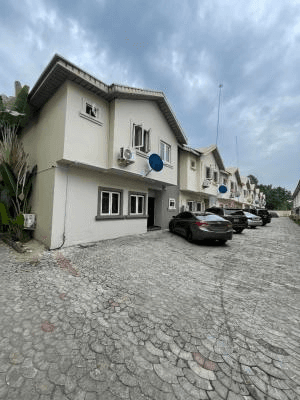
Jakande sits at a strategic midpoint within the Lekki rental market, functioning as a vital buffer between the high-priced developments of Lekki Phase 1 and the rapidly expanding suburban sprawl of Ajah. For many budget-conscious renters, Jakande represents the last frontier of “affordable” living before prices escalate into the luxury bracket. Its positioning on the Lekki-Epe Expressway makes it a prime target for professionals who need proximity to the business hubs of Victoria Island and Ikoyi but cannot justify the premium rents demanded in those immediate vicinities.
The value proposition of Jakande becomes clear when compared to Lekki Phase 1. A standard two-bedroom apartment that costs ₦6,500,000 per year in Lekki Phase 1 can be found for ₦2,800,000 to ₦3,500,000 in Jakande. This saving of over ₦3,000,000 per year represents more than just a lower monthly burn rate; it provides a financial cushion that allows renters to invest in better private security, reliable solar power installations, or a more robust vehicle to handle the local terrain. In Jakande, you are essentially paying for the location and the square footage while accepting that you may need to supplement the infrastructure yourself.

This guide provides a realistic assessment of the Jakande rental market in 2026. We acknowledge that “cheap” is a relative term that covers a wide spectrum of housing quality, ranging from well-maintained estates to buildings that struggle with seasonal drainage issues.
Our goal is to outline the specific price bands currently active in the market, what those amounts actually buy in terms of lifestyle, and where the value floor lies.
We will also identify the critical red flags that budget renters often overlook during the dry season, ensuring you make an informed decision based on long-term habitability.
Browse verified apartments in Jakande (Lekki) at current prices on Expert Listing:
What “Cheap” Actually Means in Jakande (Lekki)
In the context of the Lekki Peninsula, the word “cheap” is often used loosely to describe anything that falls below the ₦4,000,000 annual threshold for a multi-bedroom unit. However, the definition shifts significantly based on a renter’s previous living situation and their specific expectations for infrastructure. Before looking at the raw numbers, it is essential to understand how different demographics perceive value in this specific corridor.
For a renter relocating from a more expensive area like Lekki Phase 1 or Oniru, cheap means a significant reduction in the baseline rent, often by as much as 40 to 50 %. To this group, Jakande offers a way to maintain an “Island” lifestyle and social circle while drastically cutting overhead. They are typically willing to trade the paved, manicured streets of a private Phase 1 estate for the slightly more rugged environment of Jakande, provided the apartment interior remains modern, and the compound is secure.
For a renter relocating from the Lagos Mainland, such as Gbagada or Surulere, Jakande represents an entry point into the Island corridor at Mainland-adjacent prices. To them, cheap means the ability to live within a twenty-minute commute of their Victoria Island office without spending 70 % of their income on housing. This move represents a major lifestyle shift, trading the established community feel of the Mainland for the fast-paced, commercial energy of the Lekki axis.

For a first-time renter in Lagos, Jakande is often the most accessible starting point on the Island. At this level, cheap refers to the “self-contained” or “studio” format. For these individuals, the area provides a prestigious address and proximity to corporate opportunities that would be out of reach in more central locations. They often prioritise the lowest possible entry price, even if it means living in older buildings with limited amenities, using Jakande as a temporary base to build their career before moving further up the peninsula.
Ultimately, navigating the Jakande market requires balancing these different perspectives against the reality of the 2026 price landscape.
Jakande (Lekki) Rent Price Bands in 2026
The following four price bands represent the current market reality for residential rentals in Jakande as of early 2026.
Budget tier: below ₦1,200,000 per year
- What you get: In this bracket, you are looking exclusively at self-contained units or very basic “tenement-style” apartments in the older parts of the Jakande community. Infrastructure is minimal, with no central generator provided by the landlord. Water is usually sourced from a basic borehole with limited filtration. Road access to these buildings is often unpaved and can be difficult to navigate during the peak of the rainy season.
- Who this suits: This tier is most suitable for National Youth Service Corps (NYSC) members, students, or early-career workers who spend most of their day out of the house and only need a place to sleep and store their belongings.
- What to be careful about: The primary risk here is “hidden costs” related to water treatment and the lack of security. You may find yourself spending a significant amount on sachet water for bathing if the borehole is poorly maintained.
Mid-budget tier: ₦1,500,000 – ₦2,500,000 per year
- What you get: This is the most competitive segment of the Jakande market. At the lower end (₦1,500,000), you can find decent mini flats (one bedroom and a sitting room). At the upper end (₦2,500,000), you can secure a standard two-bedroom apartment in a non-gated but decent street. These buildings usually have better finishing, including tiled floors and basic kitchen cabinets.
- Who this suits: This tier is ideal for young couples or mid-level professionals who want a private space but are not yet ready for the full service charge of a premium estate.
- What to be careful about: Quality is highly variable. One building might be excellently maintained, while the one next to it suffers from damp walls and failing plumbing. Professional inspection is mandatory.
Mid-to-upper tier: ₦2,800,000 – ₦4,500,000 per year
- What you get: This price range moves you into the semi-serviced and gated estates within Jakande. You can expect three-bedroom apartments or high-end two-bedroom units with 24-hour security, dedicated parking, and often a central generator service (though you pay for the diesel separately). The internal finishing usually includes POP ceilings and modern bathroom fittings.
- Who this suits: Established families or senior professionals who require a higher level of security and a more serene environment.
- What to be careful about: Service charges in this tier can be surprisingly high, sometimes reaching 30 to 40 % of the annual rent. Always ask for a breakdown of the previous year’s service charge before signing.
Serviced and short-let tier: ₦450,000 – ₦850,000 per month
- What you get: This tier covers fully furnished apartments with all utilities included, including internet and daily cleaning. These are often used by corporate travellers or individuals in transition.
- Who this suits: Short-term contractors, digital nomads, or families renovating their primary homes.
- What to be careful about: Ensure the “all-inclusive” claim actually covers 24/7 power, as some operators cap generator hours to save on costs.

Where the Cheapest Habitable Apartments Are in Jakande (Lekki)
Location within Jakande is the single biggest determinant of whether a “cheap” apartment is actually a bargain or a logistical nightmare. The area is a mix of traditional community settlements and newer, planned developments.
The Femi Okunnu Estate area is one of the most recognised landmarks in Jakande. While the main estate itself is priced higher, the streets immediately surrounding it offer a variety of mini flats and two-bedroom apartments. These units typically range from ₦1,800,000 to ₦2,600,000. The advantage of this zone is the relatively better drainage and the presence of established security patrols, making it a safer bet for those new to the area.
Agungi/Jakande Axis (Right Side) houses several smaller, unnamed gated streets that offer excellent value. You can find modern three-bedroom apartments here for approximately ₦3,500,000. The road infrastructure here is a mix of paved and graded earth, but the proximity to major shopping hubs like Shoprite Circle Mall makes it highly desirable. Residents here benefit from being able to access the expressway quickly without getting caught in the deeper internal traffic of Jakande.
Osapa London Border Zone is where Jakande meets the more upscale Osapa area. Because it sits on the boundary, you can often find “overflow” housing that features Osapa-level finishing but Jakande-level pricing. Two-bedroom flats here often go for ₦2,800,000 to ₦3,200,000. This is a high-volume rental zone, meaning there is always stock, but you must move quickly as these units are often off the market within days of listing.
Jakande Housing Estate (LSDPC) remains the ultimate budget option for many. As a government-built estate, the structures are older but generally solid. You can find large three-bedroom flats here for under ₦2,000,000, which is nearly impossible elsewhere on the Island. However, the infrastructure is aged, and you will likely need to invest in your own water treatment and power solutions.
Not sure about Jakande (Lekki)? Read our full area guide first:
What the Cheapest Jakande Apartments Get Wrong (and How to Avoid It)
In the budget segment of the Jakande market, landlords often cut corners to keep the headline rent attractive. Understanding these failure modes is the difference between a comfortable home and a year of frustration.
No functional generator backup
In many budget-tier buildings in Jakande, there is no provision for a central generator. Landlords may point to a “generator house” during the tour, but this is often just a shed for individual tenants to place their own small “I-better-pass-my-neighbour” units. The noise and fumes from twenty different small generators running at once can make life unbearable. In slightly better buildings, a central generator might exist, but it is often poorly managed with no clear schedule for diesel contributions.
The question to ask: You must ask the agent or landlord directly: “Is there a central generator, and if so, what is the specific schedule for power?” Follow up by asking how the diesel cost is shared. Is it a flat monthly fee, or is it metered? If it is a flat fee, ask for receipts from the last three months to ensure the system is actually functioning and that tenants are complying.
No borehole: water delivery instead
While most buildings in Lekki claim to have “running water,” the reality in Jakande is that many older or cheaper buildings have boreholes that yield salt water or heavy, iron-laden water. In some cases, the borehole has failed entirely, and the building relies on water tanker deliveries. This creates a dependency on external vendors; if the tanker is late or the road is blocked, the entire building goes dry.
The question to ask: Check the colour of the water in the storage tanks, if possible. Ask the current tenants if the water is treated and if the borehole runs consistently. If the building relies on tankers, ask who pays for the delivery and how often the tanks are filled.
Unpaved or badly maintained access roads
Jakande has a notorious reputation for road conditions once you move away from the main expressway. During the dry season, an unpaved road looks like a simple dusty path. However, by June or July, these roads can turn into mud traps that are impassable for smaller sedans. Budget apartments are almost always located on these secondary or tertiary roads.
The question to ask: Do not take the agent’s word that the road is “fine.” Look for the “high-water mark” on the walls of surrounding buildings. If you see a stained line a foot or two above the ground, that is a clear indicator of how high the water sits during the rains. Ask specifically if the street requires a 4×4 vehicle during the peak of the rainy season.
Flooding in the compound or the apartment
Flooding is a systemic issue in parts of Lekki, and Jakande is no exception. In cheaper developments, the compound floor might be lower than the street level, causing water to pool and enter the ground-floor units. Some apartments are built in “reclaimed” areas where the drainage is insufficient to handle heavy downpours.
The question to ask: Focus your search on upper-floor units if you are in a high-risk zone. Expert Listing maps flood-risk signals at the individual listing level, which is the most reliable way to verify a property’s history. Ask the landlord if the compound has been “sand-filled” recently to raise the level, as this is a common remedial step.
Agents without verified authority
The high demand for budget housing in Jakande attracts many “freelance” agents who may not have a direct relationship with the landlord. These individuals often “piggyback” on other agents’ listings, leading to higher fees and a lack of transparency. In the worst-case scenario, multiple people are “rented” the same apartment by different unverified agents.
The question to ask: Before making any payment, demand to see the landlord or a legal representative with a registered power of attorney. Verify the identity of the person collecting the money against the property’s title documentation. Never pay for “form fees” or “commitment fees” until you have physically inspected the apartment and verified the agent’s authority.
How to Get the Best Value in the Jakande Budget Market
Finding value in Jakande is not about finding the lowest number on a listing; it is about finding the highest level of habitability for your specific budget.
Set a realistic minimum for your infrastructure requirements. If you require consistent power for remote work, do not look at apartments below ₦2,200,000. Below this floor, the chances of finding a building with a functional, professionally managed generator system are slim. By setting this realistic floor, you save time and avoid the hidden costs of setting up your own heavy-duty power backup.
Prioritise newer stock within your budget. In Jakande, a five-year-old building is often in significantly better shape than a fifteen-year-old one, even if the older one is “renovated.” Look for buildings constructed between 2021 and 2025. Newer builds tend to have better electrical wiring, more modern plumbing materials that resist saltwater corrosion, and better-planned drainage systems that account for recent rainfall patterns.
Factor in the full cost, including service charges. The “cheap” rent you see on a flyer is only part of the story. In Jakande, monthly levies for security, waste management, and compound cleaning typically range from ₦15,000 to ₦45,000. A worked example: if the headline rent is ₦2,000,000 and the monthly levy is ₦25,000, your effective annual cost is ₦2,000,000 + (₦25,000 x 12), which equals ₦2,300,000. Always calculate this effective cost before comparing two properties.
Negotiate on apartments that have been sitting. Even in a high-demand market like Jakande, certain apartments stay on the market for three to four weeks. This usually happens because of a minor cosmetic flaw or a slightly high initial asking price. For example, an apartment with an asking price of ₦2,800,000 that hasn’t moved in a month is often negotiable down to ₦2,500,000 if you can prove you are a “ready” tenant with your payment available immediately.
Use a platform with verified availability. The biggest time-waster in the Jakande market is the “stale listing”, an apartment that was rented weeks ago but is still being advertised by agents to harvest leads. Expert Listing solves this by removing listings in real time, the moment they are rented or sold. Each listing is verified before publication, ensuring that when you see a “cheap” apartment, it actually exists and is available at the stated price.
Cheapest Apartment Types in Jakande and What They Include
Self-contained / Studio (₦800,000 – ₦1,200,000 per year)
A self-contained unit in Jakande typically consists of a single room that serves as the bedroom and living area, with an ensuite bathroom and a small kitchenette. At this price point, the kitchenette is often a simple counter with a sink. These units are perfect for single individuals or students. Most are located in older, multi-tenanted buildings where you will share a compound with several other residents.
Mini flat (₦1,400,000 – ₦2,000,000 per year)
The mini flat is the most popular unit type for young professionals in Jakande. It includes one separate bedroom, a living room, a kitchen, and usually one or two bathrooms. In the ₦1,400,000 range, these are found in older sections of the area. As you move toward ₦2,000,000, you begin to see units in newer buildings with better tiles, fitted wardrobes, and sometimes basic security features like gated access.
1-bedroom flat, budget (₦1,200,000 – ₦1,600,000 per year)
While similar to a mini-flat, a “budget” one-bedroom often refers to units in older family houses that have been partitioned. They may be larger in terms of square footage than a modern mini-flat, but they will have older fittings and may require some personal investment in painting or minor repairs. These are common in the Jakande Housing Estate and the internal community streets.
1-bedroom flat, estate (₦2,200,000 – ₦2,800,000 per year)
These are premium one-bedroom units located within gated estates or modern serviced blocks. They include high-end finishing, POP ceilings, and often come with a service charge that covers security and water treatment. These units are highly sought after by corporate workers who want the security of an estate without the expense of a multi-bedroom apartment.
2-bedroom flat, budget (₦2,200,000 – ₦2,800,000 per year)
A budget two-bedroom in Jakande offers a lot of space for the price. These are typically found in stand-alone buildings rather than estates. They suit small families or roommates. At this price, you should expect to handle your own power and potentially your own water treatment, as the landlord’s involvement in facility management is usually minimal.

Ready to Search Verified Cheap Apartments in Jakande (Lekki)?
Every listing on Expert Listing is verified before going live. Flood risk is mapped at the individual listing level. Listings are removed the moment they are rented or sold.
Browse verified budget apartments in Jakande (Lekki) on Expert Listing:
Frequently Asked Questions
Is cheap rent in Jakande worth it compared to Lekki Phase 1?
For many, the answer is a definitive yes because the price difference is massive. While you lose the paved streets and prestige of Phase 1, you can save over ₦3,000,000 annually. This money is often better spent on a more reliable car or a high-quality solar power system, which provides a more consistent quality of life than simply having a Phase 1 address. If you work on the Island and don’t mind a slightly more “rugged” environment, Jakande offers the best price-to-proximity ratio in Lagos.
Can I find a mini flat in Jakande for under ₦1,500,000 per year?
Yes, it is possible to find a mini flat in Jakande for under ₦1,500,000, but these are increasingly rare in 2026. Most units at this price point will be in older buildings, deeper inside the community or in the LSDPC housing estate. You should expect basic finishing and will likely need to account for unpaved roads during your commute. If you find a listing at this price that looks “modern,” be sure to verify the agent through Expert Listing to avoid potential scams.
What is the cheapest rent in Jakande, Lagos, in 2026?
The cheapest habitable rentals in Jakande for 2026 start at approximately ₦800,000 for a basic self-contained unit. While there may be “face-to-face” style rooms for less, ₦800,000 is the realistic starting point for an apartment with an ensuite bathroom and a private kitchenette. For a standard flat (mini flat), the entry point is roughly ₦1,400,000.
Are there good schools near the budget apartments in Jakande?
Yes, several well-regarded institutions are located within or very near Jakande. For example, Meadow Hall School is a prominent option nearby, offering a high standard of education for residents of the Lekki corridor. Families also frequently consider Tenderloving Childcare for younger children. Access to these schools is a major reason why many families choose Jakande despite the infrastructure challenges in some of the budget zones.
What happens if my Jakande apartment floods?
If you are in a flood-prone zone, the impact can range from a wet compound to water entering the ground floor. This is why we strongly recommend budget renters look for units on the first floor or higher. In the event of compound flooding, many residents rely on higher-clearance vehicles. If you use Expert Listing, you can check the specific flood-risk signal for the building before you pay, which is the most effective way to avoid this problem entirely.
Where can I find emergency medical care in Jakande?
Jakande is served by several clinics and hospitals. Circle Care Clinic is located conveniently near the Circle Mall axis and provides a range of medical services. Having a verified hospital nearby is a critical consideration for budget renters, as it ensures that “cheap” housing does not come at the cost of being too far from emergency support. Always check the proximity of the nearest clinic to your potential apartment during your physical inspection.