Cost of Living in Jakande, Lagos (2026): Rent, Food, Transport & Utilities Cost
Expert Listing
·
·
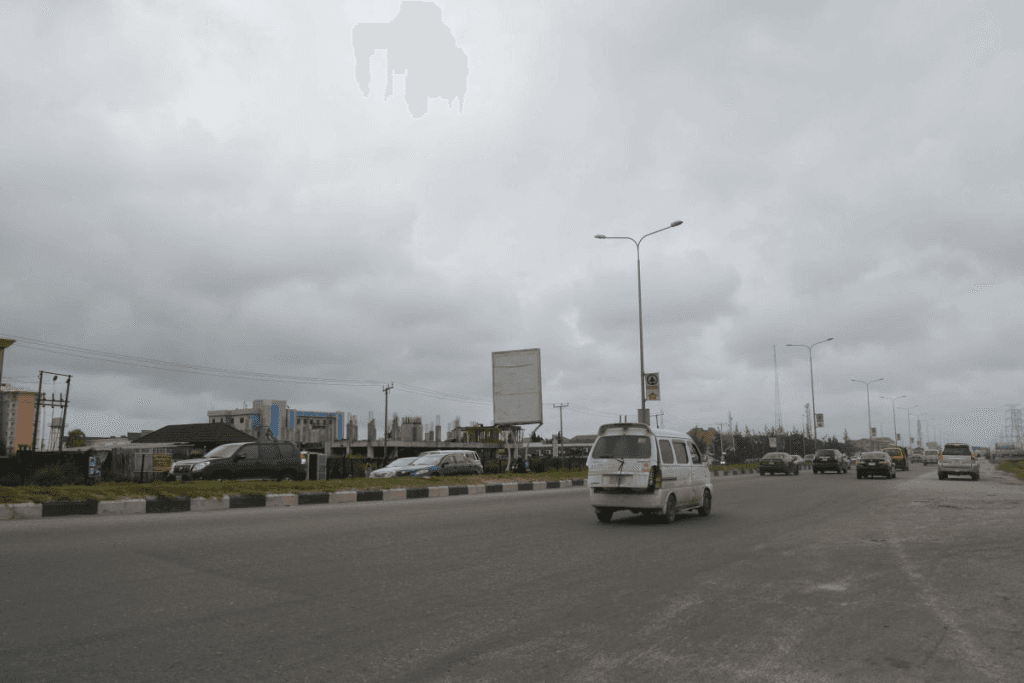
Jakande is a neighbourhood that carries a distinct reputation along the Lekki-Epe expressway axis, and anyone looking to move here generally knows it will not be a low-budget undertaking. The broad assumption is that living anywhere past the first Lekki toll gate demands a premium financial commitment, which often leads prospective residents to expect flatly exorbitant costs across the board.
However, the actual disconnect between expectation and reality lies in how these expenses are structured. Many individuals move to the area assuming that a high rental payment is the final major hurdle, only to discover that unbundled operational costs, hyper-local grocery premiums, and structural estate levies can quickly reshape their entire monthly financial outlook.
This guide provides an exhaustive, practical breakdown of what it truly costs to reside in Jakande in 2026. By examining real-time market ranges for housing, service levies, food, transportation, educational expenses, and healthcare, this overview covers multiple household configurations from single professionals to growing families. The objective is to arm you with hard, verified figures so you can build an accurate, realistic budget before making a structural commitment, ensuring you do not encounter unexpected financial shocks after moving your belongings through the gates.
Distinctively, Jakande presents a fragmented cost structure because it functions as a transitional zone between the ultra-premium estates of Ikate and Osapa London and the slightly more dense, commercial hubs further down towards Chevron and Ajah.
It is an area where a luxury fully serviced terrace compound can sit down the street from an older, traditional urban setup, meaning that your specific choice of street or mini-estate will dictate your utility and service overheads far more than in entirely uniform neighbourhoods. This spatial variety means that two people living three minutes apart can experience wildly different monthly baselines depending on how their immediate compound manages its security, power infrastructure, and drainage maintenance.

Browse verified apartments in Jakande with current pricing on Expert Listing:
How Much is rent in Jakande?
Rental pricing stands as the absolute anchor of your household budget in Jakande, representing the dominant cost category around which all other secondary monthly expenses organise themselves. If your rent is poorly calibrated against your actual income, the subsequent pressures of estate levies, power consumption, and routine maintenance will quickly make the location unsustainable.
| Property Type | Annual Rent Range | Monthly Equivalent |
| Self-contained / Studio | ₦1,500,000 – ₦2,500,000 | ₦125,000 – ₦208,333 |
| 1-Bedroom Flat | ₦3,000,000 – ₦5,000,000 | ₦250,000 – ₦416,667 |
| 2-Bedroom Flat | ₦4,500,000 – ₦7,500,000 | ₦375,000 – ₦625,000 |
| 3-Bedroom Flat | ₦7,000,000 – ₦11,000,000 | ₦583,333 – ₦916,667 |
| 4-Bedroom Duplex | ₦10,000,000 – ₦16,000,000 | ₦833,333 – ₦1,333,333 |
First, it is vital to understand the structural realities of the Lagos rental market, which heavily relies on upfront annual or biennial payments rather than the smooth monthly distribution shown in budget spreadsheets. For example, if you secure a mid-tier 2-bedroom flat on Platinum Way priced at ₦6,000,000 per annum, you must have that entire sum ready as a single lump payment before receiving your keys.
Furthermore, initial move-in costs will routinely include an additional 10% for legal fees, 10% for agency fees, and a caution deposit of roughly ₦500,000, turning a ₦6,000,000 headline rent into a real-world upfront cash requirement of approximately ₦7,700,000 for the first year.
Second, the wide variations within the ranges listed above are driven almost entirely by structural building quality, specific street access, and whether the apartment sits inside a secure, paved gate system.
Properties located closer to the main Lekki-Epe expressway or within established tracks like Platinum Estate command the absolute top tier of these rent ranges due to superior drainage, reliable tarred roads, and modern construction finishing.
Conversely, properties situated deeper inside the interior or along streets prone to seasonal flash flooding during the rainy season will sit at the lower boundaries of the scale, highlighting why a physical inspection of the immediate street topography is essential.
Service Charges and Estate Levies
The ongoing service charge is the specific cost vector that new renters in the Jakande area underestimate most frequently, often treating it as a minor footnote rather than a fixed structural obligation. In modern Lagos proptech frameworks and standard estate structures, these fees are mandatory and are designed to keep the residential space functional, secure, and habitable.
A standard, well-managed estate or serviced multi-unit compound in Jakande utilises these monthly or annual levies to fund 24-hour uniformed security guards at the gates, central generator maintenance, corporate waste management via the Lagos State Waste Management Authority or approved private compactors, water treatment plant operations, common area landscaping, and daily building administration.
In more premium compounds, these fees scale upwards to cover corporate facility managers, swimming pool chemical treatments, gym equipment calibration, and industrial-grade water filtration systems that eliminate the standard sulfur tint common to the local water table.
| Building Type | Monthly Service Charge Range |
| Older standalone building (basic) | ₦35,000 – ₦60,000 |
| Mid-tier estate compound | ₦70,000 – ₦120,000 |
| Well-managed newer estate | ₦130,000 – ₦200,000 |
| Premium serviced building | ₦220,000 – ₦350,000+ |
To see how this operates in practice, consider a family renting a 3-bedroom flat within a mid-tier estate compound in Jakande with a realistic annual rent baseline of ₦9,000,000. If the estate levies a standard monthly service charge of ₦100,000, that introduces an additional fixed operational cost of ₦1,200,000 over the course of twelve months. This brings your effective annual housing commitment to ₦10,200,000, and this combined figure is the metric you must utilise when performing real budget comparisons across different Lagos neighbourhoods rather than looking at the base rent in isolation.
Because these figures can significantly alter your monthly discretionary cash flow, you should always demand to confirm the precise breakdown of the service charge in writing as a formal clause within the tenancy agreement before executing any bank transfers. Some landlords or developer agents verbally promise low communal fees during initial property viewings, only to introduce unbundled security levies, sanitation surcharges, or sudden facility management adjustments three months after you take possession of the apartment.

Want to live in Jakande? Check our guide to renting an apartment in Jakande
Generator Fuel: The Hidden Utility Bill
The cost of fueling generators represents a distinct, often volatile utility bill that can completely break an otherwise clean budget if it is not explicitly mapped out before move-in. In Jakande, the local electrical grid supply can be highly inconsistent, forcing residential compounds to rely extensively on industrial diesel generators or smaller residential petrol plants to maintain daily domestic operations.
Some residential buildings in Jakande choose to bill generator fuel entirely separate from the baseline service charge, applying an unbundled consumption fee that varies from month to month based on prevailing national fuel prices. Where this direct-billing system applies, residents typically face a monthly per-apartment range of ₦80,000 to ₦180,000 for standard residential apartments, with the exact variance depending heavily on the total KVA capacity of the central generator, the number of active units sharing the load, and the exact daily usage schedule, which usually runs for a mandatory 8 to 12 hours overnight.
In contrast, where a property is marketed as a flat-service-charge building, this substantial energy expense is already fully integrated into the fixed monthly fees outlined in the preceding section, giving you a highly predictable spending ceiling. However, in buildings utilising direct consumption billing or pre-paid diesel meters, this ₦80,000 to ₦180,000 range must be manually added to your monthly baseline calculations, as it behaves exactly like a second rent obligation that cannot be skipped if you want to run your air conditioning units.
The exact practical question you must put directly to any landlord, facility manager, or sitting resident before signing papers is whether generator fuel is wrapped into the primary service charge or billed dynamically via a monthly consumption log. Furthermore, you should explicitly request to see the actual written billing receipts or the WhatsApp group expense statements for that specific apartment compound for the most recent two billing months to verify what the current tenants are actually paying out of pocket.
Food and Groceries
The food and grocery landscape in Jakande is highly accessible, offering a functional mix of modern corporate retail outlets and traditional open-air commodity markets that allow residents to optimise their food budgets based on lifestyle choices.
Supermarket shopping within and directly around Jakande is anchored by established retail spots such as Ebeano Supermarket and Prince Ebeano Mart located along the Lekki axis, alongside local daily neighbourhood supermarkets and retail hubs nearby like Spar or Circle Mall in Osapa.
For individuals who prefer sourcing their provisions from these organised retail environments, a single professional can expect a weekly grocery shopping bill ranging from ₦25,000 to ₦45,000 for basic provisions, dairy, and frozen proteins. A couple will typically spend between ₦50,000 and ₦85,000 per week, while a family of four cooking regular westernised or processed meals can easily see their weekly supermarket checkout total hit ₦95,000 to ₦160,000.
Local market shopping provides an immediate and substantial cost advantage for residents willing to buy fresh produce, local grains, tubers, and bulk proteins directly from traditional wet markets.
The nearest primary local trading hub is the famous Jakande Market itself, which is widely recognised across the Lekki peninsula as a major destination for affordable foodstuffs, fresh seafood, and wholesale agricultural products brought in from the hinterlands.
Relying on Jakande Market for your weekly fresh food supply delivers a highly consistent savings margin of 25% to 35% compared to buying the equivalent weight of items inside air-conditioned supermarkets, making it the preferred strategy for families looking to control running costs.
Eating out in the area is defined by the high concentration of casual dining spots, local fast-food chains, and upscale lounges lining the main Lekki-Epe expressway corridors and nearby commercial strips in Agungi and Ikate. A basic mid-range meal consisting of local rice dishes, swallow, or standard continental options at a casual restaurant or quick-service outlet costs roughly ₦4,500 to ₦9,000 per person.
A premium dining experience at an upscale bistro or lounge near the area will typically cost between ₦15,000 and ₦35,000 per person once drinks, starters, and service charges are included. For a working professional who eats out or orders delivery roughly three times a week for convenience, this habit translates into a realistic monthly expenditure of about ₦75,000 to ₦140,000.
| Household Type | Cooking at Home Mostly | Mixed (some eating out) |
| Single professional | ₦90,000 – ₦140,000 | ₦150,000 – ₦230,000 |
| Couple | ₦170,000 – ₦260,000 | ₦270,000 – ₦400,000 |
| Family of four | ₦320,000 – ₦480,000 | ₦450,000 – ₦650,000 |

Transport
Transportation costs for a Jakande resident are largely determined by your specific commute destination and whether your daily routine requires crossing the major traffic choke points heading toward the commercial core of the Island.
Operating a personal vehicle from Jakande involves factoring in regular fuel consumption along the frequently congested Lekki-Epe expressway, alongside the recurring costs of mechanical maintenance driven by Lagos stop-and-go traffic. A standard sedan or compact SUV on a daily commute from Jakande to Victoria Island or Ikoyi will consume between ₦90,000 and ₦150,000 worth of fuel monthly, assuming normal urban gridlock. When you factor in an amortised monthly allocation of ₦35,000 to ₦65,000 to cover routine engine oil changes, brake pad replacements, and suspension checks, the total monthly running cost for a single vehicle settles into a range of ₦125,000 to ₦215,000.
Relying exclusively on ride-hailing applications like Uber and Bolt represents a significantly more expensive transportation choice due to dynamic surge pricing during morning and evening rush hours. A typical one-way commute from the Jakande roundabout area to Victoria Island or the business district of Lagos Island falls between ₦4,500 and ₦8,500, depending on weather conditions and traffic severity. For a professional commuting five days a week, this daily two-way trip pattern results in an aggregate monthly ride-hailing bill of ₦200,000 to ₦360,000, making it a heavy drain on discretionary income.
The Bus Rapid Transit system and standard public transportation buses offer a much more economical route for Island-bound commuters looking to bypass the financial strain of private transport. Residents can access commercial buses or corporate shuttle transit routes directly at the Jakande bus stop along the expressway, where a single journey heading down to Victoria Island or Obalende typically costs between ₦700 and ₦1,500. This public transit framework stands out as the most cost-effective, practical option for daily commuters who do not own a personal vehicle or want to shield their cars from daily expressway wear.
| Commute Pattern | Monthly Transport Cost |
| Personal vehicle, daily Island commute | ₦125,000 – ₦215,000 |
| Ride-hailing, daily Island commute | ₦200,000 – ₦360,000 |
| BRT / Public daily commuter | ₦30,000 – ₦65,000 |
| Mixed (drive some days, public others) | ₦80,000 – ₦140,000 |
| Work from home / minimal commute | ₦25,000 – ₦50,000 |

Utilities: Internet and Additional Power Costs
Domestic internet connectivity in Jakande is well-supported by several primary broadband providers, including FiberOne, Smile, and MTN Fibre, alongside satellite options like Starlink, which have become incredibly popular for remote professionals. A basic, unlimited monthly fibre or wireless data subscription suited for light streaming and standard office work ranges from ₦20,000 to ₦35,000. Premium high-speed corporate plans or unlimited Starlink subscriptions capable of supporting multi-device households sit between ₦40,000 and ₦70,000 per month.
Additional power expenses must be budgeted for to cover instances where grid electricity fails, and central estate generator schedules leave gaps during the day. Many residents deploy private inverter systems, which require an occasional battery top-up or maintenance allocation of ₦15,000 to ₦30,000 monthly when amortised over the lifespan of the gel or lithium cells. For those in properties where secondary diesel billing or small petrol generator backup fueling is managed independently, this adds a recurring baseline of ₦40,000 to ₦90,000, depending on your personal consumption habits.
Domestic water infrastructure along the Lekki corridor is famously reliant on private treatment, and in Jakande, borehole water systems are standard. In the vast majority of structured compounds and estates, the cost of running the automated water pumps and treating the raw water with industrial chemicals is already fully covered by your primary service charge. However, if you live in a basic standalone building without an integrated water setup, you may need to allocate a separate monthly sum of ₦10,000 to ₦25,000 for private water tanker deliveries or local treatment chemicals.
Total utilities estimate: ₦85,000 – ₦195,000 per month, depending on building arrangement and consumption.
School Fees
For families residing in Jakande, educational expenses represent a massive, non-negotiable structural cost that routinely ranks as the second-largest line item in the annual household budget, right after house rent.
| School Tier | Termly Fees Range |
| Entry-level private primary | ₦150,000 – ₦300,000 per term |
| Mid-tier established private school | ₦350,000 – ₦650,000 per term |
| Premium private school (e.g. Halifield Schools) | ₦750,000 – ₦1,300,000 per term |
| International curriculum school (e.g. Honeyland Schools) | ₦1,500,000 – ₦2,500,000 per term |
When calculating the real annual cost of education, these termly figures must be multiplied by three to account for the standard three-term academic calendar year used in Nigeria. An entry-level private primary institution will require an annual cash commitment of ₦450,000 to ₦900,000 per child, while a mid-tier established private school scales up to between ₦1,050,000 and ₦1,950,000 annually for a single student.
For a family with two children enrolled in a mid-tier private academy in or directly adjacent to Jakande, the true annual educational cost structure requires a clear budget allocation of approximately ₦2,100,000 to ₦3,900,000, a sum that does not include secondary expenses like mandatory school bus services, uniforms, text materials, and end-of-term developmental levies.

Household Help
Sourcing domestic assistance is a standard practice for middle and upper-income households in the Lekki peninsula to manage daily domestic upkeep, property maintenance, and child minding.
A live-in housekeeper or cook in Jakande commands a monthly salary range of ₦50,000 to ₦90,000, an expense that comes with the mandatory structural caveat that you must provide dedicated accommodation, which is usually a boys’ quarter room or an integrated staff room within your apartment compound. If you choose to hire a part-time daily cleaner who visits your home two to three times a week for laundry and general sweeping, you can expect to pay a monthly stipend of ₦25,000 to ₦45,000, depending entirely on the total square footage of the flat.
A specialised nanny or dedicated childminder will require a monthly salary allocation of ₦60,000 to ₦100,000, with the precise figure varying based on their previous experience, specific working hours, and whether they are tasked with preparing specialised infant nutrition. For households residing in standalone houses or unserviced villas outside of a central estate gate, employing a private security guard to manage the street gate introduces a further monthly cost of ₦55,000 to ₦85,000 per guard.
For families with very young children or two working parents managing strict corporate schedules on the Island, the cost of a reliable nanny transitions from a discretionary luxury line item into an absolute, essential budget line that must be funded consistently every month.

Healthcare
Managing healthcare costs while living in Jakande requires balancing proactive insurance coverage with the realities of localised medical infrastructure pricing.
Most white-collar corporate professionals residing in the area rely heavily on employer-covered health insurance plans to shield them from unpredictable medical bills. However, for entrepreneurs, freelance professionals, or families operating on a self-pay model, securing a decent, reliable individual health maintenance organisation plan in Lagos requires an annual premium outlay ranging from ₦90,000 to ₦220,000 for a standard tier plan. These baseline plans generally cover routine malaria treatments, basic laboratory diagnostic tests, vaccinations, and standard prescriptions at local network pharmacies without requiring out-of-pocket cash payment.
If you choose to pay out-of-pocket at private clinics directly serving the Jakande and Lekki axis, a basic general practitioner consultation fee at an established local facility like Dobic Health or similar mid-tier neighbourhood clinics typically ranges from ₦8,000 to ₦15,000 per visit. Seeking out a specialist consultation for maternal health, paediatrics, or cardiology at premium regional facilities nearby will cost between ₦20,000 and ₦45,000 per visit for the consultation fee alone. Because diagnostic scans, specialised laboratory work, and prescription drugs are billed entirely separately from the baseline doctor’s visit, it is highly recommended to maintain a dedicated monthly healthcare emergency fund of at least ₦30,000 to ₦60,000 if your family is operating without a comprehensive corporate HMO cover.

Entertainment and Lifestyle
Maintaining a social life while residing in Jakande exposes you directly to the lifestyle pricing dynamics of the Lekki corridor, which can easily swallow a significant portion of your disposable income if left unmonitored.
A monthly membership fee at a quality, well-equipped gymnasium or fitness centre within or immediately adjacent to Jakande ranges from ₦25,000 to ₦55,000, depending on whether the facility provides premium amenities like access to a swimming pool, specialised spin classes, or personal fitness trainers. For indoor digital entertainment, a standard bundle of digital streaming services, including Netflix, Showmax, and Amazon Prime Video, combined with a basic satellite television package, requires a fixed monthly allocation of ₦12,000 to ₦28,000.
Weekend dining, socialising, and general lifestyle entertainment will vary dramatically based on your personal social circle and how frequently you frequent the prominent dining and lounge corridors stretching from Ikate to Lekki Phase 1. A conservative estimate for a single professional who restricts their entertainment to occasional casual drinks or a single monthly movie night sits around ₦40,000 to ₦75,000 per month. For an individual with an active social life who regularly visits trendy lounges, beach clubs, and weekend music events along the Lekki axis, this lifestyle choice quickly escalates into a monthly spend of ₦120,000 to ₦250,000+.
Personal grooming and physical care expenses represent another steady monthly financial commitment that varies by complexity. A standard visit to a professional neighbourhood barber shop for a basic haircut and shave costs between ₦3,500 and ₦8,000, while a woman’s monthly routine at a local beauty salon for hair styling, nails, and general grooming services settles into a reliable range of ₦25,000 to ₦65,000.

Full Monthly Budget Summaries
Bringing all categories together, here are realistic monthly cost estimates for three common Jakande household profiles.
Single Professional in a 1-Bedroom Flat
This budget assumes a modern, mid-tier 1-bedroom flat in a secure Jakande compound with an annual rent baseline of ₦4,200,000.
| Category | Monthly Cost |
| Rent (monthly equivalent) | ₦350,000 |
| Service charges | ₦90,000 |
| Food (mixed cooking and eating out) | ₦180,000 |
| Transport (personal vehicle) | ₦150,000 |
| Internet and utilities | ₦110,000 |
| Entertainment and lifestyle | ₦65,000 |
| Healthcare buffer | ₦35,000 |
| Total | ₦980,000 |
Couple in a 2-Bedroom Flat
This budget assumes a well-located 2-bedroom apartment with an annual rent baseline of ₦6,000,000.
| Category | Monthly Cost |
| Rent (monthly equivalent) | ₦500,000 |
| Service charges | ₦110,000 |
| Food (mixed) | ₦310,000 |
| Transport (one vehicle) | ₦160,000 |
| Internet and utilities | ₦130,000 |
| Entertainment and lifestyle | ₦95,000 |
| Healthcare buffer | ₦45,000 |
| Total | ₦1,350,000 |
Family of Four in a 3-Bedroom Flat
This budget assumes a spacious 3-bedroom apartment with an annual rent baseline of ₦9,000,000, with two children attending a mid-tier private primary school.
| Category | Monthly Cost |
| Rent (monthly equivalent) | ₦750,000 |
| Service charges | ₦140,000 |
| Food (family) | ₦520,000 |
| Transport (one vehicle) | ₦180,000 |
| School fees (two children, averaged monthly) | ₦280,000 |
| Housekeeper/nanny | ₦75,000 |
| Internet and utilities | ₦160,000 |
| Entertainment and lifestyle | ₦110,000 |
| Healthcare buffer | ₦60,000 |
| Total | ₦2,275,000 |
These calculations represent realistic middle-of-the-range lifestyle estimates, and your actual individual spending will naturally vary above or below these baselines depending on your specific utility choices and consumption patterns.
How Jakande Compares to Nearby Areas
For context, here are approximate all-in monthly costs for comparable household profiles in nearby areas:
| Area | Single Professional (1-bed) | Family of Four (3-bedroom) |
| Lekki Phase 1 | ₦1,500,000 – ₦2,200,000 | ₦3,500,000 – ₦5,200,000 |
| Ikate | ₦1,100,000 – ₦1,700,000 | ₦2,600,000 – ₦3,900,000 |
| Jakande | ₦850,000 – ₦1,300,000 | ₦1,900,000 – ₦2,900,000 |
| Agungi | ₦800,000 – ₦1,250,000 | ₦1,800,000 – ₦2,750,000 |
| Ajah | ₦450,000 – ₦750,000 | ₦1,100,000 – ₦1,750,000 |
An analysis of these figures shows that Jakande functions as a mid-priced buffer zone along the axis, representing roughly 55% of the total monthly overhead required to maintain an equivalent household profile in Lekki Phase 1. When evaluated against its more immediate premium neighbour, Ikate, living in Jakande delivers an immediate monthly savings margin of approximately 20% to 25% on both rent and estate services. However, when compared to more affordable options further down the expressway, like Ajah, Jakande retains a noticeable premium, requiring almost double the monthly financial commitment to cover housing and logistics. Whether this geographical and structural cost premium is worth the investment depends entirely on your personal workspace destination, your tolerance for daily expressway traffic, and your household’s specific budget ceilings.
Ready to Plan Your Jakande Budget?
Securing a property along the Lekki axis requires access to reliable data to prevent costly miscalculations. Every property listing published on Expert Listing includes fully verified pricing structures, real-time rental availability status, and precise location data, including localised flood-risk signals to help you make an informed choice.
Frequently Asked Questions
Is Jakande expensive compared to the rest of Lagos?
Jakande is moderately expensive when viewed within the broader context of Lagos State, sitting firmly in the middle-to-upper tier of the regional cost hierarchy. It requires a significantly higher financial layout than mainland neighbourhoods like Surulere, Yaba, or Isolo due to its prime positioning along the highly sought-after Lekki-Epe residential corridor. However, compared to neighbouring Island districts like Lekki Phase 1, Ikoyi, or Victoria Island, Jakande operates as a cost-effective alternative that allows residents to enjoy the benefits of Island proximity at a fraction of the cost.
How much does it cost to live in Jakande per month?
The total cost of living in Jakande per month varies based on your household structure, with a single professional using a personal car typically needing between ₦850,000 and ₦1,300,000 to cover rent equivalents, food, transport, and utilities. A couple residing in a 2-bedroom flat will generally see their aggregate monthly operational expenses settle between ₦1,200,000 and ₦1,800,000, depending on their lifestyle choices. For a family of four with two children enrolled in private local schools, the real-world monthly baseline ranges from ₦1,900,000 to ₦2,900,000.
What is the minimum salary to live comfortably in Jakande?
To live comfortably in Jakande as a single professional without severe financial strain, an individual should ideally earn a net monthly salary of at least ₦1,000,000 to ₦1,200,000. This level of income ensures that your monthly rent equivalent remains well under 40% of your earnings while leaving enough cash to handle estate service charges, power fueling, and private vehicle maintenance. For a household or family provider looking to cover a multi-bedroom flat, school fees, and domestic assistance, a combined monthly income baseline of ₦2,500,000 is recommended.
Are service charges mandatory in all Jakande apartments?
Service charges are a mandatory contractual obligation in virtually all structured mini-estates, modern blocks of flats, and newly developed serviced compounds within Jakande. These fees are collected centrally by landlords or facility managers to ensure that essential communal services like localised security, waste disposal, and water treatment remain operational. If you are looking to avoid these fixed fees entirely, your options are limited to renting older, unserviced standalone properties where residents manage their own individual security and waste logistics.
Is Jakande Market cheaper than local supermarkets?
Yes, sourcing your provisions from Jakande Market is significantly cheaper than shopping at organised retail supermarkets located along the expressway. Buying your fresh produce, tubers, grains, and local proteins directly from the open-air stalls inside Jakande Market provides a highly consistent savings margin of 25% to 35% on your food bill. Supermarkets remain useful for imported packaged items, household chemicals, and dairy, but a blended approach, favouring the local wet market, will dramatically optimise your household grocery budget.
How does flooding affect the cost of living in Jakande?
Flooding exercises an indirect but highly visible influence on the structural cost of living in Jakande by creating wide variations in rent prices between different streets. Properties built along low-lying paths with poor drainage infrastructure suffer from lower tenant demand, pushing their baseline rents to the lower end of the market spectrum. However, choosing a cheaper flat on a flood-prone street often introduces hidden long-term costs, including accelerated vehicle suspension wear, frequent water pump repairs, and the potential need for expensive structural flood mitigation measures during the peak rainy season.