Renting in Ayobo, Lagos: What You Need to Know Before You Rent (2026)
Expert Listing
·
·
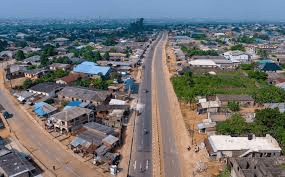
The stakes for renting in Ayobo are deceptively high because the area presents a facade of extreme affordability that often masks high hidden costs in transportation and structural maintenance.
Unprepared renters often find themselves trapped in “cheap” apartments where the annual savings on rent are entirely swallowed by the soaring cost of motorcycle shuttles to the Megida bus stop or the frequent repair of vehicles damaged by the undulating, unpaved inner roads.
Prepared renters, however, recognise Ayobo as a strategic frontier where one can secure a modern, spacious three-bedroom apartment for the price of a cramped studio in more central Lagos, provided they identify buildings with independent water systems and proximity to the main tarred arteries.
This guide provides a deep analysis of the Ayobo rental market, moving beyond surface-level listings to reveal the protective intelligence every tenant needs before making a commitment.
We cover the five most critical red flags specific to this boundary community, including the nuances of the “land-grabber” influence on older property stock and the reality of the Alimosho power grid.
You will learn how to identify management patterns in the newer estates, the realistic price floor for habitable units in 2026, and the specific questions that separate professional landlords from the informal family administrators who dominate the local landscape.
If you want to start with verified, physically inspected listings, browse apartments in Ayobo on Expert Listing.

Who Should Be Renting in Ayobo
A significant portion of renter problems in Ayobo comes from a mismatch between what the area offers and what the renter was expecting regarding infrastructure and commute times.
The area is a boundary town that shares a border with Ogun State, which means it serves a very specific subset of the Lagos workforce while being fundamentally unsuitable for others.
The area works exceptionally well for remote workers and freelancers who require significant square footage for a home office but do not need to commute into central Lagos more than once a week.
It is an ideal fit for civil servants and educators working within the Alimosho Local Government Area or the nearby Lagos State University (LASU) in Ojo, as the commute is direct and bypasses the worst of the Lagos-Abeokuta Expressway traffic.
Small-scale entrepreneurs who trade in the bustling Ikotun or Iyana-Ipaja markets also find Ayobo a perfect residential base because it offers a quieter, more affordable retreat from their high-intensity work environments.
For families who prioritise a larger living space and a slower pace of life over proximity to the “Island” nightlife, Ayobo’s newer developments provide a standard of living that would be financially impossible in areas like Gbagada or Yaba.
Conversely, Ayobo is a poor fit for young professionals who work in corporate roles on Lagos Island, Victoria Island, or Lekki Phase 1. The daily commute from Ayobo to the Island can easily exceed three hours each way during peak periods, leading to physical exhaustion and a total collapse of work-life balance. It is also unsuitable for those who rely heavily on Bolt or Uber for daily movement, as driver availability drops significantly after dark, and many drivers refuse to enter the inner streets due to road conditions.
Furthermore, individuals who expect a high density of upscale social amenities, such as cinemas, premium supermarkets, or international private schools, will find the area’s local, more traditional market structure frustratingly limited.
If you are in the first group, read on. If you are in the second group, consider whether Ayobo’s price advantage genuinely compensates for the daily friction before committing.

The Ayobo Rental Market: How It Actually Works
The Ayobo rental market is a stark study in contrasts, dominated by a heavy mix of informal, family-owned bungalows and a rapidly growing sector of modern, multi-tenanted “room-and-parlour” or flat developments. Unlike the more corporate-managed markets of Ikeja or Magodo, the vast majority of Ayobo’s housing stock is managed by local “family lawyers” or individual landlords who live on the premises.
This creates a market where documentation is often non-standard, relying heavily on handwritten receipts and basic tenancy agreements rather than formal leases drafted by established chambers.
Market structure in Ayobo leans heavily toward the informal.
While there are emerging gated enclaves like Megida and parts of Anchor University’s environs that feature more formal estate management, most renters will deal with local agents who handle multiple properties for different families.
This informality means that while the “Paperwork” might seem less daunting, the lack of standardised documentation creates a significant risk regarding the clarity of service charges and the definition of maintenance responsibilities.
Renters must be extremely diligent in ensuring that the person they are paying is the legally recognised administrator of the property, especially in cases where the original owner is deceased, and multiple children claim ownership.
The opportunity from informality lies in the high degree of payment flexibility. Unlike the rigid annual or two-year upfront requirements in more central Lagos, many Ayobo landlords are open to negotiation.
For established buildings or when dealing with a landlord who lives on-site, it is often possible to negotiate six-monthly or even quarterly payments after the initial first year has been settled.
This flexibility is a major draw for middle-income earners who prefer to manage their cash flow rather than parting with a massive lump sum.
Furthermore, because the market is not as fast-moving as Surulere, a tenant with a solid “bulk” payment often has significant leverage to drive down the total package price.
The risk from informality, however, is the high frequency of “Omonile” or land-grabber disputes that can occasionally spill over into the rental market. If a building is under litigation or there is a family dispute over the inheritance of the property, a tenant may find themselves caught in the middle of a lock-out or a demand for double payment.
This makes the better end of the market, consisting of newly built, fenced, and gated apartments with clear title documents, highly desirable.
These managed buildings command a 20% to 30% premium over the average local stock, but they offer the security of professional management and a buffer against the chaotic elements of the informal market.
Not sure about Ayobo? Read our area guide first.
Red Flag 1: The Inner-Street “Accessibility Trap”
The most significant risk for renters in Ayobo is not the apartment itself, but the terrain leading to it. Many stunning, modern buildings are located deep within the inner streets of areas like Baruwa or Amule, where the roads are unpaved and prone to extreme erosion. During the dry season, these roads are manageable, but during the rainy season, they become nearly impassable for low-clearance vehicles. Renters who sign leases in December often find themselves unable to drive their cars to their front gates by June, forcing them to pay for daily “Okada” trips or expensive car suspension repairs.
What to look for during a viewing:
You must pay close attention to the gradient of the street and the presence of deep gullies or “channels” carved into the dirt by previous rainstorms. Look at the base of the fences in the street; if you see watermarks or stains that sit a foot or more above the current ground level, the street experiences significant pooling or “flash flooding” that does not drain quickly.
Check the undercarriage of cars parked in the neighbourhood; if they are caked in thick, dried mud or show signs of frequent scraping, you are looking at a location that will isolate you during the peak of the Lagos rains.
The protective steps involve visiting the property, specifically after a heavy downpour, before you pay any commitment fee. A street that looks “rustic” and “quiet” on a sunny Saturday can turn into a swamp by Monday morning.
Expert Listing’s flood-risk data highlights that while Ayobo is generally on higher ground than areas like Lekki, the localised “street-pond” effect caused by lack of drainage is the real threat here.
Never take an agent’s word that “the government is coming to fix the road next month,” as these promises have been used as a sales tactic in Alimosho for over a decade without fruition.
Red Flag 2: The “Ghost” Water Supply Systems
Water is a critical failure point in many Ayobo rentals because the area lacks any form of public water utility. Every building relies on a private borehole, but in the rush to build cheap rental stock, many landlords do not dig deep enough to reach the clean water table.
This results in “colored water” that is heavy in iron or sulfur, which stains bathroom tiles, ruins white clothing in the wash, and is unsuitable for even basic hygiene without expensive treatment.
Questions to ask before committing:
You must ask the current tenants, not the agent, about the frequency of water pump failures and the actual quality of the water. Ask specifically: “How often do you have to wash the overhead tank to remove sludge?” and “Is the water treated with a filtration system, or does it come straight from the ground?”
You should also ask about the power arrangement for pumping water; if the building relies on a central generator to pump water but the landlord is stingy with fuel, you may find your taps dry for days despite having electricity from the grid.
What this means practically is that you may end up spending an additional ₦15,000 to ₦25,000 monthly on purchasing bags of “pure water” for bathing and cooking if the borehole is substandard. During your viewing, turn on the taps in the kitchen and bathroom and let the water run for at least two minutes.
If the water has a yellowish tint or a distinct metallic “rotten egg” smell, the borehole is shallow. A good apartment in Ayobo must have a functional, deep-drilled borehole with a dedicated pumping schedule that does not leave tenants stranded.
Red Flag 3: Power Grid “Phasing” and Transformer Overload
While Alimosho generally receives better power supply than many parts of Lagos, Ayobo suffers from extreme “phasing” issues where one side of a street has electricity while the other is in darkness for weeks due to a blown transformer.
Because the population density in Ayobo has exploded faster than the electrical infrastructure, local transformers are frequently overloaded. Renters often find themselves in a situation where they have “light”, but the voltage is so low that it cannot power a refrigerator or an air conditioner, rendering the electricity almost useless for modern living.
The protective steps:
Before you sign, look at the local transformer serving the street. If it is surrounded by a chaotic web of “hook-ups” and loose wires, or if there are visible burn marks on the pole, the infrastructure is failing. You should also check if the apartment has a “change-over” switch that allows you to tap into different phases of the grid.
In Ayobo, the most reliable apartments are those that have migrated to the “Band A” or premium feeders, though these are rare and usually limited to the buildings closest to the main Ipaja-Ayobo Road.
Verification is key here. Expert Listing recommends visiting the street at night to see which houses are actually lit by the grid versus those running on generators. If the entire street is on generators while the rest of the neighbourhood has power, the local transformer is likely faulty.
Ask the agent for the last three months of electricity bills for the specific unit; if the bills show “estimated” charges that are suspiciously low, it might indicate that the meter is bypassed or the building has been disconnected for a long time, leading to a massive debt you might be asked to clear.
Red Flag 4: The Shared-Compound “Security Levies” and Hidden Fees
Ayobo is famous for its “Community Development Association” (CDA) fees, which are often not disclosed until after the tenant has moved in. These are not standard service charges but local levies for street security, waste management, and even “youth development.”
In some parts of Ayobo, these fees can add an unexpected ₦50,000 to ₦80,000 to your annual cost of living. Furthermore, many informal landlords in this area do not have a set “Service Charge” but instead knock on doors whenever the septic tank is full or the gate needs painting, leading to constant, unpredictable financial friction.
Questions to ask before committing:
You must demand a written breakdown of all non-rent costs. Ask: “What is the exact monthly contribution for the street security guards?” and “Is there a designated waste management (LAWMA) fee included in the rent, or is that a separate charge?” You should also ask: “Who is responsible for the maintenance of the common areas, and is there a fixed sinking fund for repairs?” If the landlord or agent cannot give you a specific figure and instead says, “We all contribute when there is a problem,” you are entering a high-friction living arrangement.
What this means practically is that your “cheap” rent is a variable cost, not a fixed one. In a poorly managed Ayobo compound, you may be harassed by local street “area boys” or CDA officials if the landlord hasn’t paid the building’s communal dues.
A professionally managed listing on Expert Listing will have these figures vetted and disclosed upfront so you can calculate your true “all-in” cost of living before you commit.
Red Flag 5: Property Title and “Estate” Authenticity
There is a growing trend in Ayobo where developers buy small plots of land, build a “mini-estate” of four to six units, and market them as “luxury estates.” However, many of these developments are built on land with questionable titles or are subject to “caveat emptor” notices from the Lagos State Government.
Because Ayobo is a developing frontier, many buildings have been erected without proper planning permits, which puts the tenant at risk of sudden eviction if the government decides to enforce right-of-way regulations or if a superior land title is proven in court.
The protective steps:
Never pay into a personal bank account for a newly built “estate” apartment unless you have seen the building’s approval documents or the agent can provide a valid power of attorney from the owner. You should also look for “red markings” on the walls of the building or neighbouring structures; if you see “LASPPPA – REMOVE” or similar government codes, the building violates zoning laws.
Expert Listing’s pre-listing verification serves as a structural protection against this risk, as we cross-reference property locations with known government master plans for the Alimosho corridor.
What to look for during a viewing is the presence of a permanent, high-quality fence and a clear gatehouse. If a “new” building has no perimeter fence or the “estate” consists of just one building in the middle of an empty, bushy lot, the security and legal status are likely compromised.
Ensure that the tenancy agreement specifically names the landlord or the authorised company as the “Lessor” and includes a clause protecting you from any third-party claims on the property during your tenure.
What a Good Ayobo Apartment Actually Looks Like
It is easy to read these five red flags and conclude that the area is not worth considering, but that conclusion would be wrong. Ayobo offers some of the best value-for-money housing in Lagos if you know how to identify the “Gold Standard” buildings that avoid these pitfalls.

A good Ayobo apartment in 2025/2026 typically sits in the Megida, Anchor University, or Clover Estate axes, in a building that has been actively maintained by a resident or professional manager.
These apartments feature high-quality vitrified tiles throughout, well-fitted kitchen cabinets that aren’t made of cheap, water-sensitive particle board, and bathrooms with modern plumbing that doesn’t leak into the walls.
The building will be situated on a street with at least some level of “hardcore” or gravel surfacing to prevent mud-traps, and it will have a dedicated, fenced compound with a functional gate. The water system will include a deep borehole and a clean overhead storage tank, and the electricity will be managed through a functional prepaid meter for each unit, ensuring you only pay for what you consume. Management quality is evident in the cleanliness of the common areas and the presence of a clear, written set of “House Rules” that govern noise levels and waste disposal.
Documentation for such a property is transparent, with the landlord providing a formal receipt and a tenancy agreement that clearly defines the roles of both parties.
None of what is described here is extraordinary; these are baseline expectations of a properly managed rental property. The better buildings in Ayobo deliver them consistently, providing a high quality of life at a fraction of the cost of central Lagos; the worse ones do not, and the nominal rent saving does not compensate for the daily stress of poor infrastructure.
Rent Red Flags: When the Price Is Too Low Even for Ayobo
Ayobo has some of the most affordable rents in Lagos, but there is a floor below which an asking price signals a major problem rather than a bargain. In the 2025/2026 market, the price floor for a genuinely habitable, modern 1-bedroom apartment (mini-flat) in Ayobo is ₦450,000 per year, and for a 2-bedroom apartment, it is ₦750,000 per year.
If a 2-bedroom apartment is being offered at ₦500,000 per year in a supposedly “modern” building in 2026, you must ask why it is priced so far below the market average. The most likely explanations are that the building has serious structural problems, such as a sinking foundation or a roof that leaks in every room; the listing is not genuine and is part of a “multiple-letting” scam where an agent collects deposits from twenty different people for the same flat; or there is a violent dispute over the property that will lead to the tenant being harassed or evicted within weeks of moving in.
The correct response to a suspiciously low price is not to move quickly before someone else takes it, but to ask specifically why the price is what it is and to be very cautious if the explanation is unconvincing. Below the ₦450,000 threshold for a mini-flat, the risk that something significant is wrong with the property’s legality or physical integrity is extremely high.
Negotiating Rent in Ayobo
Ayobo is one of the more negotiable markets in Lagos, precisely because it is a “tenant’s market” for those who have ready cash. Unlike Lekki, where apartments are snapped up in hours, Ayobo landlords often have to wait weeks or months to find a stable, high-quality tenant who can afford their asking price.
The most effective negotiation tool in Ayobo is the offer of a “clean” one-year payment with a commitment to long-term stability. Because many landlords in this area have been “burned” by tenants who pay the first year and then default on subsequent months, demonstrating that you have a stable job and a clean history is highly effective.
If an apartment has been vacant for more than a month, offering to pay 10% below the asking price as a “one-off bulk payment” often works. Speed of commitment also unlocks flexibility; if you can show you are ready to pay immediately after a successful viewing, you can often get the landlord to waive or reduce the “Caution Fee” or “Agreement Fee,” which are the most common points of inflation in a rental package.
What rarely works is trying to negotiate based on the poor state of the road or the distance from the city centre. Landlords in Ayobo are well aware of these issues and have already factored them into their (relatively) low asking prices. Complaining about the “remote” nature of the area will only alienate the landlord, who likely views the area as a peaceful sanctuary.
The realistic discount range for properties that have been vacant for some time is between 5% and 12% below the asking price. For recently vacated, well-maintained buildings in high demand, the market rarely yields more than a 5% discount, as the landlord knows another tenant will likely pay the full price within the week.
Ready to Search Verified Ayobo Listings?
Every listing on Expert Listing is physically inspected before going live. Documentation is verified. Flood-risk is mapped at the listing level. Listings are removed the moment they are rented or sold.
Browse verified apartments for rent in Ayobo on Expert Listing.
Frequently Asked Questions
Is it safe to rent in Ayobo, Lagos?
Ayobo is generally considered one of the safer residential areas in the Alimosho axis due to its semi-suburban nature and the strong presence of local vigilante groups and Community Development Associations. Most security issues in the area are related to petty theft or occasional “area boy” activity near the bus stops, rather than the more violent crimes seen in some other parts of the city. However, like any Lagos neighbourhood, safety depends heavily on the specific street and the quality of the building’s own security, such as high fences and gated access. Renters should prioritise houses that are within gated streets or those that have a night guard on the premises.
What is the difference between renting in Megida versus Baruwa within Ayobo?
Megida is generally considered the more “upscale” and organised part of Ayobo, featuring newer building stock, better-planned streets, and closer proximity to the main road, which makes it more expensive but more convenient for commuters. Baruwa is a more established, older residential zone that offers even lower rents but often comes with more challenging inner-road conditions and a mix of older housing that may lack modern amenities. While Megida attracts younger professionals and corporate workers, Baruwa is often favoured by long-term residents and families who appreciate the larger plot sizes and more traditional community feel.
What is the average rent for a 2-bedroom flat in Ayobo?
As of 2025/2026, the average rent for a modern, well-finished 2-bedroom flat in a secure compound in Ayobo ranges between ₦850,000 and ₦1,200,000 per year, depending on the proximity to the main road and the quality of internal fittings. Older flats or those located deep within the unpaved inner streets can still be found for around ₦700,000 to ₦750,000, but these often come with higher maintenance or transportation costs. It is rare to find a genuinely high-quality 2-bedroom unit in a “Band A” power area for less than ₦1,000,000 in the current market.
How is the light in Ayobo?
The power supply in Ayobo is relatively stable compared to the Lagos average because the area is served by the Ikeja Electric Alimosho business unit, though it is highly dependent on the health of the local transformer. Many residents enjoy between 10 to 14 hours of electricity daily, but this can drop significantly if a neighbourhood transformer is overloaded or if there is a fault on the 33kV lines that feed the area. Prospective tenants should always verify if the building is on a premium feeder or if it suffers from “phasing” issues, where only parts of the building have power at any given time.
Is Ayobo a good place to live?
Ayobo is an excellent place to live for those who prioritise space, affordability, and a relatively quiet environment away from the industrial noise of central Lagos. It offers a community-centric lifestyle with lower costs for food and services, making it ideal for families and remote workers who do not need to commute to the Island daily. However, it may be perceived as a “difficult” place to live for those who require high-speed road connectivity, as the single main entry and exit point can become heavily congested during peak hours.
Which area in Ayobo is the best?
The “best” area in Ayobo is subjective, but the Megida and Clover Estate axes are widely regarded as the most desirable due to their superior road accessibility and the higher concentration of modern, fenced apartments. These areas offer a more “estate-like” feel with better-organised security and a higher standard of living than the older, more congested parts of the district. For those seeking the highest level of peace and security, the enclaves surrounding Anchor University are also highly recommended due to the institutional influence on local infrastructure and safety.