How to Find an Apartment in Ikeja GRA, Lagos (2026)
Expert Listing
·
·
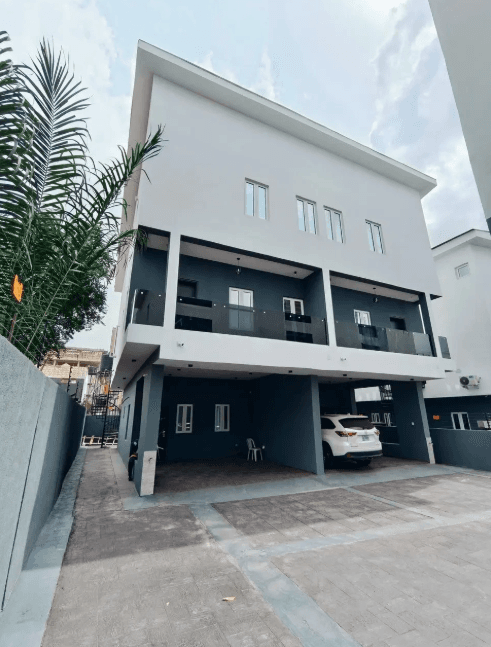
Finding an apartment in Ikeja GRA (Government Reserved Area) is a fundamentally different experience from navigating the rental markets of Lekki or Surulere. In this enclave, you are competing in one of the most supply-constrained markets in Lagos, where the demand for prestigious, secure, and well-serviced housing far outstrips the available inventory.
The primary challenge you will face is the speed at which quality units disappear; it is common for a well-priced three-bedroom apartment to be off the market within forty-eight hours of listing.
Because the area serves as the premier residential hub for the Lagos State political elite, high-ranking military officials, and top-tier corporate executives, the price-quality gap can be jarring.
You will often encounter older, poorly maintained properties commanding premium prices simply because of their address.
A prepared renter understands that in Ikeja GRA, you are not just paying for square footage, but for the most stable power grid in Lagos and a level of security that is difficult to replicate elsewhere on the Mainland.
An unprepared renter, conversely, often loses millions of Naira by rushing into a lease for a “renovated” property that hides deep-seated structural or plumbing issues.
This guide is designed for the high-value renter who needs to navigate the complexities of the Ikeja GRA market with precision. You will find detailed breakdowns of the current 2026 rental figures, the hidden costs that often catch newcomers off guard, and a zone-by-zone analysis of the neighbourhood’s sub-markets.
The guide covers how the local market dynamics work, what specific features you must treat as non-negotiables during your search, and the tactical steps you must take to secure a property before your competition does.
By the end of this manual, you will know how to position yourself as the ideal tenant, verify the legitimacy of your potential landlord, and avoid the specific agent traps that are prevalent in high-end Lagos real estate.
If you want to browse verified, real-time listings while you read, start here: Verified apartments for rent in Ikeja GRA on Expert Listing.

Understand the Market Before You Start Looking
The Ikeja GRA rental market in 2026 remains the pinnacle of Mainland real estate, characterised by high entry barriers and an extreme scarcity of new-build small units like one or two-bedroom apartments.
This is a “landlord’s market” where the power dynamic heavily favours the property owner due to the sheer volume of corporate and expatriate demand.
You are competing against multinational companies looking for staff housing and established families who prioritise the area’s proximity to the Murtala Muhammed International Airport and the Lagos State Government House.
The supply is naturally capped because the area is strictly regulated by the Ikeja GRA Residents and Stakeholders Association, which limits the density of new developments to preserve the neighbourhood’s quiet, leafy character.
One of the most significant demand drivers in 2026 is the “flight to stability.” As the cost of diesel continues to fluctuate, renters are flocking to Ikeja GRA because it sits on a dedicated power line that provides significantly more hours of public electricity than almost any other part of Lagos.
This demand keeps vacancy rates near zero for modern apartments.
Furthermore, the market is bifurcated between “Old GRA” properties, massive, older mansions often sitting on half an acre, and the newer “Luxury Low-Rise” apartments that have been carved out of subdivided plots.
Good apartments in the latter category move at an incredible pace; if you see a modern apartment with a lift and a swimming pool, it is likely already under serious negotiation by the time the sign goes up.
The practical implication of these dynamics is that your preparation must be flawless. In less competitive markets, you might have a week to think about a property, but here, the premium the area commands creates a vacuum that is often filled by aggressive agents and even fraudulent listings.
A poorly prepared renter ends up paying a premium for “distressed luxury”, properties that look impressive in photos but have failing HVAC systems or water treatment plants that are no longer fit for purpose.
You must be ready to verify every claim made by an agent, as the high stakes of Ikeja GRA rents make it a primary target for misrepresentation regarding “24-hour power” or “fully serviced” status.
Set Your Budget Including All Costs
The headline rent is only part of what you will pay in Ikeja GRA.
In 2026, the complexity of service charges and upfront fees means that your actual move-in cost can be nearly double the advertised annual rent.
You must account for the high cost of maintaining the infrastructure that makes this area desirable. Service charges in Ikeja GRA are among the highest in Lagos, often calculated as a fixed annual sum or a monthly levy that covers 24/7 security, waste management, water treatment, and the maintenance of common areas like gyms or pools.
In premium developments, you should expect these charges to add a significant %age to your total housing expenditure, particularly because of the “power pool” system, where residents share the cost of diesel for industrial-capacity generators.
In the current 2026 market, agency and legal fees remain standardised but substantial.
You will typically be required to pay 10% of the annual rent as an agency fee and another 10% as a legal/agreement fee.
Unlike some other parts of Lagos, where these are negotiable, Ikeja GRA landlords and their representative lawyers often hold firm on these %ages.
Caution deposits are also standard and usually range from ₦500,000 to ₦2,000,000, depending on the size of the unit and whether it is furnished. Regarding upfront rent, the standard expectation in 2026 is still one year’s rent in advance.
While some very new developments are experimenting with quarterly or monthly payments to attract corporate tenants, these are the exception and often come with a 15-20% markup on the base rent.
- Annual rent: ₦15,000,000 (for a standard modern 3-bedroom)
- Service charges: ₦3,500,000 per annum (inclusive of power deposit)
- Agency fee: ₦1,500,000 (10% of annual rent)
- Legal fees: ₦1,500,000 (10% of annual rent)
- Caution deposit: ₦1,000,000 (refundable)
- Total first-year outlay: ₦22,500,000 (approximately 1.5 times the headline rent)
Do this calculation before you begin. It will save you from falling in love with an apartment that turns out to be outside your actual budget once all costs are accounted for.
Not sure about Ikeja GRA? Read our area guide first.
Know the Zones Within Ikeja GRA
Ikeja GRA contains meaningfully different residential experiences depending on where within it you are looking, and knowing your target zone before you start viewing saves time and prevents disappointment.
The area is not a monolith; the lifestyle on a quiet close near the Golf Club is vastly different from the bustle near the commercial corridors of Joel Ogunnaike or Isaac John.

The Golf Course Enclave (Old GRA)
Located around the perimeter of the Ikeja Golf Club, this is the most prestigious and quietest zone within the GRA. It is characterised by massive detached houses and a handful of ultra-luxury, low-density apartment blocks. This is the top-tier price position, where you are paying for absolute privacy and the lowest noise pollution in the city. It suits high-net-worth individuals and senior diplomats who require maximum security and exclusivity. The drawback here is that you are further away from the main commercial hubs, meaning a short drive is required for even basic amenities.
The Isaac John & Joel Ogunnaike Corridor
This is the heart of the “New GRA” and serves as the mixed-use hub of the neighbourhood. The residential character here is busy and vibrant, with apartments often situated behind or above high-end restaurants, boutiques, and lounges. Prices are mid-to-top range, but the stock is generally newer. This zone suits young professionals and expatriates who want a “walkable” lifestyle where entertainment and dining are within 500 meters of their front door. The primary drawback is the weekend traffic and noise from the popular nightlife spots.
The Oduduwa & Oba Akinjobi Zone
Situated closer to the Lagos State University Teaching Hospital (LASUTH) and the High Court, this area is dominated by older, more traditional government-style buildings and newer townhouses. It is generally more accessible in terms of price than the Golf Course zone. It suits medical professionals, legal practitioners, and families who need to be close to the administrative heart of Ikeja. While it is very secure due to the proximity of government installations, some parts of this zone can feel more “institutional” than residential.
The Opebi/Allen Border Zone
This zone sits on the fringes where the GRA meets the commercial hubs of Opebi and Allen Avenue. It offers the most accessible price points while still maintaining the “GRA” address and security. The residential character is more dense, with more apartment buildings and fewer sprawling mansions. It suits middle-management professionals who work in Ikeja but cannot justify the ₦20m+ rents of the core GRA. The main advantage is easy access to the commercial centres of the Mainland, though it lacks the extreme serenity found deeper within the GRA.
Decide on your target zone before viewing. Specificity saves time and prevents agents from redirecting you to less suitable options in the hopes of a quick commission.
Decide on Your Must-Haves Before You View
Fixing your non-negotiables before viewing prevents you from making decisions under the pressure of a live viewing.
In the high-stakes Ikeja GRA market, you will be tempted to overlook flaws because of a beautiful kitchen or a prestigious street name, but the reality of living in Lagos means that infrastructure always trumps aesthetics.

Generator backup. In Ikeja GRA, the question is not whether there is a generator, but how it is managed. You must ask about the daily uptime; many buildings claim “24-hour power” but actually run a 12-hours-on, 12-hours-off schedule during outages. Ask for the fuel billing structure; a flat monthly levy is predictable, but billing by consumption (using individual meters) is often more transparent. A well-managed building will have a visible maintenance log for the generator and a backup unit in case the primary one fails. If the generator room looks unkempt or “patched together” with leaking oil and frayed wires, you will likely spend many hot nights in the dark.
Water supply. The standard in a quality Ikeja GRA building is a deep borehole paired with an industrial-grade water treatment plant. You should not accept raw borehole water, which in this part of Lagos can be heavy with iron and sediments. Ask to see the treatment tanks and check the clarity and smell of the water in the unit. A building that relies on “water tankers” for its primary supply is not an adequate long-term solution for the prices being charged in this area. Look for modern filtration systems that ensure the water is safe for bathing and general household use.
Security. The access control standard in Ikeja GRA should be multi-layered. This includes a 24-hour manned gatehouse, a perimeter fence with electric topping, and ideally, CCTV coverage of common areas. Ask whether the security guards are from a recognized professional agency or are just locally hired “maiguards.” In a top-tier market like this, security quality correlates with building type; larger estates often have better-organized security protocols than standalone houses. Confirm if there is an intercom system that allows you to vet visitors from your apartment before they are granted entry to the premises.
Parking. Designated parking is a genuine friction point in Ikeja GRA, especially in the newer, higher-density apartment blocks. You must confirm how many “official” slots are assigned to your unit. Do not accept a verbal promise that you can “just park anywhere.” In many blocks, if you have more than two cars, you will face significant challenges. Verify if there is dedicated guest parking or if your visitors will be forced to park on the street, which can be a security risk and an annoyance to the neighborhood association.
Furnishing status. Furnished apartments in Ikeja GRA typically command a 30-50% premium over unfurnished units. You must confirm exactly what “furnished” entails; often it includes only “white goods” (fridge, stove, washing machine) rather than a full furniture set. These units suit short-term expatriate contracts or corporate guests, but are often a poor financial choice for long-term residents who could furnish a space for the cost of one year’s premium. Check the condition of the appliances during the viewing; if they are outdated or poorly maintained, they will likely become a source of frequent maintenance disputes.
Lease length and renewal terms. You must review the proposed lease at the viewing stage because Ikeja GRA landlords often include aggressive escalation provisions. It is common to see clauses that mandate a 10% rent increase every two years or restrict your ability to sublet (even on platforms like Airbnb). Check the notice requirements for both parties; a standard lease should require at least 3 to 6 months’ notice. Understanding these terms early prevents you from investing time in a property where the legal framework is overly restrictive or biased against the tenant.
How to Search Without Wasting Time
The biggest time-waster in the Ikeja GRA rental market is “ghost inventory”, listings that are kept active by agents long after the property has been rented, used as bait to lure you into a conversation so they can redirect you to inferior properties. Because the area is so desirable, agents often post photos of a “luxury 3-bedroom for ₦10m” that doesn’t actually exist. You can spend weeks following these leads only to find yourself viewing dilapidated houses that do not match the descriptions.
The most effective strategy is to use a platform that verifies real-time availability. Expert Listing is the right tool for this because every listing is physically inspected by a representative before it goes live. This ensures that the photos you see match the current state of the building and that the price is accurate. On this platform, listings are removed immediately when they are rented, so you aren’t wasting your time calling about a property that was taken three weeks ago. This level of verification is essential in a high-velocity market like Ikeja GRA, where the inventory needs to reflect what is actually available today, not what was available last month.
Be specific in your search parameters to filter out noise. In this market, the difference between the right building and the wrong one is often just one street or one specific feature like a lift or a dedicated transformer. Search by zone, your exact price range (including the service charge), and specific must-haves. The more specific your search, the less time you waste on “close-but-wrong” viewings. Finally, you must move quickly. The realistic timeline from viewing to commitment in Ikeja GRA is often less than 72 hours for a high-quality unit. If you find a correctly priced apartment that meets 80% of your needs, you must be prepared to pay the commitment fee immediately; delaying even by a day often results in losing the unit to a corporate tenant with a ready check.
Do not rely on a single agent. Agents in the Ikeja GRA market typically have access to a portion of available stock, not all of it. Using a verified listings platform like Expert Listing alongside agent relationships gives you broader coverage and ensures you are seeing the best of what the market has to offer, not just what one agent is trying to push.
What to Check During a Viewing
A viewing in this market is not a formality. It is due diligence. Use the time deliberately to look past the fresh coat of paint and the staging furniture.
You are looking for signs of how the building is managed, as this will determine your quality of life for the next year or more.

Check the building’s physical condition. Walk through the common areas, corridors, and the car park before you even enter the apartment. Look at the state of the lift (if applicable) and the cleanliness of the lobby. These areas reveal the landlord’s or management company’s commitment to maintenance more than the interior of an individual unit does. In a building charging Ikeja GRA prices, any sign of crumbling plaster, exposed wiring in the hallways, or a lift that sounds strained is a major red flag. It suggests that while the individual units might look good, the core infrastructure is being neglected.
Test the generator. Do not just take the agent’s word that it works. Ask the facility manager to turn it on during your viewing, especially if you are visiting during a power outage. Listen for any unusual knocking sounds or excessive smoke, which indicate a poorly maintained engine. Ask to see the generator room; a well-maintained room will be clean, with organised fuel storage and a visible service log. A patched-together generator room with oil spills and makeshift wiring tells you that the management is cutting corners on the most vital utility in the building.
Check water pressure and quality. Run all the taps and flush the toilets simultaneously to check the water pressure. Look for any brownish tint or metallic smell in the water, which indicates a failing treatment system. Ask the facility manager about the borehole depth and how often the treatment plant filters are changed. Red flags like low pressure or smelly water during a viewing will not improve after you move in; they are usually signs of a systemic issue with the building’s plumbing or filtration that the landlord is unlikely to fix once they have your rent.
Assess flood risk. While Ikeja GRA is generally well-drained compared to the Island, specific streets and lower-lying pockets are prone to flash flooding during the rainy season. During a dry-season viewing, look for watermarks on the perimeter walls or the base of the building. Check the level of the ground floor relative to the street; if the building is lower than the road, it is at higher risk. Ask existing residents or security guards about the drainage during heavy downpours. You can also reference Expert Listing’s listing-level flood-risk data, which maps these risks specifically for the area.
Review the lease terms before you leave. Request a copy of the proposed tenancy agreement while you are still at the property. Waiting until after you have made a verbal commitment or paid a “booking fee” is a mistake. Review the service charge structures, and ensure there is a clause for an annual audit of these charges. Check the renewal terms and the notice periods. If the lease allows the landlord to increase the rent arbitrarily or has restrictive rules about guests or modifications that weren’t mentioned, you need to know before you commit financially.
Alternatively, you can request a snagging service. Let professionals help you get a quality inspection before you move in.
Common Mistakes That Cost Ikeja GRA Renters Money
Paying for the address rather than the actual apartment quality. Many renters are so eager to have an Ikeja GRA “postal code” that they accept dilapidated apartments with ancient plumbing and faulty electrical systems. Do not let the prestige of the area blind you to the fact that an old house in the GRA can be a nightmare to maintain. If the property requires significant repairs, the address will not make up for the daily frustration and extra costs.
Skipping or rushing document verification. Given the high rental values, Ikeja GRA is a prime target for sophisticated scams where “fake landlords” or unauthorised agents lease out properties they don’t own. Always verify the root of the title and ensure the person signing the lease has the legal authority to do so. Rushing this process because you are afraid of losing the unit is how renters lose millions of Naira to fraudsters.
Committing before financing is arranged. Because the market moves so fast, you might be tempted to “book” an apartment before your company or bank has cleared the funds. In Ikeja GRA, landlords rarely wait. If your payment isn’t ready within 24 to 48 hours of your offer being accepted, they will move on to the next person. Only start serious viewings once you have the total move-in cost sitting in a liquid account.
Ignoring service charges when comparing headline rents. A ₦10m apartment with a ₦4m service charge is more expensive than a ₦12m apartment with a ₦1m service charge. Many renters only look at the base rent and are shocked by the total bill. Always ask for the “total package” cost and a breakdown of what the service charge covers before you begin negotiations.
Accepting verbal assurances on flooding or building conditions. Agents will often tell you “it doesn’t flood here” or “the roof was just fixed” without any proof. In the GRA, where older homes are common, these assurances are often hollow. Always verify these claims through independent observation or by talking to neighbours. If it isn’t in writing in the lease or evidenced by the building’s structure, assume it is a risk you are taking.
Underestimating the cost of “hidden” levies. Beyond the rent and service charge, some zones in Ikeja GRA have mandatory Residents’ Association dues that can run into hundreds of thousands of Naira per year. These are often used for private street security and waste management. Failing to account for these local levies can blow your budget in the first few months of your tenancy.
Negotiating Rent in Ikeja GRA
Landlords in Ikeja GRA generally do not negotiate as aggressively as those in other parts of Lagos because they know their property is in high demand. If a building is modern, well-located, and correctly priced, you should not expect more than a 5% to 10% discount on the asking rent.
In many cases, for the most desirable new builds, there is no negotiation at all; the price is fixed, and the landlord will simply move to the next person in line if you hesitate.
However, there are points of genuine leverage that actually work in this area.
Offering to pay two years of rent upfront is often the strongest leverage you have, as it provides the landlord with immediate capital for other investments and can unlock discounts of up to 15%.
Additionally, having verified income documentation from a reputable multinational or a top-tier Nigerian firm can make you a more attractive “low-risk” tenant, allowing you to negotiate for a lower caution deposit or a more favourable service charge cap.
Speed of commitment also has real value; if you can show you are ready to sign and pay within 24 hours, a landlord might accept a slightly lower offer to avoid the vacancy cost of another two weeks on the market.
Points that rarely work include comparing the property to lower-quality buildings outside the GRA or trying to negotiate after you have already signalled an intense desire for the property.
Asking for a discount without offering anything in return, such as a longer lease term or a higher upfront payment,is almost always a failed strategy. In a correctly priced building in 2026, expect to negotiate a maximum of 5% off the asking price.
If a landlord is willing to drop the price by 20% or more, you should be suspicious of the building’s quality or the legitimacy of the listing.
Ready to Start Your Search?
Every listing on Expert Listing is checked and document-verified before going live.
Flood-risk is mapped at the individual listing level. Listings are removed the moment they are rented or sold. At Ikeja GRA price points, searching verified inventory is not a convenience; it is protection.
Browse verified apartments for rent in Ikeja GRA on Expert Listing.
Frequently Asked Questions
How do I find a genuine/legitimate apartment in Ikeja GRA without being scammed?
To avoid scams in the high-value Ikeja GRA market, you must insist on verifying the landlord’s identity and the property’s title documents before making any payment. Avoid agents who demand “commitment fees” just to show you a property or who pressure you to pay into a personal account rather than a corporate or legal escrow account. Using a platform like Expert Listing ensures that the properties have been physically vetted and the documentation checked before you ever set foot on the premises. Always conduct your final due diligence by speaking with the facility manager or long-term residents of the building to confirm ownership.
What is the cheapest apartment available in Ikeja GRA?
The most affordable options in Ikeja GRA are typically found in the older “mini-flats” (one-bedroom apartments) located on the fringes near Opebi or the medical district. In 2026, these usually start around ₦3,500,000 to ₦5,000,000 per annum, though they often lack modern amenities and 24-hour power. For a modern, serviced apartment that meets the standard expectations of the area, you should expect to pay significantly more. “Cheap” in the GRA often comes with hidden costs in the form of high maintenance needs or poor security, so it is often better to look at high-quality options just outside the GRA if your budget is below these thresholds.
How much do I need upfront to rent an apartment in Ikeja GRA?
You should budget for approximately 1.5 to 1.7 times the annual rent to cover all move-in costs in Ikeja GRA. This includes the one-year rent advance, the 10% agency fee, the 10% legal fee, and a caution deposit, which is usually around 5-10% of the rent. Furthermore, you must account for the initial service charge deposit, which in 2026 can be quite high due to the cost of power and security. For a ₦10,000,000 apartment, you should have at least ₦15,500,000 ready in your account to ensure a smooth transaction and to cover any unforeseen administrative levies.
Is it better to rent furnished or unfurnished in Ikeja GRA?
Renting unfurnished is generally the better financial decision if you plan to stay in the property for more than two years, as the premium for furnished units in Ikeja GRA is extremely high. Furnished apartments are designed for corporate short-stays or expatriates on short-term contracts who need to move in immediately without the hassle of buying appliances. If you choose an unfurnished unit, you have the advantage of choosing your own quality of appliances and furniture, which you can take with you when you leave. However, if your stay is less than 12 months, the convenience of a furnished unit may outweigh the significantly higher monthly cost.
What should I look for in an apartment building in Ikeja GRA?
You should prioritise the quality of the building’s management and its core infrastructure, specifically the power and water systems. Look for evidence of a professional facility management team, a clean and well-maintained generator room, and an industrial-grade water treatment plant. Security is another non-negotiable; ensure the building has 24-hour manned access control and a solid perimeter fence. Finally, check the parking ratio to ensure you have at least two dedicated slots and that the drainage system on the street appears robust enough to handle the Lagos rainy season.
How quickly do apartments get taken in Ikeja GRA?
Modern, well-priced apartments in Ikeja GRA move incredibly fast, often being taken within 48 to 72 hours of hitting the market. This is due to the high volume of corporate “buy-ins” where companies secure housing for their executives as soon as it becomes available. If you find a property that meets your requirements, you cannot afford to “sleep on it” for several days. You should be prepared to make a verbal offer immediately and follow up with the full payment and documentation within 24 hours to secure your position as the primary tenant.