Renting in Isolo, Lagos: What You Need to Know Before You Rent (2026)
Expert Listing
·
·
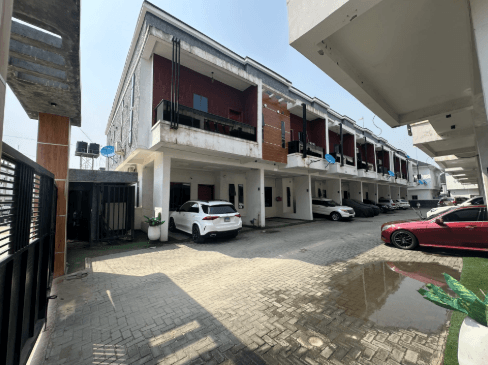
Entering the Isolo rental market without a clear strategy often leads to a cycle of hidden costs that can quickly outpace the initial savings of its relatively lower rent.
Renters who rush into commitments here frequently find themselves trapped in “dead zones” where poor drainage turns a ten-minute commute into a two-hour ordeal or where the absence of a dedicated transformer means spending a fortune on petrol for small generators.
However, the prepared renter understands that Isolo is one of the last few strategically positioned hubs in Lagos where a middle-income earner can still find a decent multi-bedroom apartment without the exorbitant price tags of neighbouring Magodo or Amuwo Odofin.
This guide provides a deep analysis of what it truly takes to secure a habitable home in this sprawling district. It covers the specific red flags unique to Isolo’s topography and ageing infrastructure, the questions you must ask to avoid the common “multiple-letting” scams prevalent in the area, the sections of the market that are currently deteriorating, and the specific indicators of a well-managed building that justifies a premium price.
By the end of this analysis, you will know exactly how to distinguish a genuine bargain from a structural liability.

If you want to start with verified, physically inspected listings, browse apartments in Isolo on Expert Listing.
Who Should Be Renting in Isolo
A significant portion of renter problems in Isolo comes from a mismatch between what the area offers and what the renter was expecting. Many individuals move to Isolo solely because of its central location on the map, only to find that the internal road networks and neighbourhood-specific issues conflict with their daily needs.
Isolo works exceptionally well for specific types of professionals. For the mid-level civil servant or private sector employee working in Ikeja or at the Murtala Muhammed International Airport, Isolo offers a commute that is often under thirty minutes during off-peak hours via the Airport Road. It is also an ideal base for traders and entrepreneurs who operate in the nearby Aswani, Ladipo, or Mushin markets, providing a residential buffer that is close to business hubs but slightly removed from their intense commercial noise.
Young families on a budget also find value here, as the area contains several established private schools and better-than-average access to healthcare facilities like the Isolo General Hospital. Furthermore, for those whose social or professional lives are split between the Mainland and the Island, Isolo’s proximity to the Oshodi-Apapa Expressway provides a strategic, if sometimes congested, gateway.
Conversely, Isolo is often a poor fit for those who prioritise absolute residential quiet or high-end lifestyle amenities. If you are a remote worker who requires 24/7 silence, the proximity to flight paths and the high density of small-scale commercial activities within residential streets will likely be a constant frustration. It is also a challenging location for corporate executives who work late on the Island and do not have a dedicated driver, as the nighttime traffic on the Cele or Oshodi axis can be draining.
Those who expect modern “lifestyle estates” with paved internal roads, central sewage systems, and uniform security will find Isolo’s fragmented, older building stock disappointing. If you are in the first group, read on. If you are in the second group, consider whether Isolo’s price advantage genuinely compensates for the daily friction before committing.
The Isolo Rental Market: How It Actually Works
The Isolo rental market is a complex mix dominated by informal, family-owned housing stock and a growing but still minority segment of professionally managed apartments.

Because much of Isolo was developed in the 1980s and 1990s, a large %age of the available housing consists of “legacy buildings” owned by individual families.
This means that documentation is often non-standard, and maintenance is frequently reactive rather than proactive. You will encounter many local agents who hold keys to multiple family houses, and in these cases, your relationship with the “Caretaker” is often more important than any formal lease agreement.
The high level of informality in Isolo creates a unique opportunity for payment flexibility that you rarely find in more corporate markets like Victoria Island or Lekki. While many landlords still prefer the standard one-year or two-year upfront payment for new tenants, the “Landlord-Next-Door” structure of Isolo means that terms are often negotiable.
It is not uncommon for a tenant to negotiate a six-month initial payment or even quarterly instalments if they can prove a stable income and a reputable character. This flexibility is a vital lifeline for many Lagosians who cannot easily access the large lump sums required by formal developers.
However, this informality carries significant risks regarding documentation and long-term stability. The absence of standardised leases means that “Agreement and Commission” fees can sometimes be arbitrarily high, and disputes over who is responsible for major structural repairs like roof leaks or borehole pumps are common.
Practically, this means you must insist on a written receipt and a clear breakdown of service charges before any money changes hands.
The better end of the market consists of newly renovated “mini-flats” and three-bedroom apartments in gated streets or “estates” like Oke-Afa or the Ajao Estate borders.
These properties command a 20% to 30% premium because they offer better security and more reliable water systems, but the investment is usually worth it to avoid the management headaches of older, unmanaged family houses.
Red Flag 1: The Invisible Cost of Poor Internal Drainage
The most significant risk for any renter in Isolo is the deceptive nature of its topography and the failure of its internal drainage systems. While the main arterial roads like the Mushin-Isolo Road may appear dry, the internal streets in areas like Ilasamaja or parts of Okota-Isolo are notorious for “seasonal ponding.” This isn’t just about getting your shoes wet; it is a structural risk.
Many older buildings in Isolo have foundations that have been compromised by years of standing water, leading to rising dampness that ruins furniture, creates a permanent smell of mould, and causes respiratory issues.
What to look for during a viewing:
You must look for the “high-water mark” on the exterior walls of the building and the surrounding fences. This is usually a faint, dark horizontal stain that indicates how high the water rises during the peak of the rainy season. If you see this stain higher than the ground floor’s entrance slab, the apartment will likely be inaccessible or flooded during July and September.
Pay close attention to the bottom of the wardrobes and kitchen cabinets for signs of swelling or wood rot, which confirms that the unit suffers from dampness. If the landlord has recently repainted only the bottom half of the walls, they are likely hiding water damage. Expert Listing’s flood-map data shows that the proximity to the canal systems in Isolo significantly increases risk in these sub-zones.
Red Flag 2: The “Ghost” Transformer and Shared Electricity Bills
Isolo’s power infrastructure is heavily strained, and many neighbourhoods suffer from what locals call “overloaded transformers.” This results in a phenomenon where the street may have power, but your specific building is “on a limb” that is too weak to carry heavy appliances. More dangerously, many multi-tenanted houses in Isolo operate on a single shared meter.
This leads to endless disputes among tenants over the “estimated billing” provided by Ikeja Electric, where you may find yourself paying for the heavy air-conditioning usage of a neighbour while you only use a single fan.
Questions to ask before committing:
Ask the current tenants or neighbours, not the agent, if the building has its own dedicated prepaid meter for each unit. If it is a shared meter, ask to see the last three months of electricity bills and the “sharing formula” used by the house.
You should specifically ask: Is this building on a “Band A” feeder or a lower tier? How many houses are connected to the street transformer? If the transformer blows, who is responsible for the repair costs? In many Isolo streets, tenants are expected to contribute upwards of ₦50,000 each for transformer repairs, which is an unexpected cost that can ruin your yearly budget. A good apartment will have an individual prepaid meter and a clear agreement on common area lighting costs.
Red Flag 3: The Multi-Agent “Double Letting” Trap
Because the Isolo market is so active and price-sensitive, it is a primary hunting ground for fraudulent agents. The most common scam involves an agent who has gained temporary access to a vacant property, sometimes by befriending the security guard, and proceeds to show the apartment to dozens of desperate seekers simultaneously.
They collect “caution fees” and “legal fees” from twenty different people for the same single-room or two-bedroom apartment, only to disappear on the day of move-in.
The protective steps:
Never pay any money to an individual agent without verifying their physical office address and seeing the original title documents or a “Letter of Authority” from the landlord.
You must insist on meeting the landlord or a recognised legal representative in person before making a transfer.
Always conduct a “neighbourhood check” by returning to the house at an odd hour, such as a Saturday morning, to ask the neighbours who the real owner is.
Expert Listing’s pre-listing verification process is designed to eliminate this risk by ensuring that every property listed has a verified ownership trail and that the person collecting the money is legally authorised to do so. If an agent pressures you to pay “immediately” because five other people are interested, treat it as a massive red flag.
Red Flag 4: Structural Deterioration and Borehole Contamination
Many of the older tenements and “flats” in Isolo were built using substandard blocks or have had no significant structural maintenance in twenty years. This is compounded by the proximity of many buildings to old soakaway pits that were not properly lined. In a densely populated area like Isolo, this creates a high risk of borehole water contamination.
If the apartment’s water source is located too close to the septic tank, the water you will use for bathing and washing will be unsafe.
What this means practically:
During your viewing, turn on the taps and let the water run for two minutes. If the water has a yellowish tint, a salty taste, or a distinct odour, the borehole is likely shallow and contaminated. This means you will spend a significant amount of money buying “pure water” or sachet water for everything from cooking to brushing your teeth.
Practically, a “cheap” ₦800,000 apartment with bad water ends up costing more than a ₦1,200,000 apartment with a deep, treated borehole. You should also check the ceilings for sagging or water stains, which indicate that the roof is failing.
Replacing a roof is a landlord’s job, but in the informal Isolo market, you may find yourself living under a leaking roof for months while the landlord “looks for funds.”
Red Flag 5: Noise Pollution and Commercial Encroachment
Isolo is a high-density zone where residential and commercial boundaries are frequently ignored. A street that looks quiet on a Tuesday morning can become a nightmare on a Friday night if there is a “hotel” or a “lounge” three houses away.
Additionally, Isolo sits directly under several flight paths for the international airport. While some renters get used to the roar of jet engines, it can be a dealbreaker for those who are sensitive to noise or who work from home.
Questions to ask before committing:
You must ask about the presence of any nearby religious houses or event centres that operate at night. Specifically, ask: Are there any “street jams” or regular parties on this block? Is there a generator farm from a nearby business that runs all night?
It is highly recommended that you visit the property at 8:00 PM on a Friday and 10:00 AM on a Sunday before signing.
This allows you to hear the actual noise levels when the neighbourhood is at its busiest. If the windows are single-glazed and the building is on a major inner road like Ire-Akari Estate Road, the noise will be a constant presence in your living room.
What a Good Isolo Apartment Actually Looks Like
It is easy to read these red flags and conclude the area is not worth considering. That conclusion would be wrong; there is a reason why Isolo remains one of the most sought-after Mainland districts.

A good Isolo apartment in 2025/2026 typically sits in the better-managed pockets of Ire-Akari, Ajao Estate, or the gated sections of Okota, in a building that has been actively maintained by a resident landlord or a professional facility manager.
This apartment will have a functional, deep-drilled borehole with a visible water treatment system, such as an industrial sand filter. It will feature independent prepaid meters for every unit, ensuring you only pay for what you consume.
The walls will be free of the “salt-peter” or rising damp stains common in the area, and the compound will be paved with interlocking stones to prevent mud and pooling during the rains. Inside, the plumbing will be modern, with no signs of leakage under the sinks, and the windows will be well-fitted aluminium frames that provide at least some insulation from the neighbourhood noise.
The security will consist of a 24-hour gateman who actually monitors who enters the premises, rather than just an old gate that is left open all day.
None of what is described above is extraordinary. These are baseline expectations of a properly managed rental property.
The better buildings in Isolo deliver them consistently; the worse ones do not, and the rent saving of ₦100,000 or ₦200,000 does not compensate for the daily stress of water shortages, power disputes, or flooded living rooms.
Rent Red Flags: When the Price Is Too Low Even for Isolo
Isolo has genuinely low rents relative to comparable Lagos addresses like Gbagada or Surulere, but there is a floor below which an asking rent signals a problem rather than a deal. If a 1-bedroom apartment is being offered at ₦350,000 per year or a 2-bedroom at ₦600,000 in Isolo in 2025, you must ask why.
In this market, such prices are almost always an indicator of a major underlying issue.
The most likely explanations for a suspiciously low price are that the building has serious structural cracks that have been covered by a thin layer of plaster, or the house is situated in a “bowl” that floods to waist-height every year.
Alternatively, the listing might be a “bait” listing used by an unauthorised agent to collect commitment fees from multiple victims before they realise the house isn’t actually available. There is also a high chance of a family dispute over the property, where one sibling is trying to rent it out without the consent of the others, leading to an eventual eviction by the police.
The correct response to a suspiciously low price is not to move quickly before someone else takes it, but to ask specifically why the price is so low and to walk away if the agent claims it is just a “distress sale” or a “landlord’s favour.”
For a genuinely habitable 1-bedroom in Isolo with functional power and water backup, the 2025/2026 market floor is approximately ₦550,000 to ₦700,000, depending on the specific estate. Below this figure, the risk that something significant is wrong is high.
Negotiating Rent in Isolo
Isolo is one of the more negotiable markets in Lagos, precisely because it is dominated by individual landlords rather than corporate entities.
These landlords are often more concerned with the quality and stability of the tenant than with squeezing every last Naira out of the initial rent. If you can present yourself as a responsible, employed professional, you have significant leverage.
The most effective negotiation tool in Isolo is the offer of a long-term commitment combined with clear proof of employment.
If you can show a letter of employment or six months of bank statements, a landlord is often willing to drop the asking price by 10% to ensure they don’t end up with a “problem tenant” who stops paying after the first year. Offering to handle minor interior repairs or painting yourself can also unlock a discount on the “caution fee” or the first year’s rent.
Speed also matters; if you can pay the total sum within 24 hours of a successful viewing and verification, you can often negotiate away the “legal and agency” fees, which are usually 10% to 20% of the rent.
What rarely works in Isolo is trying to negotiate based on the shortcomings of the neighbourhood. Landlords here are well aware of the traffic and drainage issues and have already priced them into the rent; complaining about the road will only make you look like a “difficult” tenant.
The realistic discount range for a property that has been vacant for more than a month is between 5% and 12%. For recently vacated, well-maintained buildings in high demand, you should expect very little flexibility, often no more than a 2% to 5% reduction, as there is usually a queue of ready payers.
Every listing on Expert Listing is physically inspected before going live. Documentation is verified. Flood risk is mapped at the listing level. Listings are removed the moment they are rented or sold.
Browse verified apartments for rent in Isolo on Expert Listing.
Frequently Asked Questions
Is it safe to rent in Isolo, Lagos?
Isolo is generally considered a safe, middle-class residential area, but security varies significantly between gated estates and open streets. Areas like Ire-Akari and Ajao Estate have active neighborhood watches and restricted entry at night, making them quite secure for families. However, like any high-density Lagos district, petty crime and “area boy” activity can occur near major bus stops like Iyana-Isolo or Cele, so it is advised to choose a house with a dedicated gateman and secure perimeter fencing.
What is the difference between renting in Ajao Estate versus Okota within Isolo?
Ajao Estate is generally more expensive and is preferred by those working at the airport due to its direct proximity, though it suffers from significant aircraft noise. Okota, while also part of the Isolo/Oshodi-Isolo axis, is more sprawling and varies between high-end residences and flood-prone inner streets. Ajao tends to have more formal building management, while Okota offers more of the “family-owned” flexible housing stock discussed earlier in this guide.
How is the water supply in Isolo apartments?
Most apartments in Isolo rely on private boreholes rather than municipal water. As mentioned in our analysis, the quality can be hit-or-miss depending on the depth of the borehole and its distance from soakaways. Always test the water for odour and colour during your viewing, as many older houses have rusty pipes or shallow wells that require you to buy treated water for daily use.
Are there hidden charges when renting in Isolo?
Yes, common hidden charges include “Agreement and Commission,” which can total 20% of the rent, and “Caution Fees”, which are meant to be refundable but rarely are. You should also watch out for “Development Levies” or “Security Dues” charged by the street association, which can range from ₦2,000 to ₦10,000 per month. Always ask for a comprehensive breakdown of the “Total Package” before paying.
Does Isolo flood during the rainy season?
Certain parts of Isolo, particularly those near the canal systems and lower-lying streets in Ilasamaja, experience significant flash flooding. While main roads usually clear quickly, internal street drainage is often blocked, leading to water entering compounds. Use the “high-water mark” check described in Red Flag 1 to verify the specific risk level of any building you are considering.
What is the commute like from Isolo to Victoria Island?
The commute can be gruelling during peak hours, often taking between 90 minutes to 2 hours via the Oshodi-Apapa Expressway and the Third Mainland Bridge. However, for those who leave very early (before 6:00 AM) or use the alternative route through Surulere, the time can be cut to under an hour. It is a strategic location for those who have a flexible start time or work in more central Mainland hubs.