Renting in Mile 12, Lagos: What You Need to Know Before You Sign (2026)
Expert Listing
·
·
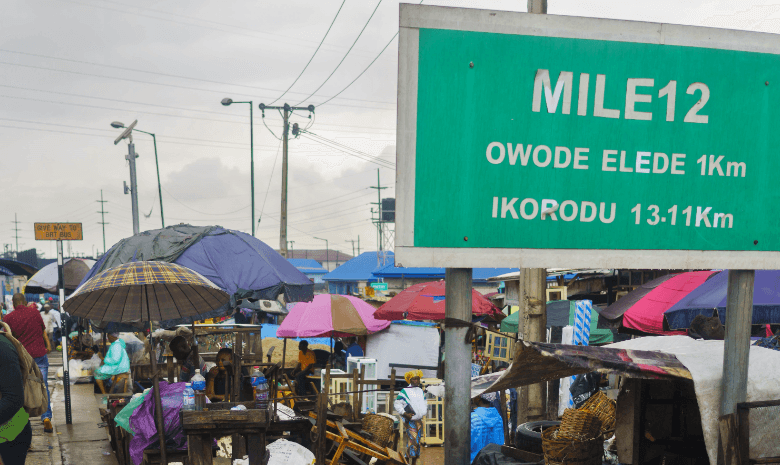
Renting in Mile 12 without a clear understanding of its unique market dynamics often leads to significant financial loss and daily logistical frustration, particularly regarding the hidden costs of property maintenance and the impact of the nearby food market on residential access.
Prepared renters find that while this area offers some of the most competitive price points in the Kosofe Local Government Area, the value only holds if you can navigate the specific risks of building neglect and seasonal flooding.
Success in this market requires looking past the low initial asking price to account for the secondary costs of living in one of Lagos’s most commercially dense transit hubs.
This guide provides the protective intelligence necessary to evaluate Mile 12’s rental stock with professional scrutiny.
It details the five most critical red flags unique to this area, ranging from the structural impact of heavy-vehicle vibration to the complexities of informal landlord-tenant agreements.
You will learn the exact questions to ask regarding water quality near the market zones, how to identify buildings that have functionally ceased to be maintained, and what constitutes a fair market price in 2025/2026.
This analysis ensures you do not mistake a compromised building for a bargain.
If you want to start with verified, physically inspected listings, browse apartments in Mile 12 on Expert Listing.

Who Should Be Renting in Mile 12
A significant portion of renter problems in Mile 12 comes from a mismatch between what the area offers and what the renter was expecting. Many individuals are drawn to the area by its reputation for affordability, but fail to account for the high-intensity environment that defines daily life here.
The area works exceptionally well for small-scale entrepreneurs and traders who operate within the Mile 12 International Market or the surrounding Mile 12-Ketu commercial axis, as it eliminates the high cost of daily commuting.
Early-career professionals working in Alausa or Ikeja often find Mile 12 a viable base because the BRT corridor provides a structured, relatively predictable transit route compared to other mainland suburbs.
Artisans and service providers who require easy access to both the Lagos Mainland and the Ikorodu Road corridor benefit from the area’s role as a central transit node.
Additionally, students of nearby institutions or those newly relocated to Lagos find the lower price entry point helpful for establishing a financial foothold while maintaining proximity to major transport links.
Conversely, Mile 12 is a poor fit for families who prioritise quiet residential environments or expansive green spaces, as the area is dominated by high-decibel commercial activity and heavy vehicular traffic.
It does not serve remote workers well if their roles require consistent, high-quality power and a low-noise background for meetings, given the density of the neighbourhood.
Renters who work on Lagos Island or in Lekki may find the commute exhausting despite the proximity to Ikorodu Road, as the bottleneck at Ketu and Ojota often adds significant time to the journey. High-income earners seeking premium finishing or estate-style security will find that the local housing stock largely falls short of those specific lifestyle expectations.
If you are in the first group, read on. If you are in the second group, consider whether Mile 12’s price advantage genuinely compensates for the daily friction before committing.
The Mile 12 Rental Market: How It Actually Works
The Mile 12 rental market is heavily dominated by informal, family-owned housing stock, with only a small %age of newer developments managed by formal estate firms.
This means the vast majority of your interactions will be with local family representatives or “attorneys” who manage multi-generational properties.
Documentation in this market varies wildly, and it is common to find older buildings where the original title documents are tied up in family probate, making it essential to verify that the person collecting your rent has the legal authority to grant a tenancy.
This informal structure creates a unique opportunity regarding payment flexibility. While many Lagos markets demand a full year of rent upfront, several landlords in Mile 12, particularly those owning older tenement or “face-to-face” converted blocks, are open to six-monthly or even quarterly payment arrangements.
This flexibility is often available for long-term tenants who can demonstrate a stable source of income, providing a critical entry point for renters who cannot easily access a large lump sum.
However, this flexibility often comes with less formal maintenance agreements, leaving the tenant responsible for minor repairs that would typically be handled by a professional manager.
The risk inherent in this informality is the high potential for tenancy disputes regarding communal bills and property upkeep. Without standardised lease agreements, many renters find themselves in constant conflict over the distribution of electricity bills (NEPA/IKEDC) or the cost of pumping water.
Practically, this means you must insist on a written breakdown of how shared utility costs are calculated before you pay your initial deposit. The better end of the market consists of recently renovated “mini-flats” and three-bedroom apartments located further away from the main market gate, often featuring gated compounds and dedicated boreholes.
These properties command a 20 per cent to 30 % premium over the average stock but offer significantly better security and a buffer from the market’s noise.

Red Flag 1: Structural Vibrations and Heavy-Vehicle Impact
The first and most important flag for any Mile 12 renter is the physical proximity of the building to the main Ikorodu Road or the heavy-vehicle loading bays near the market.
Because Mile 12 is a primary hub for articulated trucks carrying produce from the north, buildings in the immediate vicinity are subject to constant, low-frequency vibrations twenty-four hours a day.
Over time, this leads to accelerated structural fatigue, visible as deep diagonal cracks in the walls or the separation of door frames from the masonry.
What to look for during a viewing: Examine the corners of the ceiling and the areas around the window frames for cracks that have been recently plastered over or painted. These often reappear within weeks if the building is suffering from vibration-related settlement.
Pay close attention to the floor tiles; if you notice a pattern of cracked tiles spanning the width of a room, it suggests significant structural stress. You should also visit the property during a high-traffic period, typically in the evening when the heavy trucks are lining up, to feel for any noticeable trembling in the floorboards or walls.
Red Flag 2: Poor Water Quality and Borehole Contamination
Due to the high density of the Mile 12 market and the historical lack of a centralised sewage system in many of the older residential pockets, groundwater contamination is a frequent and serious issue.
Renters often move in only to find that the water from the borehole is yellowish, has a metallic smell, or is unsuitable for anything other than flushing toilets. This forces tenants to buy “pure water” or tanker water for bathing and cooking, adding a high, uncounted cost to the monthly budget.
Questions to ask before committing: You must ask the landlord or agent when the borehole was last treated and if there is a functional filtration system installed on the premises. Ask specifically if the water is clear year-round, as many boreholes in Mile 12 turn murky during the peak of the rainy season.
It is also wise to ask current tenants in the building about the frequency of water-borne illnesses or skin irritations. You should request to see the water running from the kitchen tap and the bathroom shower simultaneously to check both the clarity and the pressure.
Red Flag 3: The “Multiple Agent” Deposit Scam
The Mile 12 market is notorious for “open” listings where five or more local agents have keys to the same vacant apartment. This creates a high-risk environment for fraud, where a rogue agent may collect “caution fees” or full rent deposits from multiple prospective tenants simultaneously before disappearing.
Because many of these agents operate without a fixed office address, tracking them down once the fraud is discovered is nearly impossible.
Expert Listing’s pre-listing verification serves as the primary structural protection against this risk by ensuring that only one authorised representative is dealing with the property.
The protective steps: Never pay any commitment fee or “legal fee” until you have met the actual landlord or a verified legal representative with a traceable office. Always demand to see the “Original Letter of Authority” which gives the agent the right to market that specific property.
Verify the identity of the person you are paying by requesting a valid government ID that matches the name on the bank account. If an agent pressures you to pay “immediately” because ten other people are interested, treat it as a definitive signal to slow down and verify the documentation.
Red Flag 4: Power Distribution and Shared Transformer Issues
Mile 12 frequently suffers from localised power outages caused by overloaded transformers, as the commercial demand from the market often exceeds the residential infrastructure’s capacity.
In many apartment blocks, the “service charge” for electricity is managed informally by a lead tenant or the landlord, leading to frequent disconnections when one or two units fail to pay their share.
This results in the entire building being thrown into darkness regardless of your individual payment status.
Questions to ask before committing: Ask specifically if the apartment is on a standalone prepaid meter or if it uses a shared “analogue” meter for the whole building. You need to know how the electricity bill is shared among tenants and who is responsible for collecting and paying the utility company.
Ask if the building has a dedicated transformer or if it is shared with the commercial market stalls nearby, as the latter almost always guarantees frequent fuses blowing.
Finally, ask what the typical monthly expenditure is for the communal generator, including the cost of diesel or petrol and the maintenance schedule.
Red Flag 5: Flash Flooding and Clogged Drainage Networks
The density of the Mile 12 market leads to a massive amount of organic and plastic waste that frequently clogs the local drainage channels.
During the rainy season, even moderate rainfall can cause immediate flash flooding on the streets, trapping residents in their homes or damaging cars parked in the compound.
For ground-floor apartments, the risk is even higher, as water can back up through the pipes or seep under the doors if the building was not constructed on a sufficiently high foundation.
What this means practically: Renting a ground-floor unit in Mile 12 during the rainy season is a high-risk decision that requires careful inspection of the compound’s elevation relative to the street.
You must check the external walls of the building for “water lines”, dark stains that indicate how high the water has risen in previous years. If the street outside the compound is lower than the surrounding area and lacks clear, flowing gutters, you should assume that the property will be inaccessible during heavy rain.
Expert Listing’s flood-risk data can help you identify which specific streets in the Mile 12-Ketu axis are most prone to these seasonal blockages.
What a Good Mile 12 Apartment Actually Looks Like
It is easy to read five red flags and conclude the area is not worth considering. That conclusion would be wrong, as Mile 12 contains several well-managed pockets where the infrastructure is robust and the management is professional.

A good Mile 12 apartment in 2025/2026 typically sits in the residential areas further inward toward the Ketu border or in the newer developments along the secondary streets away from the market gates, in a building that has been actively maintained and possesses clear, documented ownership.
These properties feature high-fenced compounds with functional security gates and have their own dedicated boreholes with overhead tanks that provide clear, odourless water.
The management in these buildings provides a formal lease agreement that clearly outlines the maintenance responsibilities of both parties and utilises individual prepaid meters to avoid the frequent “shared bill” disputes that plague the lower end of the market.
Inside the unit, the finishing is practical and durable, with tiled floors that show no signs of structural settlement and ceilings that remain dry even after the heaviest September rains.
These apartments often have a small, dedicated space for a private generator and a clear, disclosed fuel billing arrangement for any communal lighting.
None of what is described here is extraordinary; these are baseline expectations of a properly managed rental property. The better buildings in Mile 12 deliver them consistently, providing a stable living environment in a high-energy part of Lagos.
The worst buildings do not, and the nominal rent saving does not compensate for the stress of constant utility failures and the risk of property damage.
Rent Red Flags: When the Price Is Too Low Even for Mile 12
Mile 12 has genuinely low rents relative to comparable Lagos addresses like Gbagada or Maryland, but there is a floor below which the asking rent signals a problem rather than a deal. In the current 2025/2026 market, if a standard 1-bedroom mini-flat is being offered at ₦350,000 per year in this area, you must ask why it is priced so far below the average.
The most likely explanations are that the building has serious structural problems that the landlord is trying to hide with a fresh coat of paint, or the listing is not genuine and is designed to collect “commitment fees” from dozens of victims. In many cases, a suspiciously low price also points to an active legal dispute over the property, such as a family feud or a pending government demolition order due to a lack of building permits.
Your response to a suspiciously low price should not be to move quickly before someone else takes it, but to ask specifically why the price is what it is.
If the explanation is unconvincing, such as the landlord “just wanting a good tenant quickly,” you should be extremely cautious.
The confirmed market floor for a genuinely habitable 1-bedroom in Mile 12 with functional power and water backup is approximately ₦550,000 per year in 2025/2026. Below this figure, the risk that the building suffers from significant neglect, water contamination, or imminent structural failure is exceptionally high.
Negotiating Rent in Mile 12
The Mile 12 rental market is one of the more flexible and negotiable segments of the Lagos mainland, largely due to the high volume of informal landlords who value immediate cash flow over rigid corporate pricing.
Unlike the fixed-price models seen in Lekki or Ikoyi, Mile 12 landlords are often willing to trade a lower annual rent for the security of a reliable tenant who can pay promptly.
The most effective negotiation tool in this specific market is the offer of a slightly larger upfront payment or the demonstration of long-term stability.
For example, offering to pay eighteen months of rent upfront instead of twelve can often unlock a 10 % discount on the annual rate. Speed of commitment is also highly valued; if you can provide your references and a down payment within forty-eight hours of viewing, you have significant leverage to negotiate the “caution fee” or the “legal and agency” %ages.
Landlords in this area are particularly wary of “difficult” tenants, so showing proof of steady employment and a clean rental history can often lead to a reduction in the total package price.
Conversely, attempting to negotiate based on the building’s flaws rarely works if those flaws are common to the neighbourhood. Complaining about the noise or the traffic will not move a Mile 12 landlord, as they view these as inherent characteristics of the area.
The realistic discount range for properties that have been vacant for more than two months is typically 5% to 10% below the asking price. For recently vacated, well-maintained buildings in high demand, the market rarely yields more than a 3 % discount, as there is usually a queue of prospective tenants ready to pay the full asking price.
Every listing on Expert Listing is physically inspected before going live. Documentation is verified. Flood-risk is mapped at listing level. Listings are removed the moment they are rented or sold.
Browse verified apartments for rent in Mile 12 on Expert Listing.
Frequently Asked Questions
Is it safe to rent in Mile 12, Lagos?
Mile 12 is generally safe for residents who stay within the established residential zones, but the area requires a high level of situational awareness due to its density and the constant influx of people at the international market. While violent crime is not higher than the Lagos average, petty theft and “one-chance” transit risks are present around the main motor parks and under the bridge. Choosing a building with a gated compound and a dedicated security guard significantly reduces these localised risks.
How do I avoid renting a flood-prone apartment in Mile 12?
Avoiding flood-prone units requires visiting the property during or immediately after a heavy downpour to see how the compound handles the runoff. You should look for watermarks on the perimeter walls and ask neighbours if the street becomes a “river” during the peak of the rainy season in July and September. It is also advisable to avoid ground-floor units in older buildings that are level with or below the street’s drainage line.
What is the difference between renting in Mile 12 North versus the Ketu-Mile 12 Border?
Renting near the North section, closer to the market gate, means higher noise levels, more truck traffic, and potentially cheaper rents, but with significantly more daily friction. The Ketu-Mile 12 border area is generally more residential, quieter, and offers better-constructed apartment blocks, though at a slightly higher price point. This border area also provides easier access to the BRT lanes for those commuting toward Lagos Island or Ikeja.
What are the average prices for a 2-bedroom apartment in Mile 12?
In the 2025/2026 market, a standard 2-bedroom apartment in a decent building ranges from ₦800,000 to ₦1,200,000 per year, depending on the proximity to the main road and the quality of the finish. Newly built units with modern amenities like pop ceilings and en-suite rooms will sit at the higher end of this range. Anything significantly below ₦750,000 for a 2-bedroom should be inspected with extreme caution for structural or environmental issues.
What hidden costs should I expect when renting in Mile 12?
Beyond the basic rent, you should budget for “caution fees,” which are often non-refundable in practice, and monthly contributions for the shared security guard and waste management (LAWMA). In many buildings, you will also be expected to contribute to the fueling and maintenance of the communal pumping machine for water. These smaller, unlisted fees can add an extra ₦10,000 to ₦20,000 to your monthly living expenses.
Can I get a monthly rent payment plan in Mile 12?
While the traditional annual payment is the standard, some “face-to-face” conversions and older family-owned properties are open to monthly or quarterly payments to fill vacancies quickly. These arrangements are usually unwritten and based on trust, so it is vital to keep clear records of every payment made to avoid “lost” transaction disputes later. Professional, modern apartments in the area almost exclusively require at least one year of rent upfront for new tenants.